
Last updated October 31, 2026
 Wrought iron
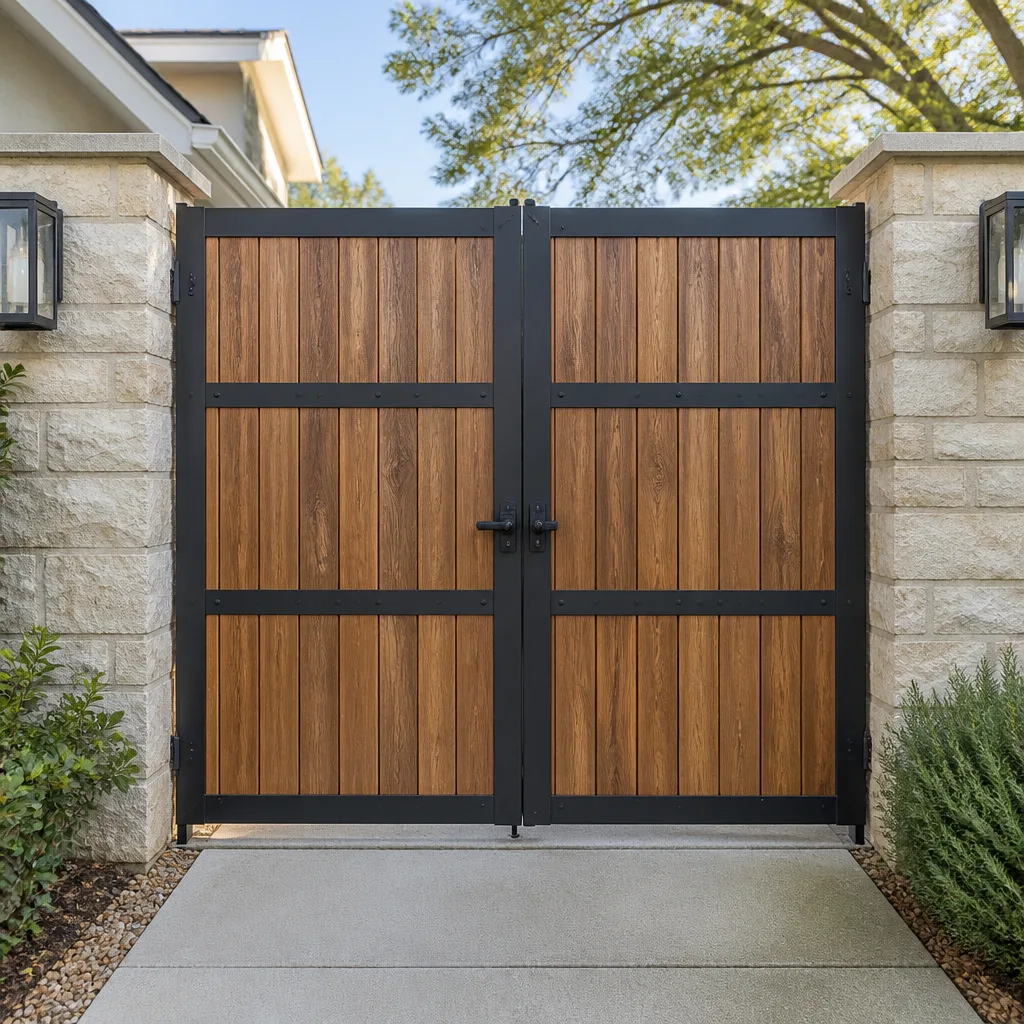 Wood & steel frame
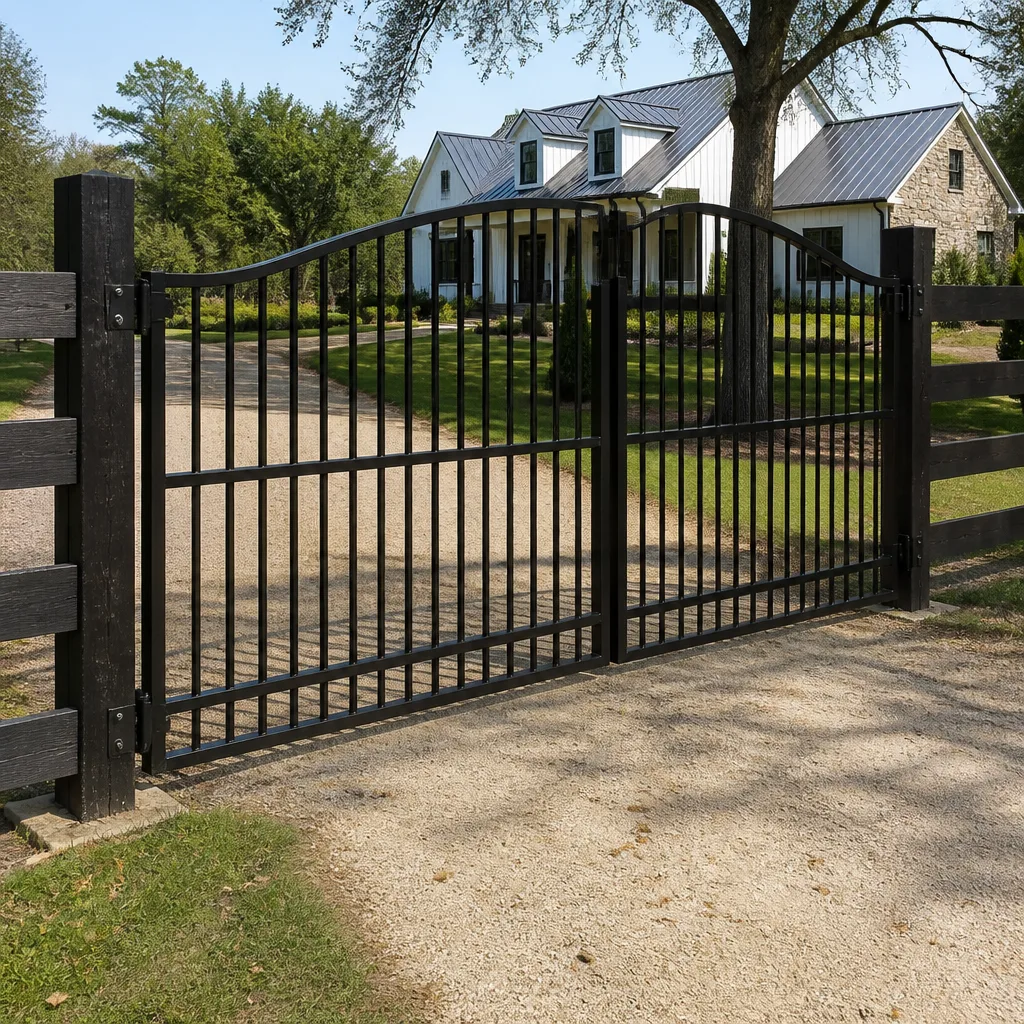 Farm & ranch
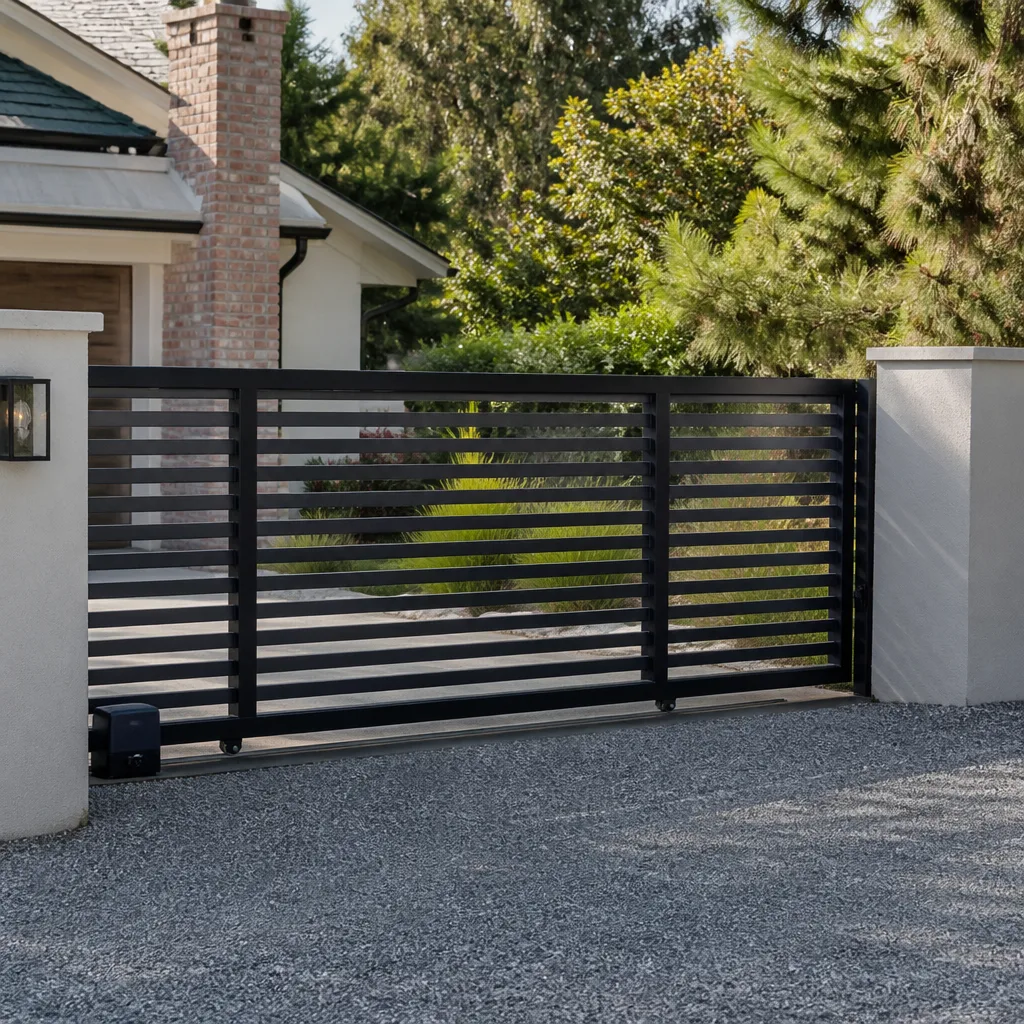 Sliding driveway gates
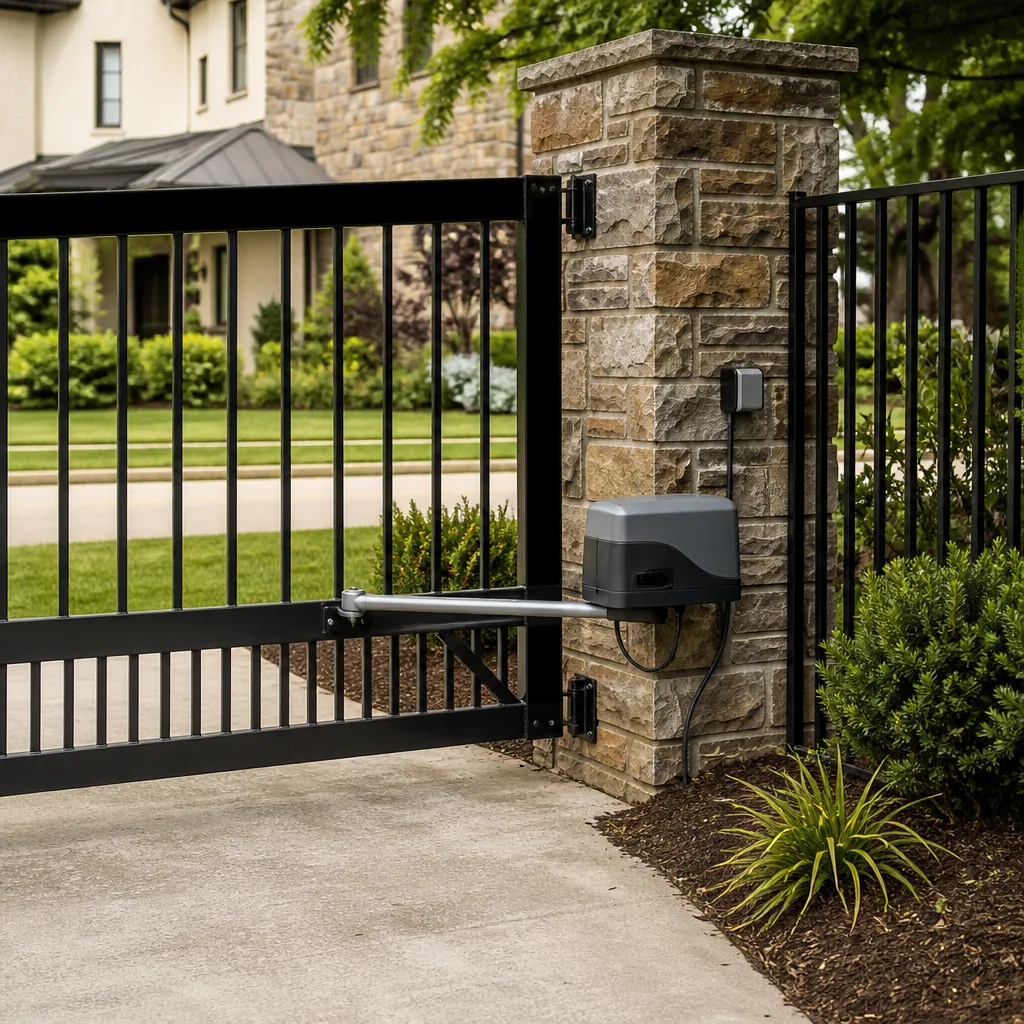 LiftMaster operators
Free on-site gate assessment - hinges, posts, and your LiftMaster or Nice gate operator checked before anything is quoted
The assessment is free and the quote is the invoice.
Get your free estimateGate Repair Warning Signs: A Miami Homeowner’s Reference Guide
A gate that hesitates for two seconds before opening isn’t being slow. It’s telling you the operator motor is working against a mechanical resistance problem that will burn out the motor within weeks. By the time the gate stops moving entirely, the repair cost has typically doubled. This guide walks through the eight warning signs we see most often across Miami properties, what each symptom actually means mechanically, and which ones demand same-week attention before a $300 hinge repair becomes a $2,000 operator replacement. For more on protecting your investment year-round, see our Seasonal Gate Repair Care for Miami: Year-Round Homeowner’s Guide.
Quick Answer
The most common gate repair warning signs in Miami are hesitation on startup, grinding or squealing during travel, a gate that drifts off its closed position, failure to latch, visible sagging, rust streaking from hardware, sensor faults that stop the gate mid-cycle, and remote range loss. Each symptom points to a specific mechanical, electrical, or structural cause. Catching these signs early typically keeps repair costs under $400; ignoring them routinely leads to motor burnout and full operator replacement.
Styles & brands we work with
Table of Contents
- Hesitation on Startup: Your Motor Is Begging for Help
- Grinding, Squealing, and Scraping: Reading the Noise
- Drifting: When a Closed Gate Won’t Stay Closed
- Failure to Latch: The Security Gap Nobody Talks About
- Sagging: The Structural Warning Sign
- Rust Streaking and Salt Corrosion: Miami’s Hidden Accelerant
- Sensor Faults and False Stops: Electrical vs. Mechanical
- Remote Range Loss: The Quiet Electrical Warning
- Common Mistakes to Avoid
- When to Call a Professional
- Frequently Asked Questions
Hesitation on Startup: Your Motor Is Begging for Help
A gate that pauses before moving, or moves in a jerky stutter for the first foot of travel, is rarely an electrical glitch. What you’re seeing is the operator motor straining against resistance it wasn’t designed to overcome. The motor’s capacitor fires, voltage hits the windings, and the armature tries to turn against a load that’s too heavy. That two-second delay is the motor hitting its stall torque threshold and only slowly winning the fight.
In Miami specifically, three culprits account for most startup hesitation we diagnose. The first is hinge seizure from salt-laden air. Coastal humidity deposits a fine saline film on hinge pins and bearing surfaces. Over months, that film corrodes the pin-to-barrel clearance until the gate’s own weight fights the motor on every cycle. The second is track wear on sliding gates. Miami’s sandy soil works its way into roller tracks, creating a grinding paste that increases rolling resistance. The third is a failing capacitor, which we see more often on older LiftMaster and Mighty Mule residential units that have been running for years in Miami’s heat. Heat shortens capacitor life measurably, and a weak capacitor delivers a soft, delayed start even when the mechanical system is fine.
Here’s the part most homeowners miss: the motor is designed to run at a specific current draw. Every extra pound of resistance pushes that draw higher. The motor’s thermal protection has to dissipate more heat, and the windings degrade faster. A gate that hesitates today is not going to fail next year. It’s going to fail in weeks, because the overheating cycle compounds. The repair that would have cost $280 for new hinges and bearings becomes $1,800 for a new motor and control board. We’ve replaced motors on Miami gates where the hinges were so seized the gate could barely be moved by hand. The motor died fighting a battle it was never going to win.
What to Check
- Stand at the gate and watch a full open and close cycle. Does it hesitate at the start, mid-travel, or only at the end?
- Listen for a low hum during the hesitation. That’s the motor under load.
- Disengage the operator (most units have a manual release) and push the gate by hand. If it resists, the problem is mechanical, not electrical.
- Check the capacitor if you have a swing gate operator. Bulging or discolored capacitor housings are a visual warning.
If the gate glides smoothly by hand but hesitates under power, the problem is electrical and points to the capacitor, the motor, or the control board. If it resists manually, the motor is being overworked and needs the mechanical issue resolved before it burns out. Either way, this is a scheduled-repair situation with a hard deadline. Same-week service prevents the failure from escalating.
Grinding, Squealing, and Scraping: Reading the Noise
A healthy automatic gate is quiet. You’ll hear the motor’s soft whir and the click of the limit switch, and nothing else. When a gate starts making noise, it’s not an aesthetic problem. Different noises map to different failure points, and learning to read them tells you exactly where the problem lives before a technician arrives.
Squealing or chirping on a swing gate almost always comes from hinge pins. The metal-on-metal contact has lost its lubrication, and the sound is the pin rubbing against the barrel. This is the earliest and cheapest fix in gate repair. If addressed now, it’s a lubrication and adjustment service call. Left alone, the friction wears the pin and barrel into an oval shape, the gate drops, and you’re replacing hinges and potentially the gate frame. On sliding gates, squealing comes from roller bearings that have eaten sand and are grinding themselves apart.
Grinding or crunching is more serious. On a sliding gate, grinding means the drive gear is slipping against the rack, usually because the gate is misaligned or the rack teeth are worn. Every grind cycle shaves metal off the rack, and eventually the gear loses purchase entirely. The gate will move halfway and stop, or refuse to move at all. On swing operators with arm-driven designs, grinding often means the internal gearbox has run dry or the gears have begun to gall. Some FAAC and BFT swing operators have sealed gearboxes that can’t be serviced; by the time they grind, the gearbox is done.
Scraping along the ground indicates the gate has dropped or shifted on its mountings. On a swing gate, the hinge post may have settled in Miami’s sandy soil, pulling the gate edge down until it drags on the driveway. On a sliding gate, a bent or worn roller lets the gate frame contact the track or the concrete. The scraping itself causes more damage, and the misalignment puts strain on the motor. This is a sign the gate is no longer operating within its design geometry.
Noise Diagnosis Table
- Squeal or chirp, swing gate, at the hinge: Dry or corroded hinge pins. Schedule soon.
- Squeal or chirp, sliding gate, near the track: Sand-contaminated rollers. Clean and replace.
- Grinding, sliding gate, near the motor: Worn drive gear or rack. Same-week repair.
- Grinding, swing gate, inside the operator: Gearbox failure imminent. Do not operate until inspected.
- Scraping, gate edge on ground: Hinge post settlement or roller failure. Same-week repair.
We tell Miami homeowners to treat unexplained gate noise the way they’d treat a new noise from their car’s engine. It doesn’t fix itself. It only gets more expensive.
Drifting: When a Closed Gate Won’t Stay Closed
A gate that drifts open an inch or two after every close cycle is failing at its most basic job. The reasons depend on whether you have a swing or slide gate, but both boil down to the same principle: something that was supposed to hold the gate in position has stopped doing that job consistently.
On a swing gate, drifting usually traces back to the operator’s internal stop mechanism or the limit switch. Limit switches tell the motor when the gate has reached fully closed. If the switch is out of adjustment or failing, the motor stops short or overshoots, and the gate drifts off its intended stop point. On a hydraulic operator, drifting can also mean internal bypass leakage in the cylinder or pump, which allows the gate to move without motor input. We see this on aging hydraulic FAAC and DoorKing units in Miami, where heat cycles accelerate seal degradation.
On mechanical systems without a driven close, drifting often means the gate’s own weight is doing the work. A swing gate that wasn’t hung level will drift toward the low point. A hinge post that’s shifted will create a constant downhill slope. The wind factor matters in Miami too. Coastal storm gusts can push a gate off its stopped position, and if the operator’s brake or lock is weak, the gate will drift after every strong gust.
The security risk here is real. A gate that drifts open defeats the entire purpose of the gate. For a property manager at a gated community in Coral Gables or a multi-family complex in Kendall, a self-opening gate is a liability. Residents feel it, and so does the HOA board. Drifting is a scheduled-repair item in most cases. The exception is when drifting increases suddenly over days, which suggests a mechanical failure like a sheared key or a snapped internal stop that will fail completely on the next cycle.
Failure to Latch: The Security Gap Nobody Talks About
The latch on a gate is the last line of mechanical security. The motor can close the gate fully, but if the latch doesn’t engage, a strong push or a wind gust will open it. In Miami, where gates often serve as the only barrier between the street and a home’s rear yard or a community’s pool area, a failed latch is a bigger deal than it looks.
Failure to latch has three common mechanical causes. First, the gate and the latch post have shifted relative to each other. Even a quarter-inch of settlement in sandy Miami soil moves the latch striker out of alignment with the receiver. The gate closes, but the latch tongue hits the edge of the receiver instead of sliding in. Second, the latch mechanism itself is worn. Spring-loaded latches lose tension over thousands of cycles, especially in humid salt air that corrodes the internal spring. Third, the motor’s close limit isn’t being reached, so the gate stops an inch short of the latch point. The motor thinks the gate is closed. The latch knows better.
On electric gates with magnetic locks or solenoid-driven latches, failure to latch may be purely electrical. A magnetic lock that doesn’t power up, or that loses voltage due to a corroded connection, will never hold. These locks are common on commercial gate installations in Miami, and corrosion at the wire terminations is the usual culprit. The power supply reads fine, but the lock sees reduced current and can’t hold against pressure.
This is a same-week repair for most properties. A gate that doesn’t latch is a gate that isn’t secure, and for commercial clients, that’s a code and insurance concern. If you have a manual latch that’s simply worn, a gate technician can replace it in a single visit. If the issue is alignment, the fix is adjusting the gate and possibly resetting the post. If it’s electrical, a technician who understands low-voltage wiring and access control is the right call. Electric gate repair in Miami covers this exact category of work, and a specialist can diagnose it quickly.
Sagging: The Structural Warning Sign
Sagging is the most visible warning sign and the one homeowners most often rationalize away. A gate that dips two inches at the latch end looks wrong, but it still closes, so it gets ignored. The problem is that a sagging gate is transferring all its weight onto components that were designed to carry a fraction of it. The geometry of the entire system has changed.
On a swing gate, sagging means the hinge post has moved or the hinges themselves have worn. Miami’s soil, particularly in coastal areas where the water table sits high, settles differently under load. A free-standing hinge post anchored in a concrete footing can shift over years, and once it moves, the gate’s weight pulls it further. Every cycle compounds the lean. The fix is resetting the post in a proper footing, or replacing worn hinges with appropriate-weight bearings. It’s not a cheap repair, but it’s mechanical work, not electrical, and a dedicated gate company does it in a day.
On a sliding gate, sagging usually means a roller has failed or the track has deflected. A gate running on three rollers with one failed will ride low, scrape the concrete, and put side load on the motor. V-groove rollers and guide rollers need to be matched to the gate’s weight, and when someone installs an undersized roller, the failure comes early. We’ve replaced rollers on Miami sliding gates where the original installer used components rated for half the actual gate weight.
Sagging is a scheduled-repair item unless the gate has become difficult to move manually, at which point the operator is working against a dangerous load and the motor is at risk. If you can see daylight under one edge of the gate when it’s closed, or if the gap between gate and latch post is wider at the top than the bottom, the structure has moved. Call before the motor pays the price. Gate repair in Miami starts with a structural assessment, and a good technician will measure the post, the hinges, and the gate weight before recommending anything.
Rust Streaking and Salt Corrosion: Miami’s Hidden Accelerant
Miami’s salt air is the single biggest factor in gate deterioration that doesn’t get discussed enough. A gate that looks fine on the surface can be corroding internally at a rate that surprises people who moved here from dryer climates. The signs are specific, and they show up early if you know where to look.
Rust streaking from hinge bolts, gate hardware, and weld points is the obvious surface signal. What matters more is what it indicates underneath. When you see brown staining running down from a bolted connection, the corrosion is already inside the joint. The bolt is rusting inside the hole, and the expansion of the iron oxide is actually forcing the connection apart. On ornamental aluminum gates with steel hardware, this is a galvanic corrosion problem. Dissimilar metals in contact, with Miami’s salt air as the electrolyte, create a small battery that eats the steel. Aluminum gates don’t rust, but their hardware does, and it fails invisibly inside the connection.
Hinge pitting is the early warning sign we train our technicians to check on every Miami service call. Look at the hinge pin ends and the barrel surfaces. Small pits, like salt-and-pepper speckling, mean the chromium oxide layer on stainless hardware has been breached. The pitting will deepen, the pin will seize, and the hinge will fail. Replacement hinges are cheap. A gate that falls because a hinge sheared is not.
White, chalky powder on aluminum gates is aluminum oxide. It’s not structural by itself, but it means the protective coating has failed and the base metal is exposed to salt. On aluminum gate frames near the beach, that powder is the first stage of pitting that can eventually eat through thin-wall tubing.
For operators and control boards, salt corrosion shows up at the wire terminals. Green crust on a terminal strip means moisture and salt have been working on the connection. The result is voltage drop, intermittent operation, and eventually burned contacts in the control board or the motor. We see this on outdoor-mounted operator cabinets in Miami with some regularity, especially units installed without proper sealing. The operator fails electrically even though the mechanical gate is fine.
The Miami homeowner’s defense is inspection. Once a year, walk the gate and look at every bolted connection, hinge, and weld. If you see streaking, pitting, or powder, call before the component fails. A hinge replacement is a $200 repair. A failed hinge that drops a 300-pound gate into a parked car or a pedestrian is a different conversation entirely.
Sensor Faults and False Stops: Electrical vs. Mechanical
When a gate stops mid-cycle, reverses unexpectedly, or refuses to close, Miami homeowners often assume the motor is dying. Just as often, the motor is fine and the problem is in the sensor system. Photocells, loop detectors, and safety edges are the gate’s nervous system, and when they misfire, the gate behaves erratically for reasons that have nothing to do with the drive mechanism.
Photocells, the small light-beam sensors mounted on either side of the gate opening, are designed to stop or reverse the gate when the beam is broken. In Miami’s intense sun, a misaligned or dirty photocell can false-trigger. Sunlight at the right angle can saturate the receiver, making it read a broken beam when nothing is there. Dust, spider webs, and salt film on the lens do the same thing. The result is a gate that stops midway through close, then reverses, every single cycle. The homeowner thinks the operator is failing. The operator is doing exactly what a faulty sensor told it to do.
Loop detectors, the wire loops buried in the driveway that sense vehicle presence, fail in two ways. The saw cut in the concrete that holds the loop wire cracks over time, and water infiltrates, shorting the loop. Or the loop stops reading reliably and the gate opens for cars leaving but not for cars arriving. In Miami’s heavy rain, a loop with water in the saw cut will behave intermittently, working on dry days and failing on wet ones. That’s a diagnostic clue. Intermittent problems tied to weather point to sensors and connections, not the motor.
Safety edges, the pressure-sensitive strips on the leading edge of sliding gates and the bottom edge of swing gates, are mechanical wear items. When the rubber edge gets brittle from UV and salt, it can develop internal shorts. The control board reads the short as a triggered safety input and refuses to close the gate. Replacing a safety edge is a straightforward repair, and it’s the kind of work a generalist might miss entirely.
The distinction between electrical and mechanical is the key here. A mechanical problem, like a seized hinge, shows up when you push the gate by hand. An electrical or sensor problem doesn’t. The gate moves freely, the motor runs, but the control system is making bad decisions. Diagnosing that takes experience with gate control wiring, not general handyman instincts. Daystar Gate Repair works on these systems daily, from residential LiftMaster and Mighty Mule units to commercial FAAC and Elite installations. Knowing how the sensor loop should be wired, and what a specific error code means, is the difference between a two-hour repair and a three-week cycle of guesswork.
Remote Range Loss: The Quiet Electrical Warning
Remote range loss is the gate warning sign that gets attributed to dead batteries more than any other. And yes, sometimes the remote battery is simply old. But when new batteries don’t fix it, or when the range has been shrinking gradually over months, something else is happening. That something is usually the receiver, the antenna, or interference from a source that’s been added near the operator.
Receiver degradation is gradual on older gate systems. The receiver module inside the control board loses sensitivity over years of heat cycling and voltage fluctuation. A gate that opened from 100 feet when it was new might now need 30 feet. On Miami properties where the gate has been in service for a decade, a fading receiver is common. The fix is often replacing the receiver or adding an external antenna, which is inexpensive compared to the motor replacement that’s coming if you ignore other warning signs.
Antenna damage is a specific physical problem. The small wire antenna on most gate operators is exposed to weather, and in Miami, weather means salt air, storms, and UV. A broken or corroded antenna connection drops range sharply. Sometimes the antenna itself is gone, snapped off by a hurricane band or knocked loose by a landscaper’s trimmer. A technician can check this in minutes.
Interference is the wildcard. New LED lighting, a neighbor’s security system, or a recently installed smart home hub can broadcast on frequencies that step on the gate’s receiver. We’ve seen Miami homeowners replace remote after remote on a gate that opened fine from the wall button, only to discover a new LED floodlight on the garage was drowning the receiver. The diagnostic step is simple: test the range with all nearby electronics off, and work backward.
Range loss is a scheduled-repair item by itself. It’s not an emergency, and it doesn’t threaten the motor. But it’s worth investigating, because a failing receiver sometimes accompanies other electrical problems that will eventually take down the gate. If the range loss comes with hesitation or grinding, the electrical and mechanical issues are compounding, and the timeline for a bigger failure just got shorter.
Common Mistakes to Avoid
- Ignoring a noisy gate because it still works. Noise is the earliest warning sign in gate repair. By the time a grinding gate stops moving, the gear, rack, or hinge has already failed, and the motor has likely taken damage from the added load.
- Lubricating hinges without cleaning them first. Spraying lubricant over sand and salt just creates a grinding paste. The hinge needs to be cleaned, inspected, and then lubricated with the right product. Skipping the cleaning step accelerates wear in Miami’s sandy environment.
- Replacing the battery in the remote and calling it done. If new batteries don’t restore range, the problem is the receiver, the antenna, or interference. Continuing to blame the remote delays the electrical diagnosis.
- Attempting to adjust limit switches without knowing the system. Limit switch adjustments on an electric gate are not like adjusting a garage door. Setting the close limit too far can damage the gate frame, and setting the open limit wrong can strip gears. This is a professional adjustment.
- Power-washing the gate operator. Miami homeowners pressure-wash everything, and it destroys gate electronics. A high-pressure stream forces water past seals into the motor and control board, and salt residue from the driveway gets carried in with it. Operators should be wiped down, never sprayed.
- Waiting until the gate is visibly broken to call. The entire point of this guide is that visible breakage is the end of the failure timeline. The warning signs happen first. Acting on them keeps repair costs low.
- Hiring based only on price from a generalist. A fencing contractor who installs gates may not diagnose a control board failure or a loop detector problem accurately. You pay for that gap in time and failed repairs. A gate specialist sees the electrical, mechanical, and structural system as one integrated unit.
When to Call a Professional
Call a gate professional when you see any of the warning signs in this guide and you’re not certain of the cause. Call urgently when the gate hesitates under load, grinds from the operator housing, drifts significantly off its closed position, or emits a burning smell from the motor cabinet. Any of those signals means the gate is working against itself, and continued operation risks a complete failure. If the gate is sagging enough to drag on the ground, or if a photoelectric sensor repeatedly false-triggers, manual lockout and inspection are the right immediate step. Daystar Gate Repair offers free estimates in Miami, and we’ll tell you what the symptom means, what it costs to fix now, and what it will cost if you wait. Call (855) 752-6802.
Frequently Asked Questions
Gate repair in Miami typically runs $150 to $300 for minor mechanical work like hinge lubrication, latch replacement, or sensor cleaning, $300 to $800 for motor, control board, or receiver replacement, and $1,200 to $2,500 for full operator replacement including labor. The exact number depends on your gate type, brand, and which components have failed. Call (855) 752-6802 for a free estimate on your specific gate.
We prioritize same-week emergency repairs for gates that won’t close, won’t open, or are stuck in a position that leaves a property unsecured. Response time depends on current workload and your location in Miami, but we always aim for the fastest possible dispatch on genuine emergencies. Call (855) 752-6802 and we’ll give you an honest answer about scheduling.
A full gate installation includes measuring the opening, evaluating post footings and soil conditions in Miami, fabricating or ordering the gate to your spec, installing hinges or rollers, setting the operator (if automated), and programming remotes, sensors, and safety devices. We handle manual and automated gates across all nine brands we service. Gate installation in Miami starts with a free on-site measure and written price.
Yes. Electric gate repair in Miami covers motor replacement, control board diagnostics, limit switch adjustment, loop detector repair, safety sensor replacement, and remote access programming. Electric gate work requires low-voltage wiring expertise and brand-specific training, which is exactly what we do.
Stopping halfway and reversing almost always points to a photocell or safety edge fault. The control system reads a false safety input and reverses the gate to avoid hitting an obstruction. Misaligned photocells, dirty lenses, and sun saturation are common causes in Miami. A technician can test each safety input and isolate the fault in one visit.
We repair and install LiftMaster, FAAC, BFT, Linear, Viking, Ghost Controls, DoorKing, Elite, and Mighty Mule systems. That covers residential swing gates on Mighty Mule and Ghost Controls budget units up to commercial FAAC and BFT access control installations. If your gate has a motor and a control board, chances are we know the brand.
The Bottom Line
The gate on your Miami property talks to you long before it fails. It hesitates, it grinds, it drifts, it sags, and it corrodes in visible patterns that any homeowner can learn to read. Each warning sign corresponds to a specific mechanical, electrical, or structural cause, and each cause has a window of time where the repair is affordable. Miss that window, and you’re replacing a motor instead of a hinge. The specialist advantage matters here, because diagnosing the difference between a sensor fault and a gearbox failure takes experience across brands and systems. Daystar Gate Repair home is built around that focus. Swing gates, slide gates, every common brand, residential and commercial. And if you’re seeing any of the warning signs in this guide, call us before the gate makes the decision for you.
Written by the team at Daystar Gate Repair, serving Miami since 2018. Browse more guides & resources.
See the difference
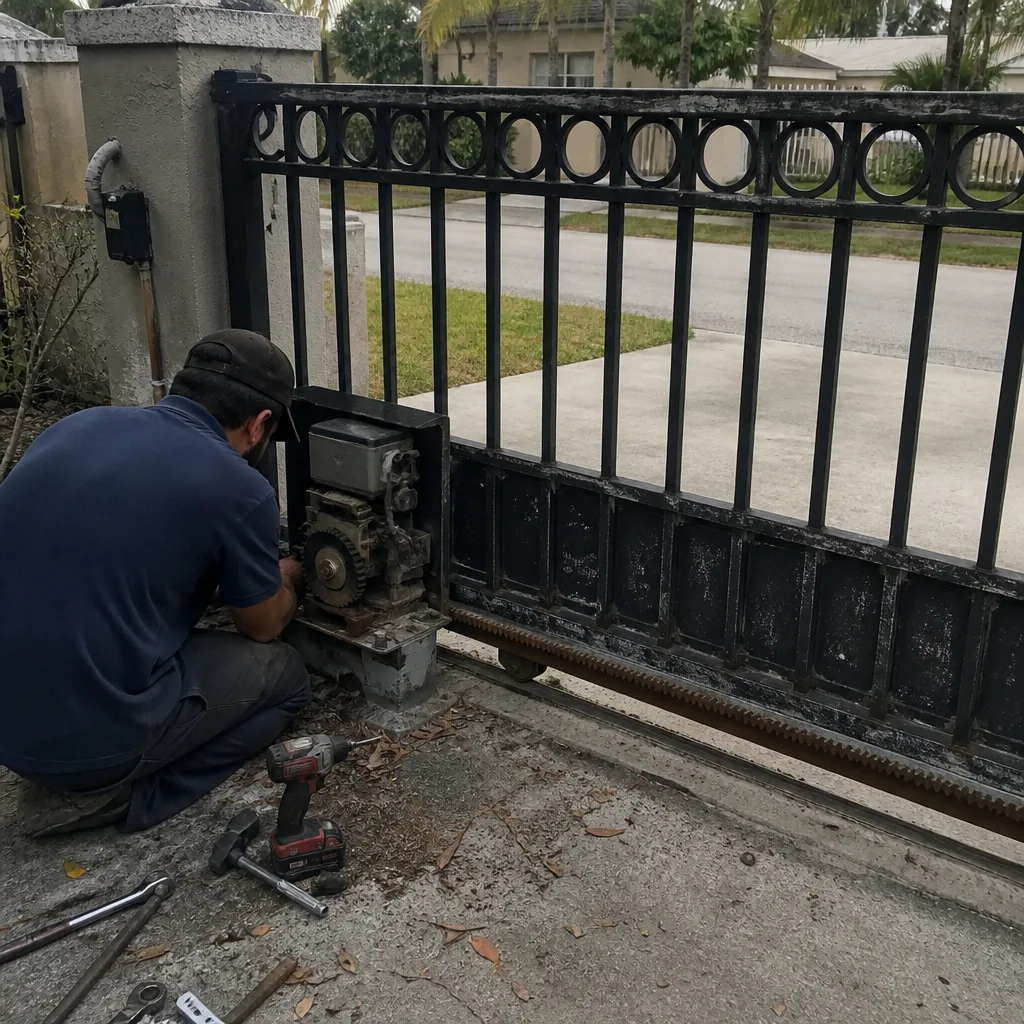 Before
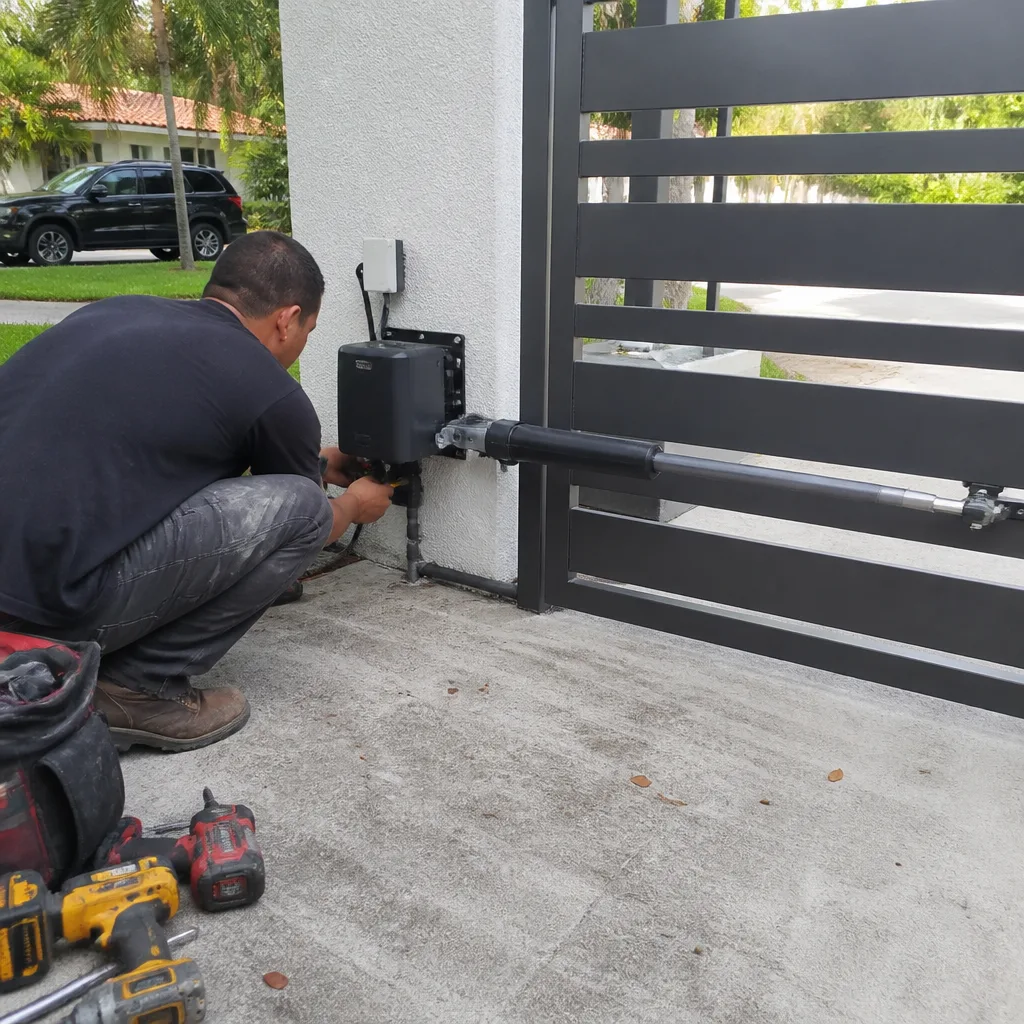 After
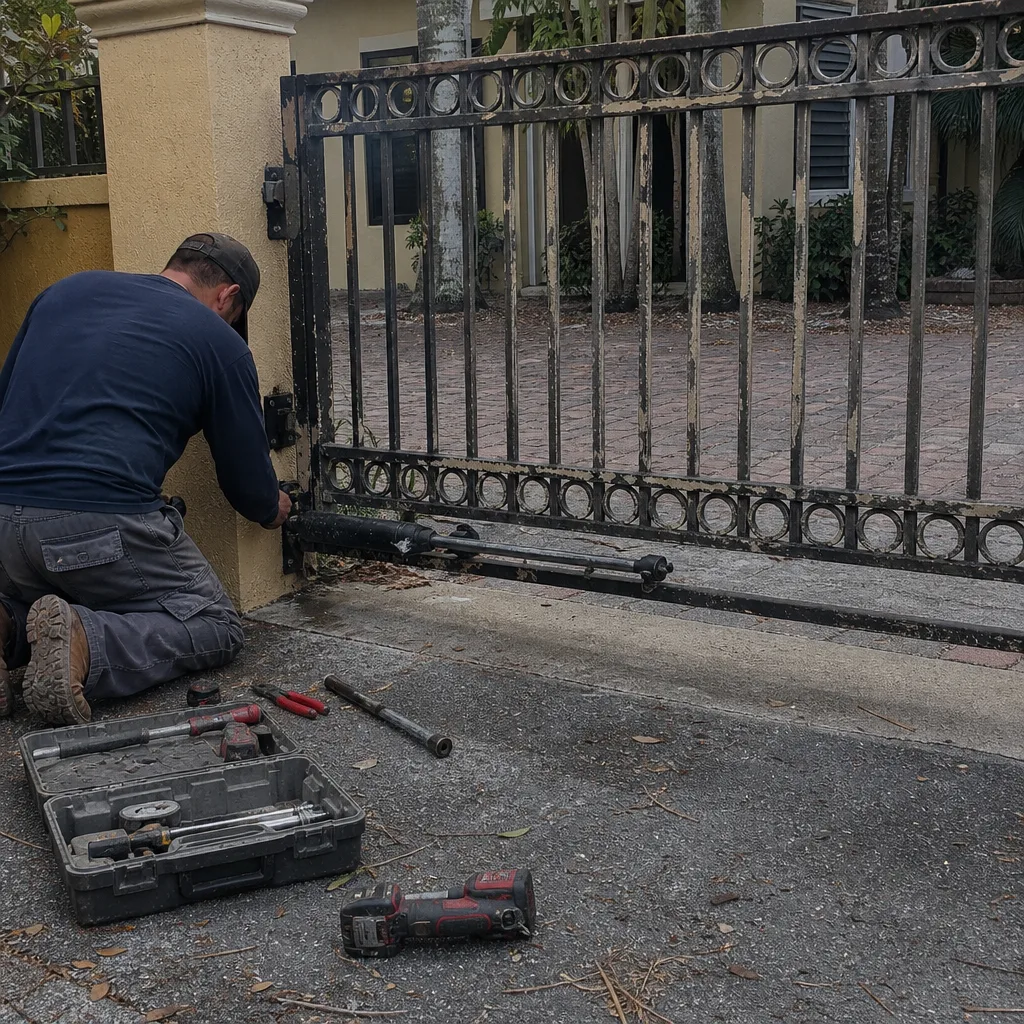 Before
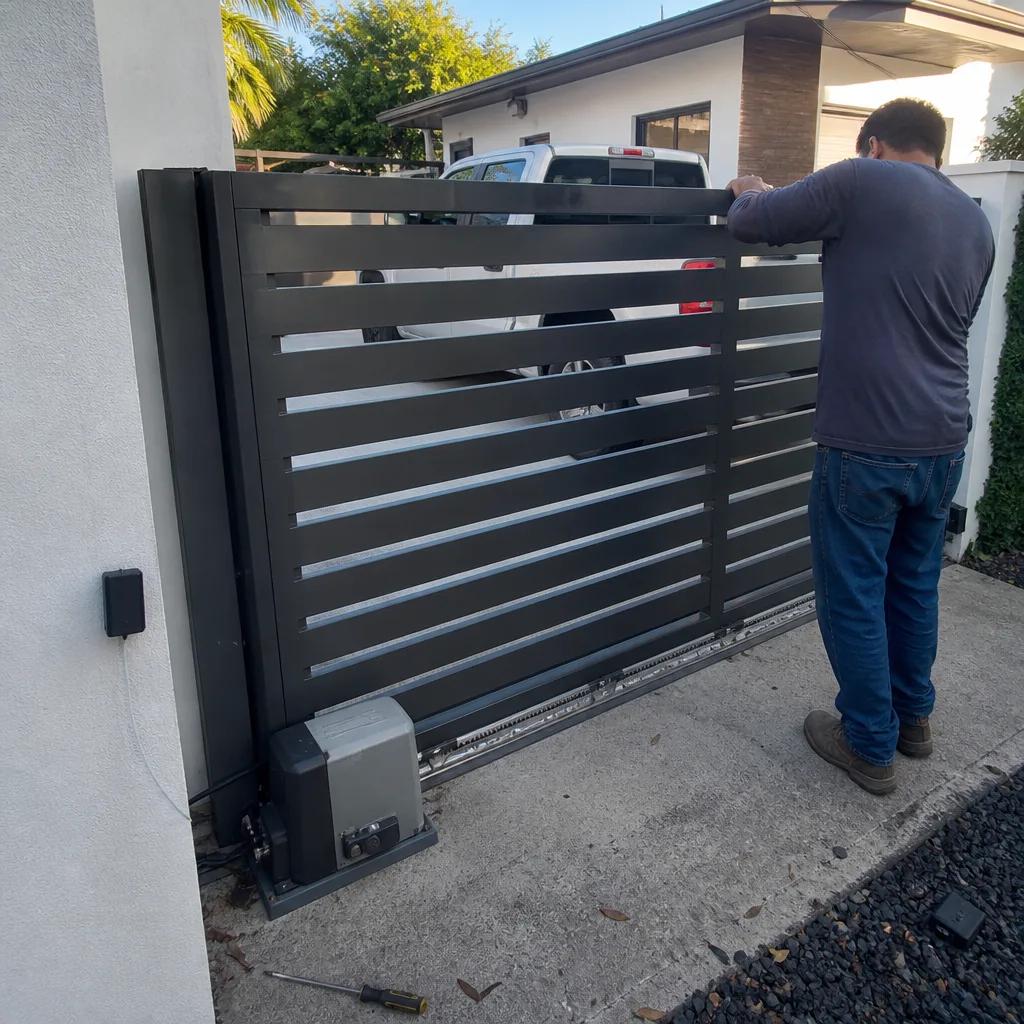 After
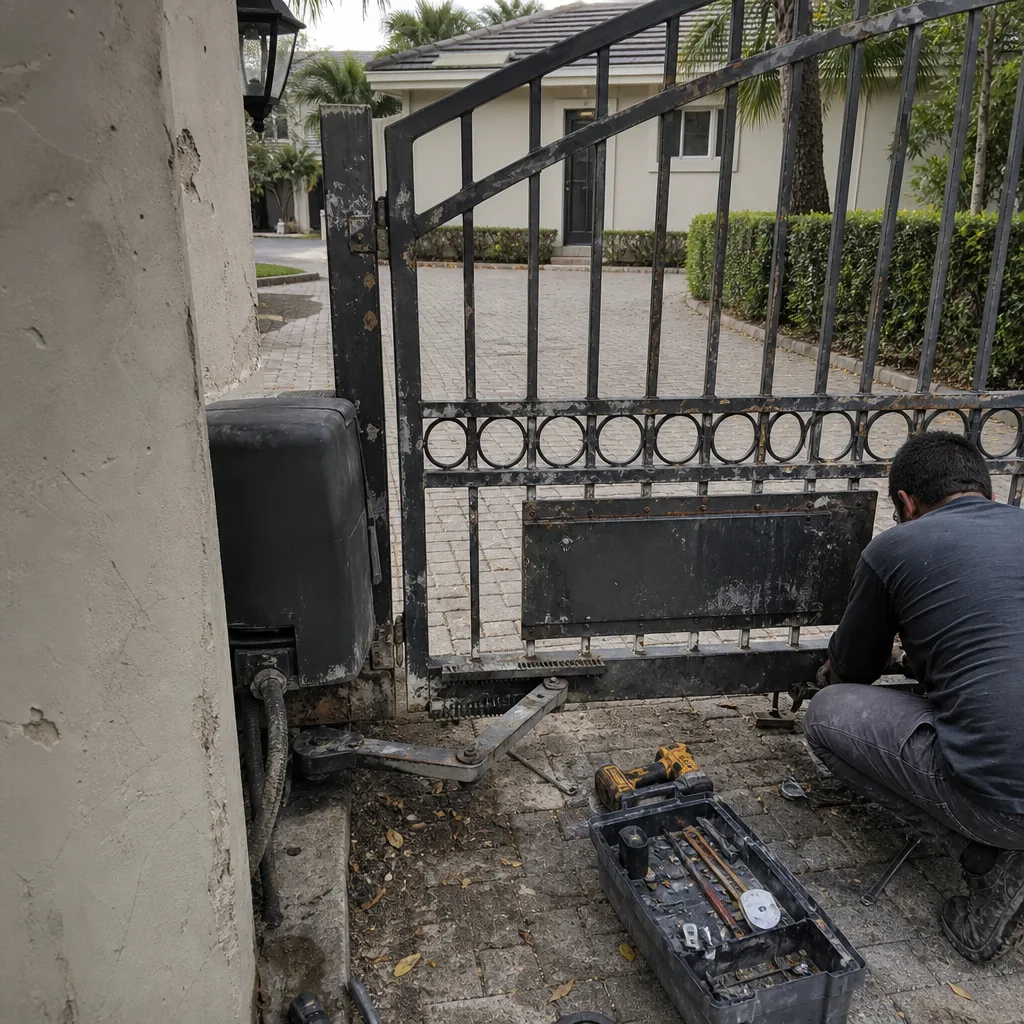 Before
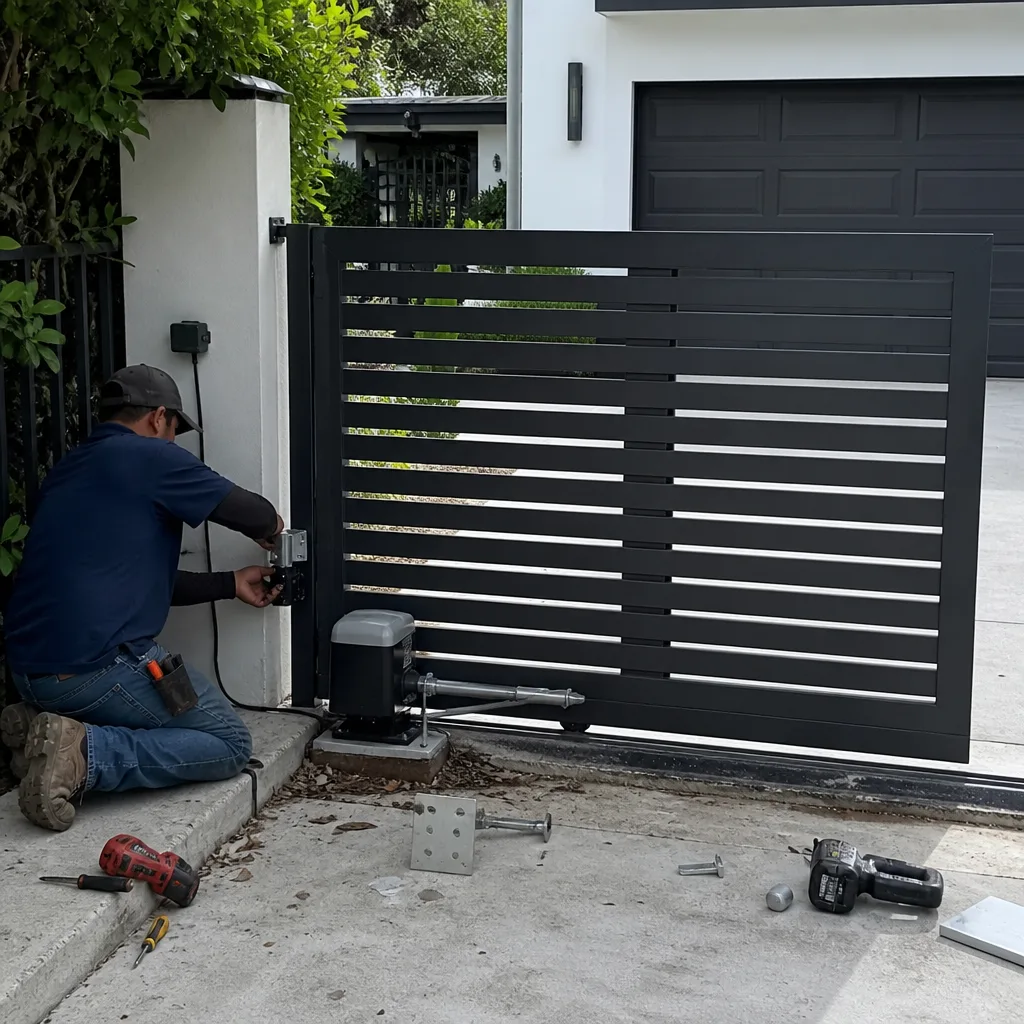 After