
Last updated October 31, 2026
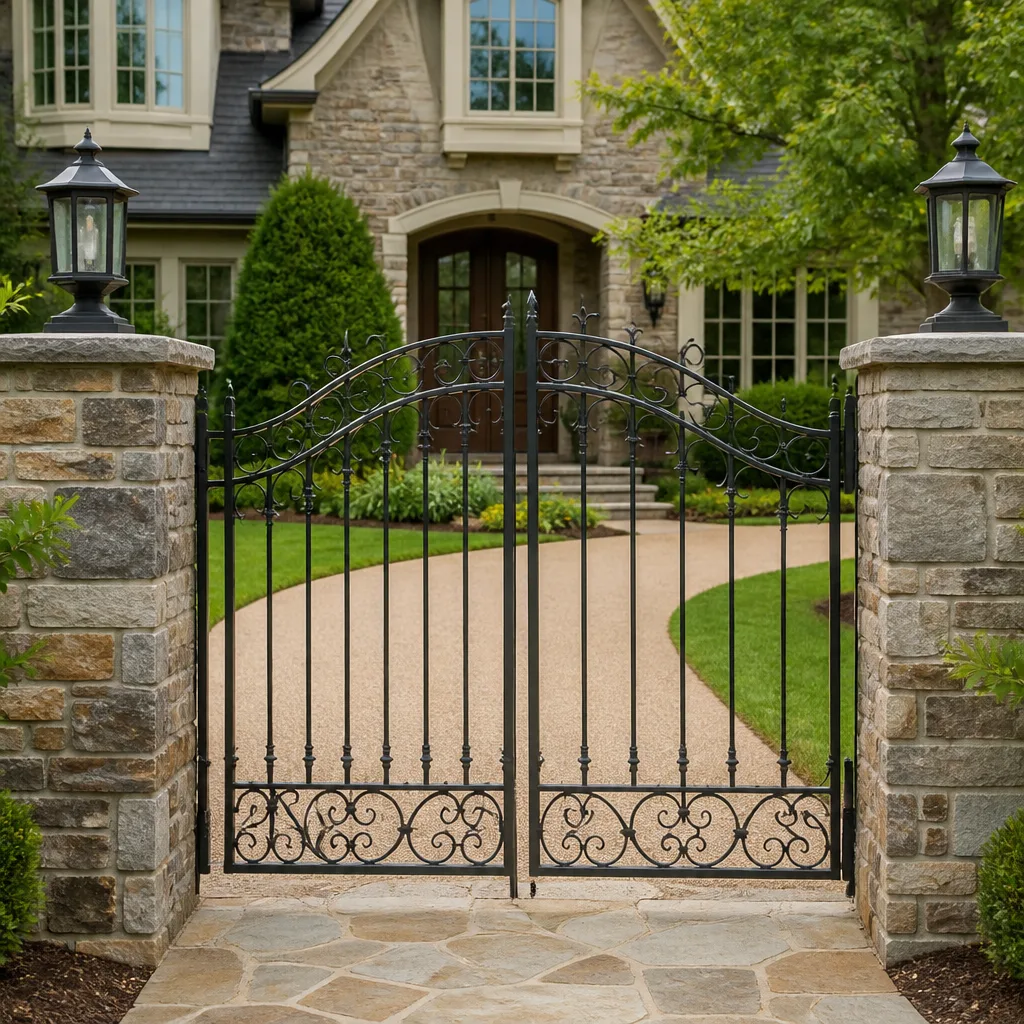 Wrought iron
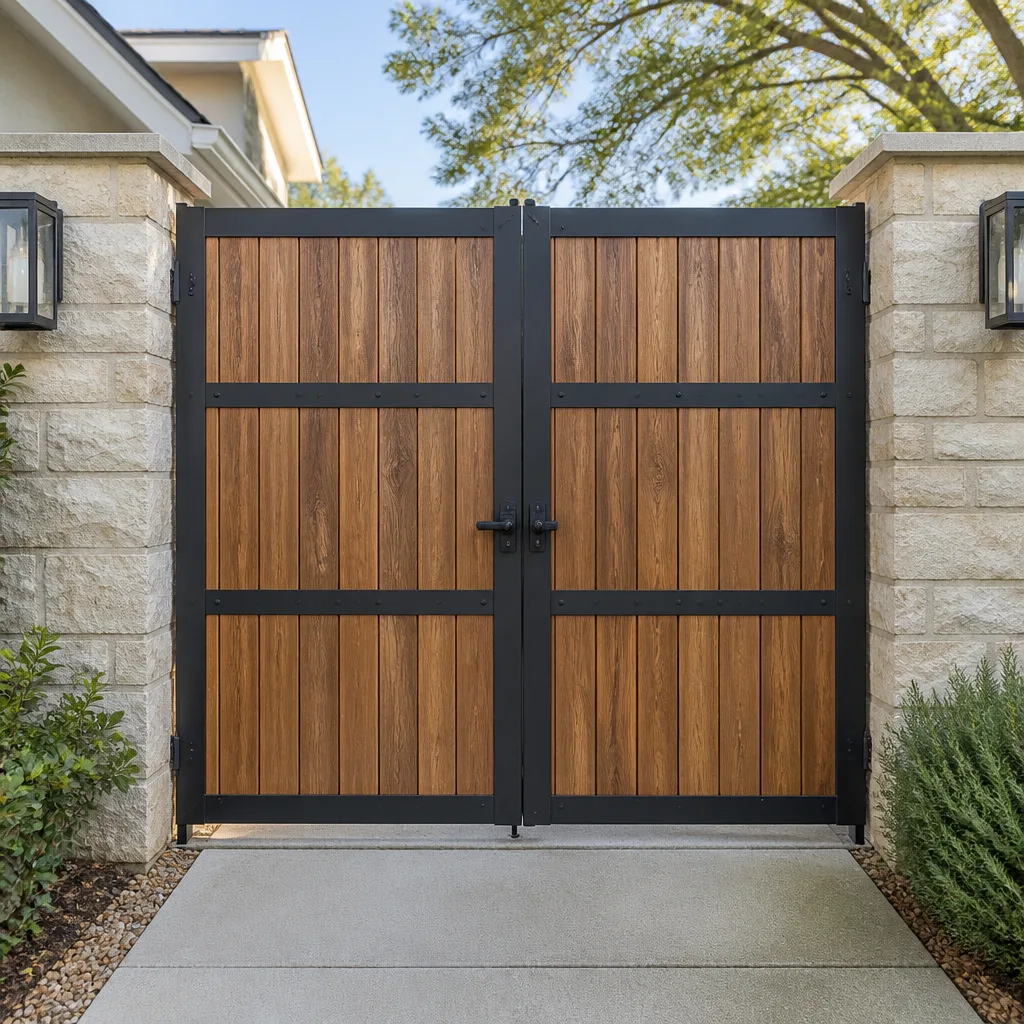 Wood & steel frame
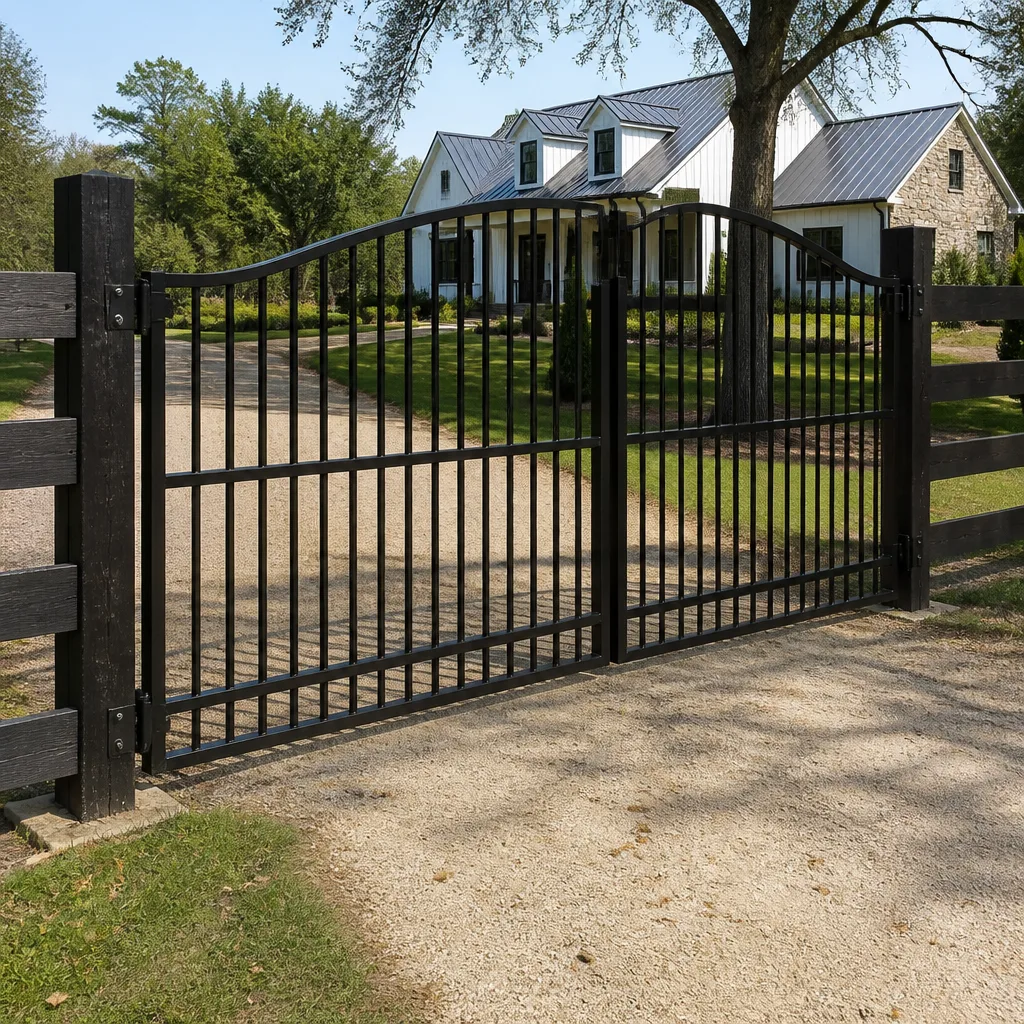 Farm & ranch
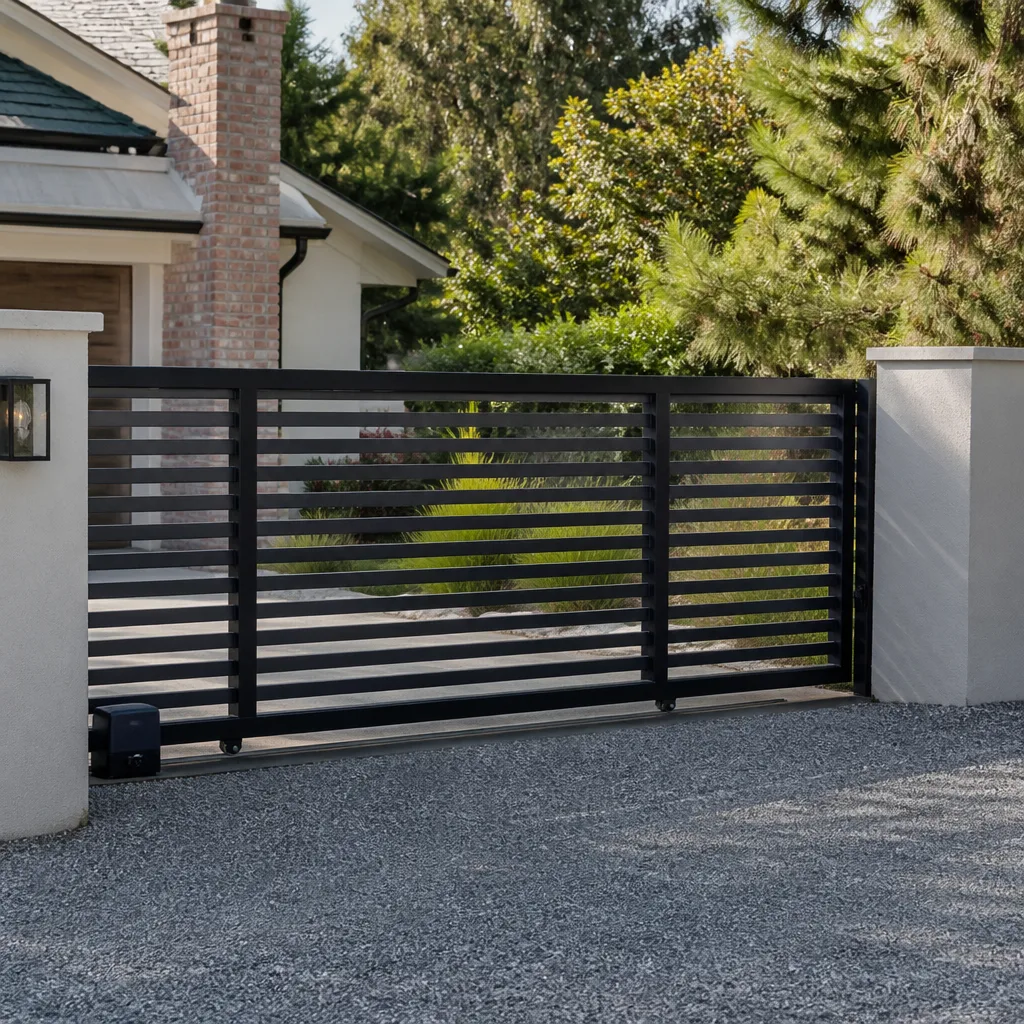 Sliding driveway gates
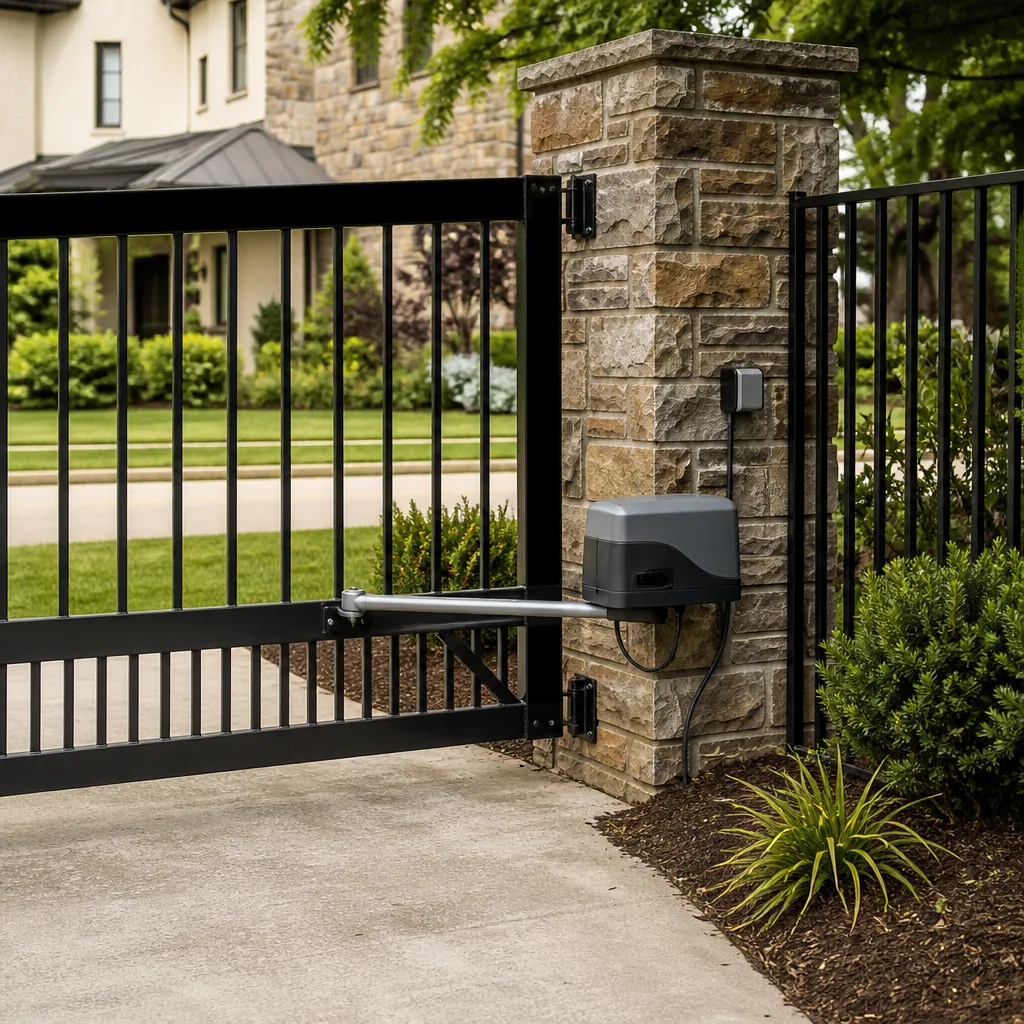 LiftMaster operators
Free on-site gate assessment - hinges, posts, and your LiftMaster or Nice gate operator checked before anything is quoted
The assessment is free and the quote is the invoice.
Get your free estimateThe Complete Guide to Gate Repair in Miami
A wrought iron gate in Phoenix can go five years with minimal maintenance. The same gate installed in Coconut Grove may show rust perforation in under 18 months. Not because the gate is cheap, but because the environment it sits in is one of the most corrosive in North America. This guide maps every major gate system, material, and failure mode through a Miami-specific lens. You’ll learn what actually fails, why it fails faster here than almost anywhere else in the country, and how to tell whether a repair will hold or whether the structure underneath has quietly reached the end of its service life.
Styles & brands we work with
Quick Answer
Gate repair in Miami means addressing failures caused by salt air, subtropical humidity, and hurricane-grade wind loads, not just mechanical wear. A repair that ignores the coastal corrosion profile of the specific address, the wind-load rating of the hardware, or the interaction between a manual gate frame and an electric operator will fail prematurely. For most Miami properties, the right fix starts with identifying the corrosion zone the property sits in and matching the repair materials and hardware grade to that zone. Daystar Gate Repair provides gate repair, electric gate repair, and gate installation across Miami, with technicians who work specific brands like FAAC, BFT, and Linear every week.
Table of Contents
- Why Miami Corrosion Zones Decide What a Repair Should Cost
- Manual Gate Repair vs. Electric Gate Repair: Miami Humidity Hits Each Differently
- How Miami-Dade High Velocity Hurricane Zone Requirements Shape Every Repair
- The Five Most Common Gate Failures in South Florida and Their Real Repair Timelines
- Repair or Replace? How to Tell If the Structure Is Compromised
- Brand-Specific Failure Patterns: Why Knowing the Operator Changes the Diagnosis
- A Miami Gate Maintenance Schedule That Actually Works
- Common Mistakes to Avoid
- When to Call a Professional
- Frequently Asked Questions
- The Bottom Line
Why Miami Corrosion Zones Decide What a Repair Should Cost
Miami is not one corrosion environment. It is at least two, and the difference between them determines whether a hinge replacement needs standard galvanized steel or a marine-grade stainless that costs three times as much. We see this every day at Daystar Gate Repair. A gate on an inland Kendall street ages more slowly than an identical gate on a waterfront lot in Coral Gables or Key Biscayne, even if the two gates came from the same manufacturer and were installed in the same year.
The practical breakdown looks like this:
- Zone 1 – Coastal exposure, within 1 mile of Biscayne Bay or the Atlantic. Salt aerosol loads are high year-round. Bare steel, standard zinc plating, and even powder coat that was not applied over a proper marine primer will fail fast. Hardware should be 316 stainless or better, and aluminum frames need a chromate conversion coating under the finish. Hinges, latch posts, and the bottom rail of the gate are the first points of failure.
- Zone 2 – Inland Miami, more than 1 mile from salt water. The main enemy shifts from chloride corrosion to humidity and condensation. Steel that is painted but not primed on the inside will rust from the inside out. Electro-galvanized hardware lasts longer here than in Zone 1, but still underperforms hot-dip galvanizing or stainless.
What this means for a repair estimate is straightforward. A hinge replacement on a Zone 1 property should not use the same hinge as a Zone 2 property. If a contractor quotes you a price without asking where in Miami the gate lives, and without specifying the hardware grade, that quote is not based on your gate. It is based on a template. Daystar Gate Repair prices repairs by corrosion zone and material grade, not by a flat rate that assumes every Miami gate is the same.
Manual Gate Repair vs. Electric Gate Repair: Miami Humidity Hits Each Differently
There are really two separate repair disciplines, and Miami weather attacks them in opposite ways. Manual gate repair covers hinges, latch posts, drop rods, frames, and the physical structure of the gate. Electric gate repair covers the operator, control board, loop detectors, safety edges, and remote access system. Homeowners often blur these together, but a technician has to think about them separately because the failure mechanisms are completely different.
Manual Gate Repairs in Miami
The mechanical side fails through corrosion, wind fatigue, and settlement. Humidity gets into hinge bearings. Salt air eats the zinc off hardware. Hurricane-force gusts twist the gate leaf until the top hinge stretches or the latch post leans. Over time, the gate sags, the latch no longer lines up, and the frame carries stress it was never designed for. Most manual gate repair in Miami is, at its core, a corrosion or alignment problem.
Electric Gate Repairs in Miami
The electric side fails through humidity, heat, and power surges. Control boards in South Florida see condensation inside the operator housing even when the housing is sealed. Capacitors dry out faster in sustained heat. Lightning strikes and grid instability during summer storms take out boards and transformers. A gate that opens manually but will not respond to a remote, keypad, or loop detector is almost always an electric problem, not a mechanical one. We call this the split diagnosis: if the gate moves freely by hand, the operator and its controls are the suspect. If the gate is stiff or binding when pushed by hand, the mechanical side is loading the operator and will eventually kill a new board too. That interaction is what makes electric gate repair in Miami a specialist trade. The mechanical and electrical sides have to be diagnosed together.
How Miami-Dade High Velocity Hurricane Zone Requirements Shape Every Repair
Miami-Dade County sits inside the High Velocity Hurricane Zone, which carries the strictest wind-load standards of any building code in the United States. That is not a bureaucratic detail. It changes what a gate must withstand, how it must be anchored, and what a code-compliant repair actually looks like.
For a gate repair, the relevant points are the post footings, the hinge hardware, and the latch or lock engagement. A repair that replaces a damaged hinge with a lighter-duty part is not just a poor repair. It may take a gate that was originally engineered to withstand 170 mph gusts and leave it with hardware rated for half that. The gate will open and close fine on a calm Tuesday. The problem appears during a hurricane, which is precisely when no one can get a technician out to fix it.
Two things matter in practice:
- The hardware grade has to match or exceed the original. If the original hinge was a heavy-wall bearing hinge, replacing it with a light residential hinge to save money creates a structural downgrade. A knowledgeable technician matches the repair part to the wind-load class of the original installation.
- The concrete anchor points matter more than the gate itself. We see gates where the steel leaf is still solid, but the hinge post is loose in its footing or the concrete around the anchor bolts is cracked. Under wind load, the post rotates and the gate shears off the operator arm. A repair that does not inspect the post footing is not a real repair in Miami-Dade County.
Any repair on a gate that is part of a property’s wind mitigation system, especially on a barrier island or a street that fronts open water, should be treated as a structural job, not a cosmetic one.
The Five Most Common Gate Failures in South Florida and Their Real Repair Timelines
After working on gates across Miami, we can list the failures we see most often, in rough order of frequency. These are not hypotheticals. These are the calls we take every month from places like Aventura, Pinecrest, Coral Gables, and Doral.
1. Control Board Failure on Electric Operators
The most common electric gate failure in Miami is a dead or erratic control board. Symptoms include the gate working from one remote but not another, the gate reversing for no reason, or the operator humming but not moving the gate. On brands like Linear and Viking, we often find the board has taken a surge or has corrosion in the terminal strip from trapped humidity. Repair timeline: typically same-day diagnosis, with board replacement often completed in one visit for common brands. Repair usually beats replacement here. The board is a component, not the whole operator.
2. Hinge and Bearing Corrosion
On manual and electric gates alike, the hinges are where Miami salt air does its worst work. A gate that creaks, drops when released, or rubs against the latch post usually has a worn or seized hinge bearing. On Zone 1 properties, we regularly see hinge pins rusted solid inside eighteen months of installation when the original hardware was not marine-grade. Repair timeline: hinge replacement on a standard residential gate is usually a few hours. The key is specifying 316 stainless or sealed-bearing hardware on coastal lots, or the repair will not survive the next wet season.
3. Loop Detector Failure
Commercial and multi-family properties in Miami rely on in-ground loop detectors to open gates automatically when a vehicle approaches. The loop itself is a buried wire coil, and in South Florida the failure is usually in the wire splice, the sealant, or the detector module in the operator cabinet. Symptoms: the gate opens fine from a clicker but not when a car pulls up, or the gate closes on a vehicle because the loop has stopped sensing. Repair timeline: loop detector replacement is usually same-day. Depending on the setup, replacing the saw-cut loop wire itself can take one to two days including concrete repair.
4. Gate Leaf Misalignment from Wind and Settlement
Miami’s summer storms and shifting ground gradually push a gate out of alignment. The latch no longer lines up, the gate scrapes the driveway, or one leaf sits lower than the other. On sliding gates, the rollers chew through the track. On swing gates, the top hinge stretches and the gate cants. Repair timeline: alignment work often takes a few hours, but if the post has moved, the footing may need concrete work that adds a day or more. This is also the failure that most often tips a repair into a replacement question.
5. Motor and Capacitor Failure from Heat and Friction
Miami’s heat and humidity age operator motors faster than they age in drier climates. A motor that runs but cannot move the gate, or a gate that opens halfway and stops, often points to a failing capacitor or a motor that has been dragging against a misaligned frame for too long. On FAAC and BFT swing operators, we frequently find that a gate that was never aligned after a storm has slowly overloaded the motor. Repair timeline: capacitor replacement is quick. A full motor swap may take a day, depending on the brand and model. The right fix includes correcting the underlying load problem, or the new motor will burn out the same way.
Repair or Replace? How to Tell If the Structure Is Compromised
This is the question every Miami homeowner eventually faces. The honest answer is that some repairs hold for years, and some are money set on fire. The difference is whether the underlying structure is sound.
Ask these questions before approving any repair:
- Can the gate be realigned without a torch or a structural patch? If the technician can bring the gate back to level by adjusting hinges, replacing a worn bearing, or shimming a latch, the gate is structurally fine. If the frame tubes are buckled, the hinge welds are cracked, or the bottom rail is rusted through, the gate is moving beyond repair territory.
- Does the damaged area show active structural rust, not surface rust? Surface rust cleans up and gets treated. Rust that has perforated the steel, especially on the bottom rail or at the hinge mounts, means the gate is losing its load path. Patches may hold a year. On a Zone 1 waterfront lot, possibly less.
- What did the original gate cost, relative to the repair quote? As a rough rule, if a repair estimate on a residential gate exceeds 60% of the cost of a properly specified new gate, the new gate is usually the better decision. We use this threshold in Miami because a new gate can be ordered with marine-grade hardware and a Miami-Dade wind-load rating from the start. That is harder to achieve retroactively.
The goal is not to sell a new gate every time. The goal is to avoid repairing a frame that will fail again in eighteen months while the customer keeps spending. Daystar Gate Repair gives a written recommendation either way and explains the material logic behind it, so the customer can see the reasoning instead of just hearing a number.
Brand-Specific Failure Patterns: Why Knowing the Operator Changes the Diagnosis
The operator brand is not a detail. It is the first clue in a diagnosis. A technician who treats every electric gate as generic will misdiagnose a surprising number of them, because each manufacturer designs its limits, safety logic, and failure behavior differently.
We service FAAC, BFT, Linear, and Viking among others, and we approach each one with its known failure profile in mind:
- FAAC swing operators are hydraulic and heavy-duty, common on estate gates in Coral Gables and Pinecrest. The most frequent issues we find are low hydraulic oil, failing limit switches, and board failures after storms. When a FAAC gate moves slowly or stops mid-cycle, it is often not the motor, it is the thermal relief in the hydraulic circuit responding to a gate that is binding.
- BFT operators appear on both residential and commercial properties across Miami. Their boards are sensitive to moisture, so unsealed conduit or a housing gasket that has degraded in the humidity is a common root cause. A BFT that keeps blowing fuses often has water migration into the control housing, not a shorted motor.
- Linear operators are widely used on commercial parking gates and multi-family properties from Doral to Kendall. The usual culprits are capacitor failure in the motor and loop detector issues that cause the gate to behave erratically. Linear boards are generally straightforward to diagnose once you know the error code sequence.
- Viking operators are strong but less common in Miami residential settings. When a Viking gate fails to respond, the first thing we check is the board’s input wiring, because Viking systems are often installed with external accessories like keypads and card readers that can short or feed stray voltage back into the control board.
This is the difference between a gate specialist and a general contractor with a multi-bit screwdriver. The specialist knows that a FAAC slow cycle and a BFT blown fuse are completely different animals, even though both present as “the gate won’t move.” Electric gate repair is diagnosis first, parts second. The diagnosis is faster when you know the brand.
A Miami Gate Maintenance Schedule That Actually Works
The cheapest gate repair in Miami is the one you prevent. A simple maintenance rhythm, matched to the local climate, extends the life of both manual and electric gates by years. Here is the schedule we recommend to our customers:
Every 3 months
- Wash the gate with fresh water, especially within a mile of the bay. Salt sits on the surface and starts working as soon as it gets wet again.
- Check the gate’s travel path. Leaves, sand, and small debris under a sliding gate track will cause the operator to draw more current and trip its thermal protection.
- Run the gate and listen. A new creak, a grinding sound at the end of travel, or a motor that labors where it used to coast is an early warning.
Every 6 months
- Inspect all hinges, latch posts, and bolt heads for rust or flaking finish. Treat small spots before they become perforation.
- Test the safety edges and photo eyes on electric gates. Walk through the gate path and interrupt the beam. The gate should stop and reverse.
- Inspect the operator housing for moisture, condensation, or a degraded gasket. This is a big one in Miami humidity.
Every 12 months
- Check the gate for sag, latch alignment, and squareness. Small adjustments now are cheap. A dropped gate in year three is expensive.
- Test the battery backup if the gate has one. Storm season is the wrong time to find out a backup battery died quietly six months ago.
- Have a gate technician inspect the full system. We do annual inspections for many Miami properties and commercial accounts, and we catch a lot of problems months before the owner would have noticed a symptom.
Properties along the coast, especially on Key Biscayne, Miami Beach, and Coral Gables waterfront lots, should bias every interval slightly shorter. The salt exposure justifies it.
Common Mistakes to Avoid
- Using non-marine hardware on a coastal gate. Saving $40 on a standard zinc-plated hinge on a Zone 1 property guarantees a repeat repair. Salt air does not negotiate. Specify 316 stainless on waterfront lots, no exceptions.
- Ignoring a misaligned gate until the operator burns out. A gate that scrapes or binds is slowly destroying the motor on every cycle. The alignment fix is a few hundred dollars. The motor and board replacement is over a thousand. Do the alignment first.
- Replacing the board without finding the moisture leak. In Miami heat and humidity, a new control board installed into a housing that still leaks will fail again within months. The gasket or conduit entry is part of the repair.
- Letting a handyman repair a wind-load-rated gate with whatever hinge fits. HVHZ hardware requirements are not optional. A downgraded hinge may pass a visual check and fail catastrophically during the first named storm.
- Trying to DIY a high-tension swing gate spring or an operator arm under load. The stored energy in a wound spring or a loaded operator arm can cause serious injury. Some jobs are hardware-store jobs. This is not one of them.
- Waiting until hurricane season to address a gate that is already struggling. Every Miami gate repair spike happens in August and September, right when capacity is tightest. If the gate is showing symptoms in spring, fix it in spring.
When to Call a Professional
You should call a gate technician when the gate is binding, sagging, or refusing to open reliably. You should call immediately if the gate reverses into a vehicle, will not hold position on a slope, or has a safety sensor that is not stopping the gate. These are not cosmetic issues. On a Miami property, a gate that fails to close is also a security gap, and a gate that closes on a car is a liability. Daystar Gate Repair offers free estimates in Miami. Call (855) 752-6802 and we will send a technician who works on your specific gate brand, not someone who has to look up the model number on the way over.
Frequently Asked Questions
A minor repair like a hinge replacement or a photo eye adjustment often falls in the $150 to $400 range. A board replacement on a residential electric gate typically runs $400 to $900 depending on the brand. Motor replacement or major alignment work on a commercial system can run higher. The exact price depends on the brand, the corrosion zone, and whether the repair exposes a second problem behind the first. Call (855) 752-6802 for an exact quote, estimates are free, and the price is always quoted and agreed before any work starts.
Both. Daystar Gate Repair handles manual gate repair and full electric gate repair, including control boards, motors, loop detectors, safety sensors, and remote access systems across electric gate repair in Miami. We service FAAC, BFT, Linear, Viking, and other major brands.
In most cases, yes. We run repair calls across Miami daily, from Doral to Aventura and down to Pinecrest and Kendall. Call (855) 752-6802 with your address and a description of what the gate is doing. We will tell you the earliest available slot for your area.
It can. A full gate installation in Miami includes the gate structure, hinges, posts, and hardware, and we can also supply and install the operator, control board, photo eyes, and safety edges so the whole system works as one integrated unit. We prefer to spec the automation with the gate, because matching the operator to the gate’s size and wind-load class is easier at the design stage than after the rest is built.
Most residential repairs, including hinge replacements, sensor fixes, and board swaps, are completed in a single visit. More involved work, like replacing a concrete post footing or rebuilding a gate leaf that needs fabrication, can take two to five days. We give a written time estimate before the work starts.
Yes. Hurricane season is when Miami gates take the most damage, and we prioritize calls where the gate is stuck open, stuck closed, or blocking vehicle access. Call (855) 752-6802 and describe the situation. We will let you know the fastest realistic arrival for your area.
The Bottom Line
Gate repair in Miami is a discipline defined by the environment the gate lives in. Salt air selects for marine-grade hardware on the coast. Humidity attacks control boards and hinges inland. Hurricane wind-load standards demand that repairs match the original engineering rather than downgrade it. The gate brand matters, because a FAAC failure and a BFT failure are not the same problem. And the decision between repair and replacement should be driven by material inspection, not by a sales script. A gate specialist who knows the Miami failure map, the brand lineup, and the code requirements will save you money and downtime compared to a generalist working from a template. That is the whole thesis of this guide, and it is how we run Daystar Gate Repair every day.
Written by the team at Daystar Gate Repair, serving Miami since 2018.
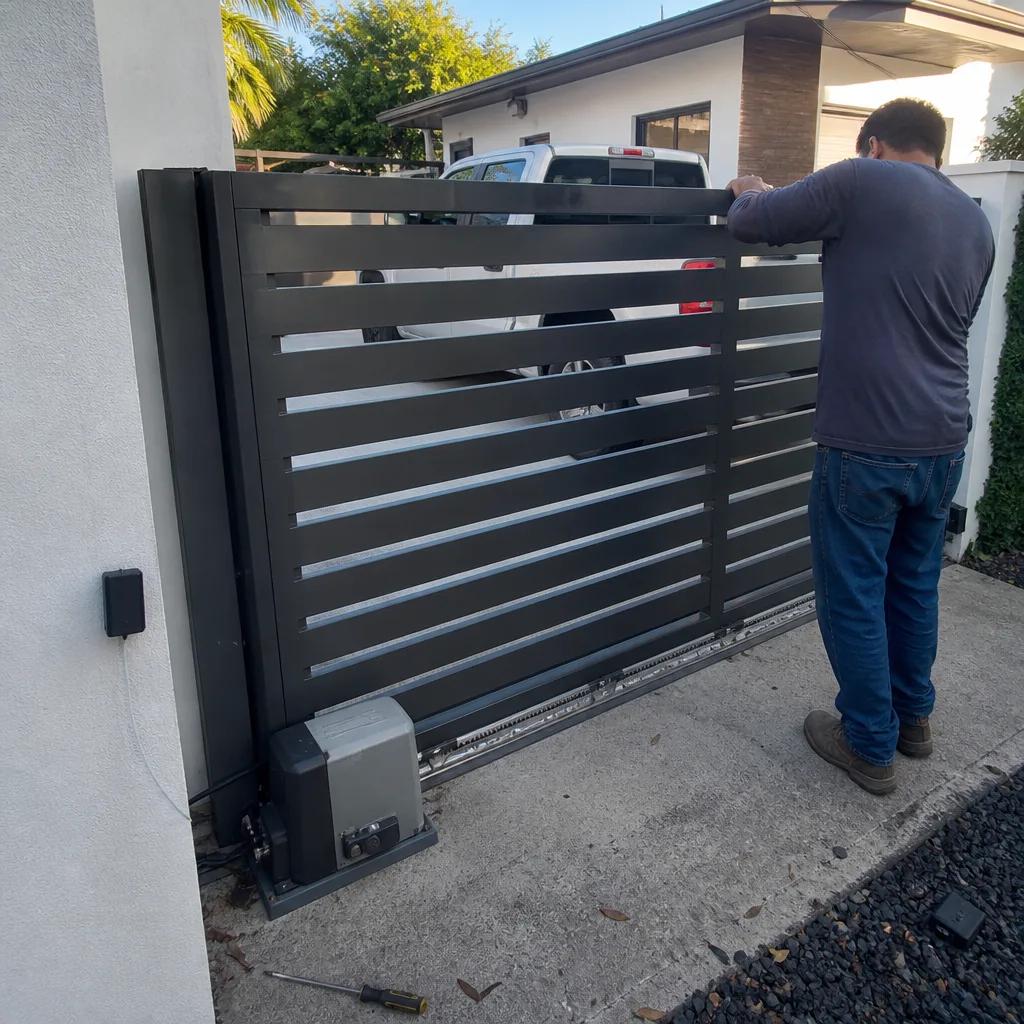
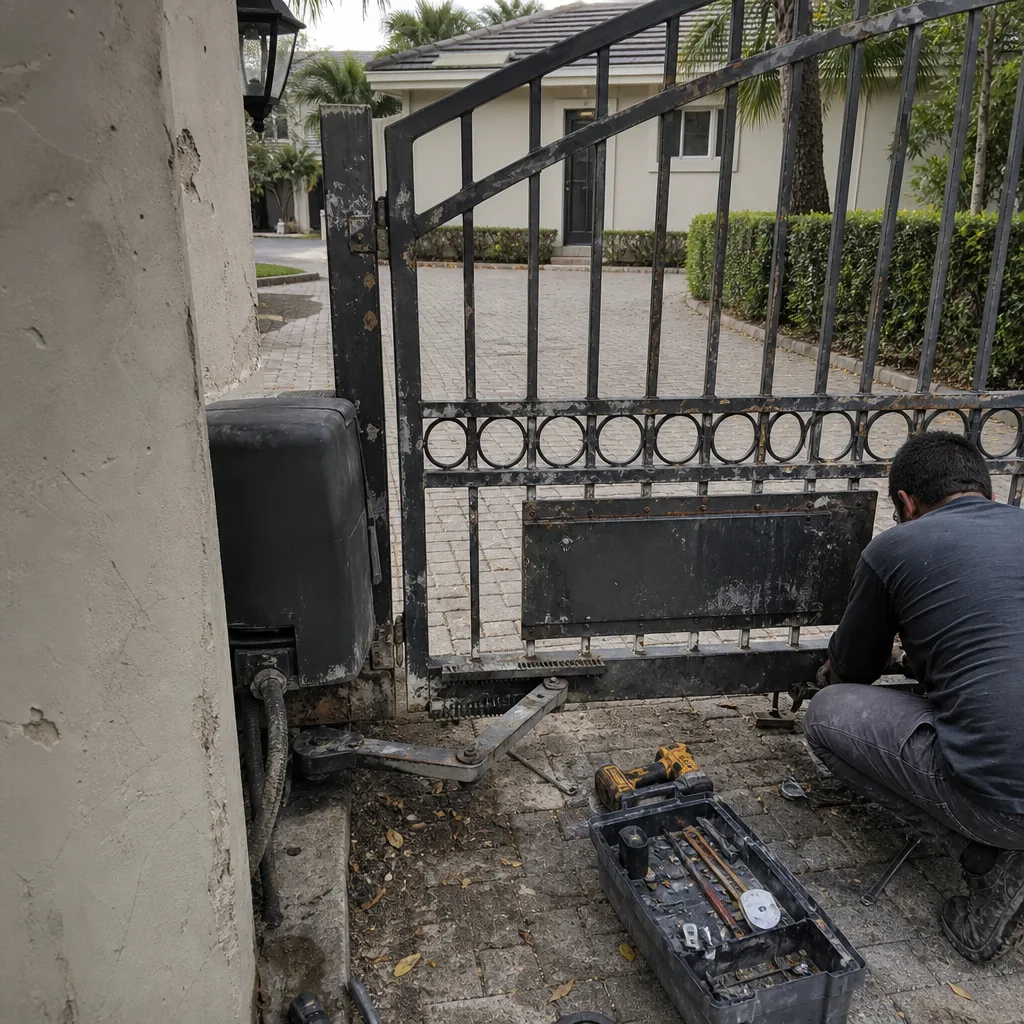
See the difference
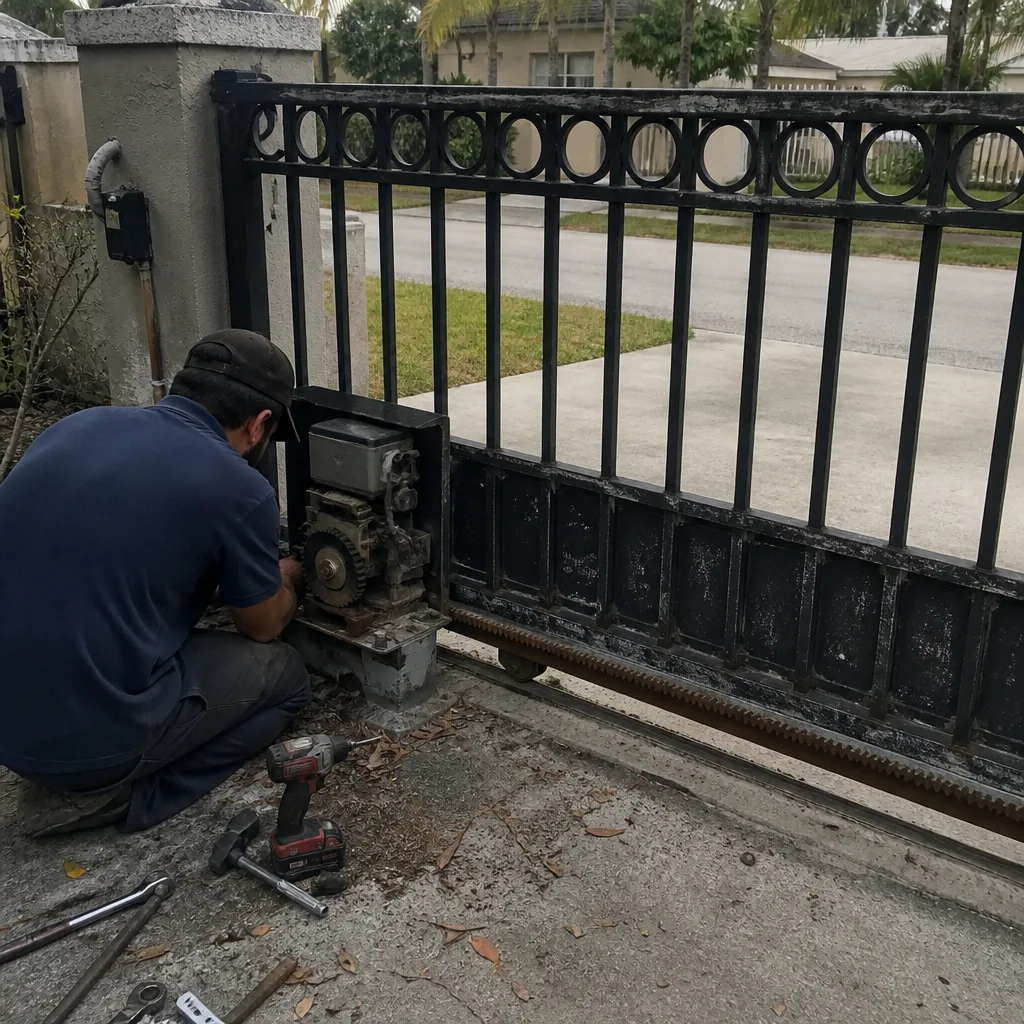 Before
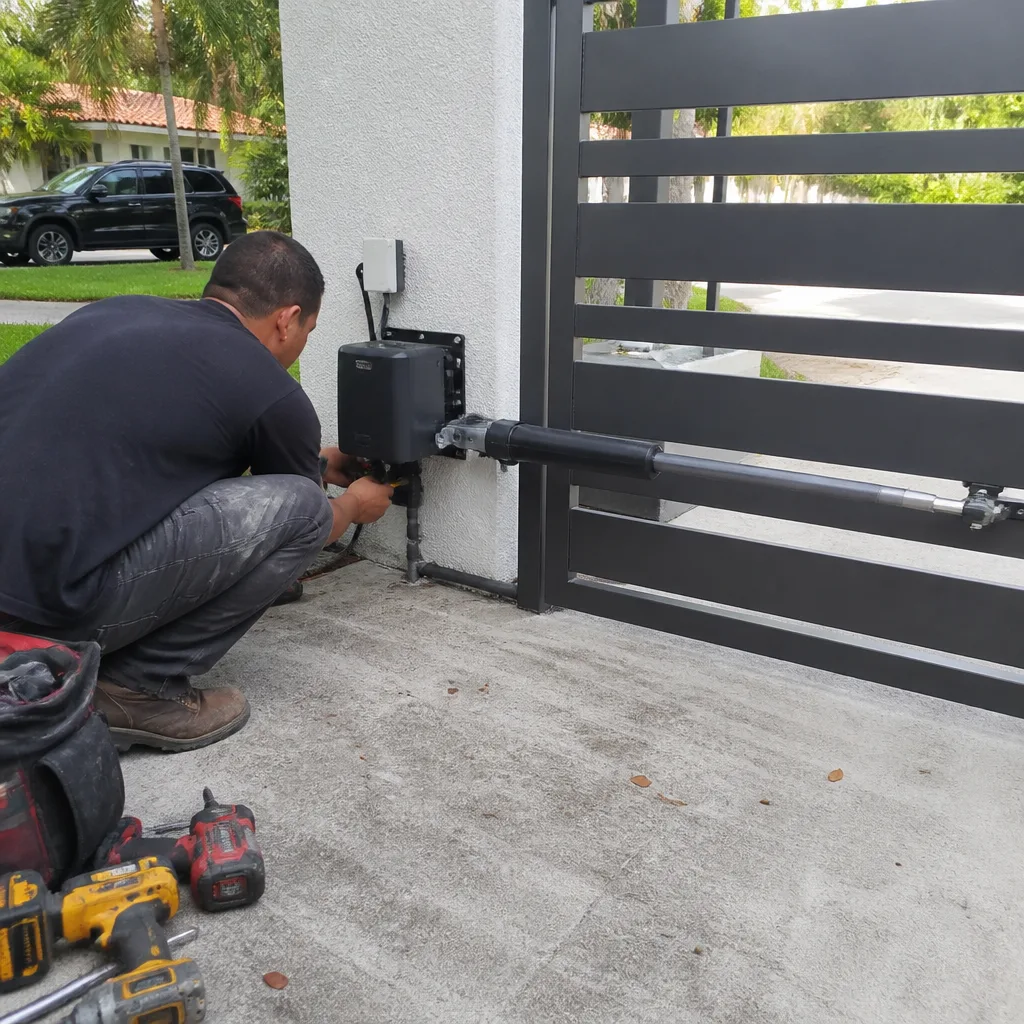 After
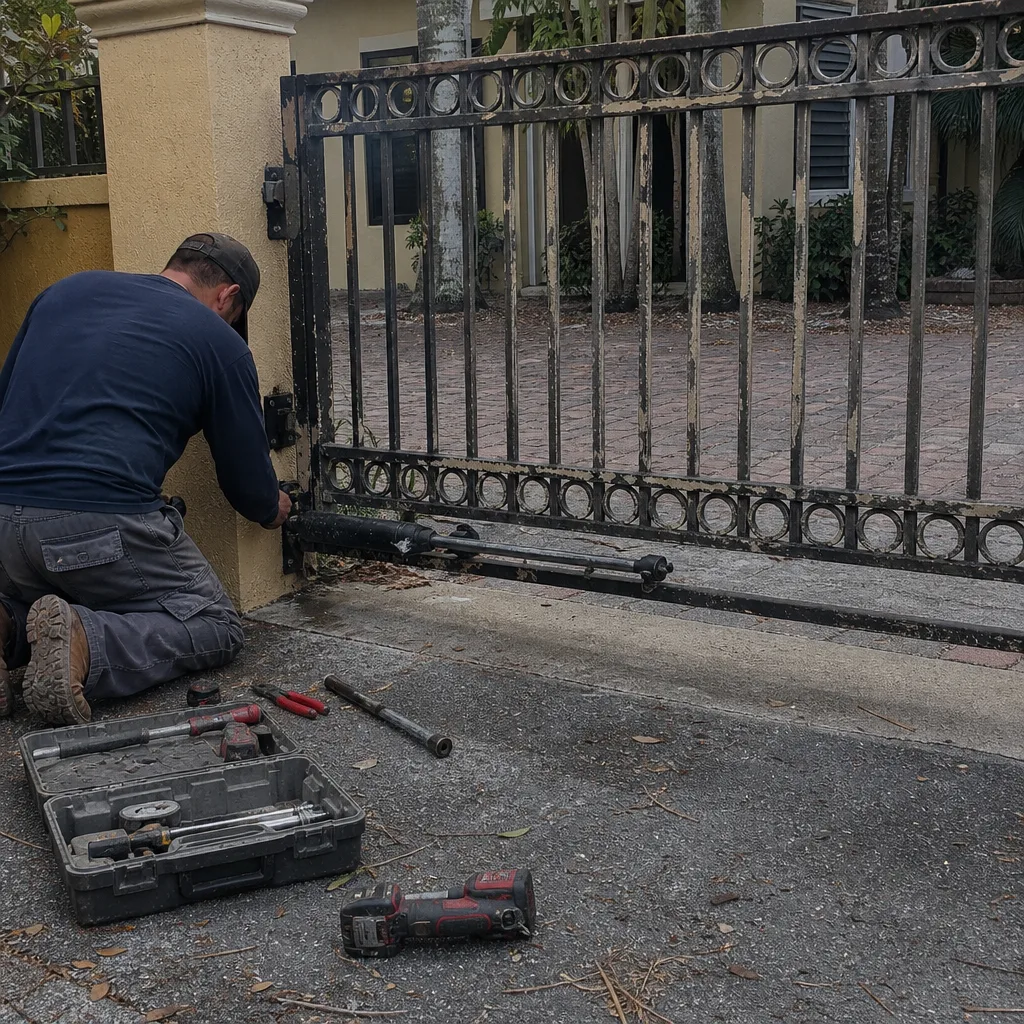 Before
 After
 Before
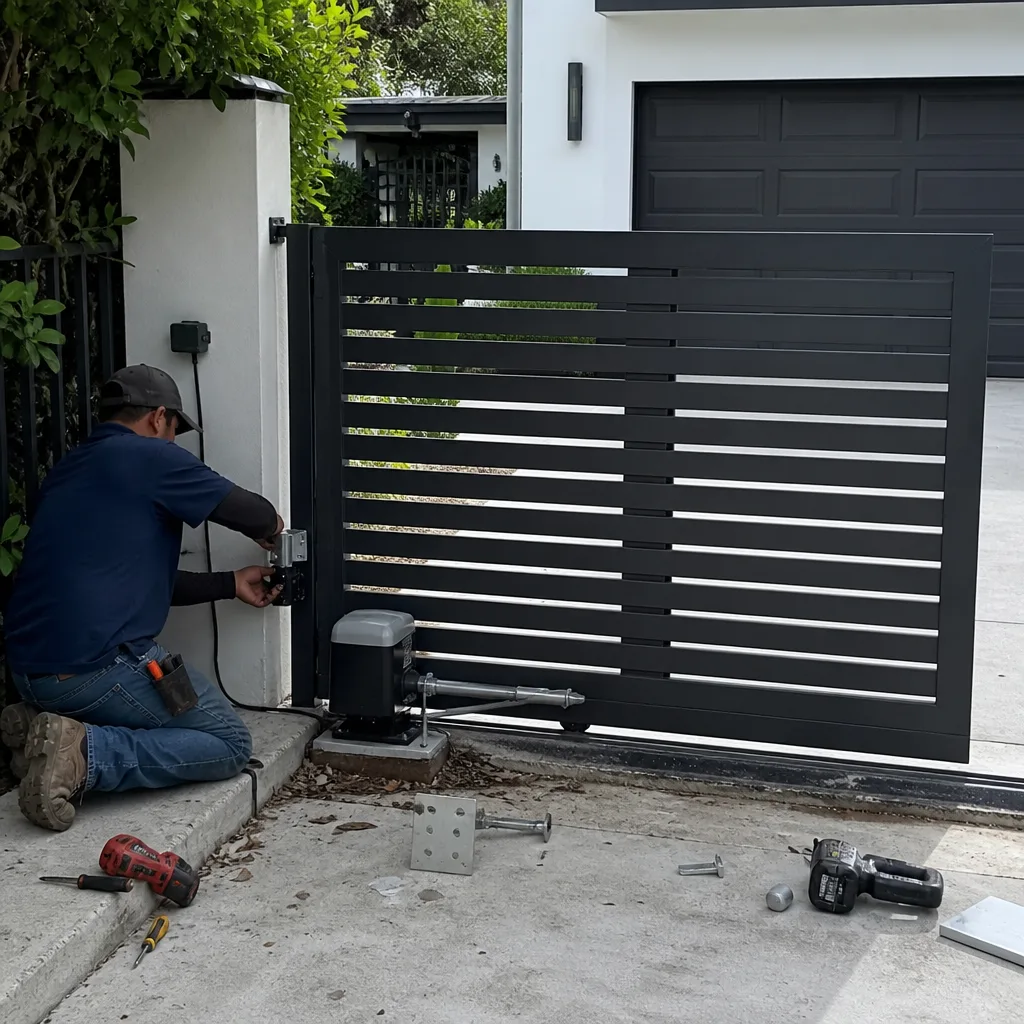 After