
Last updated October 31, 2026
 Wrought iron
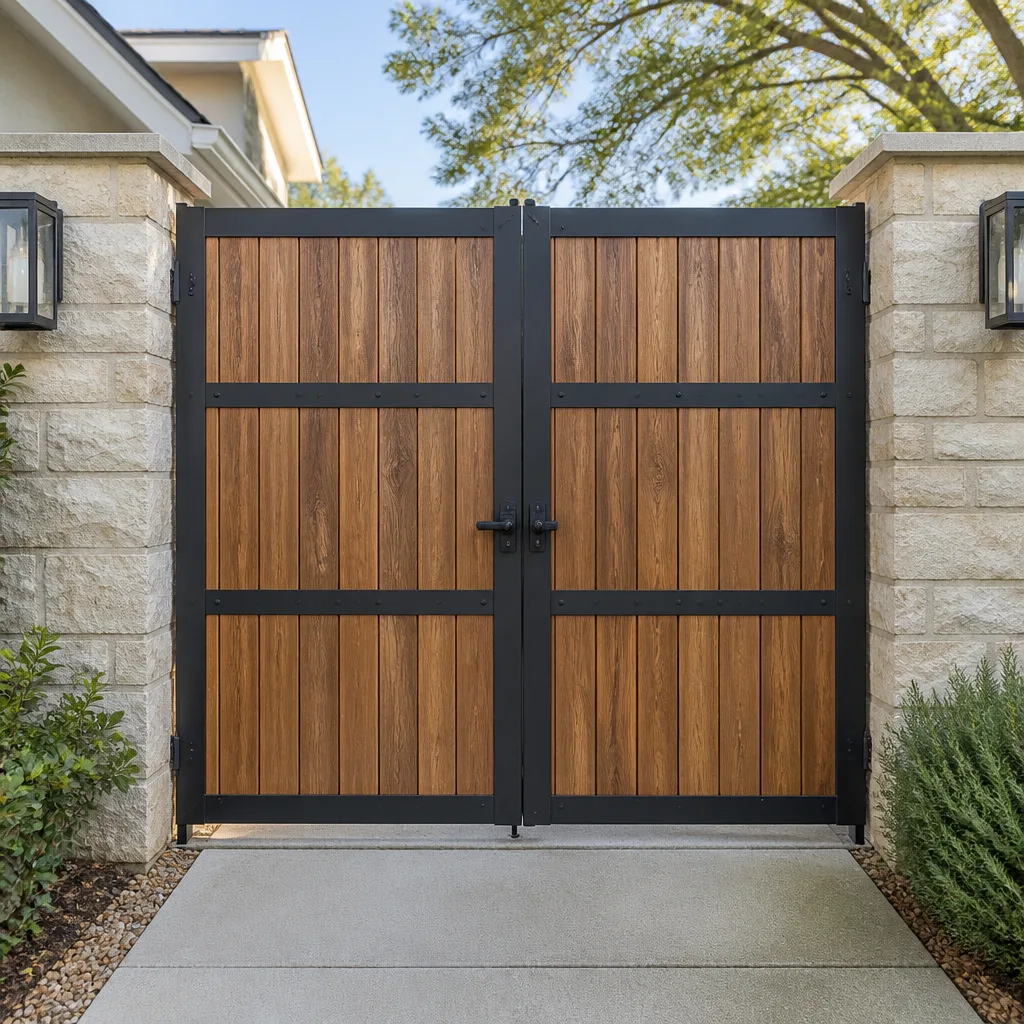 Wood & steel frame
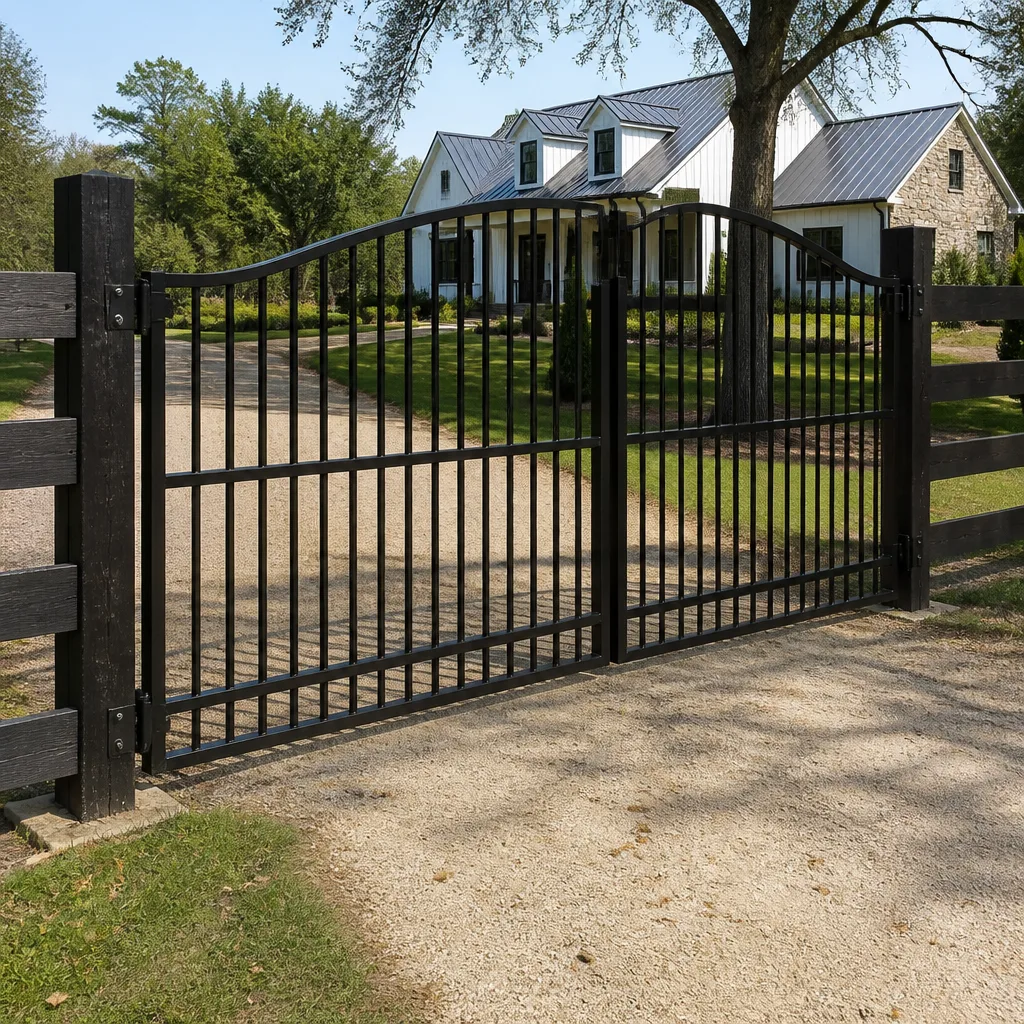 Farm & ranch
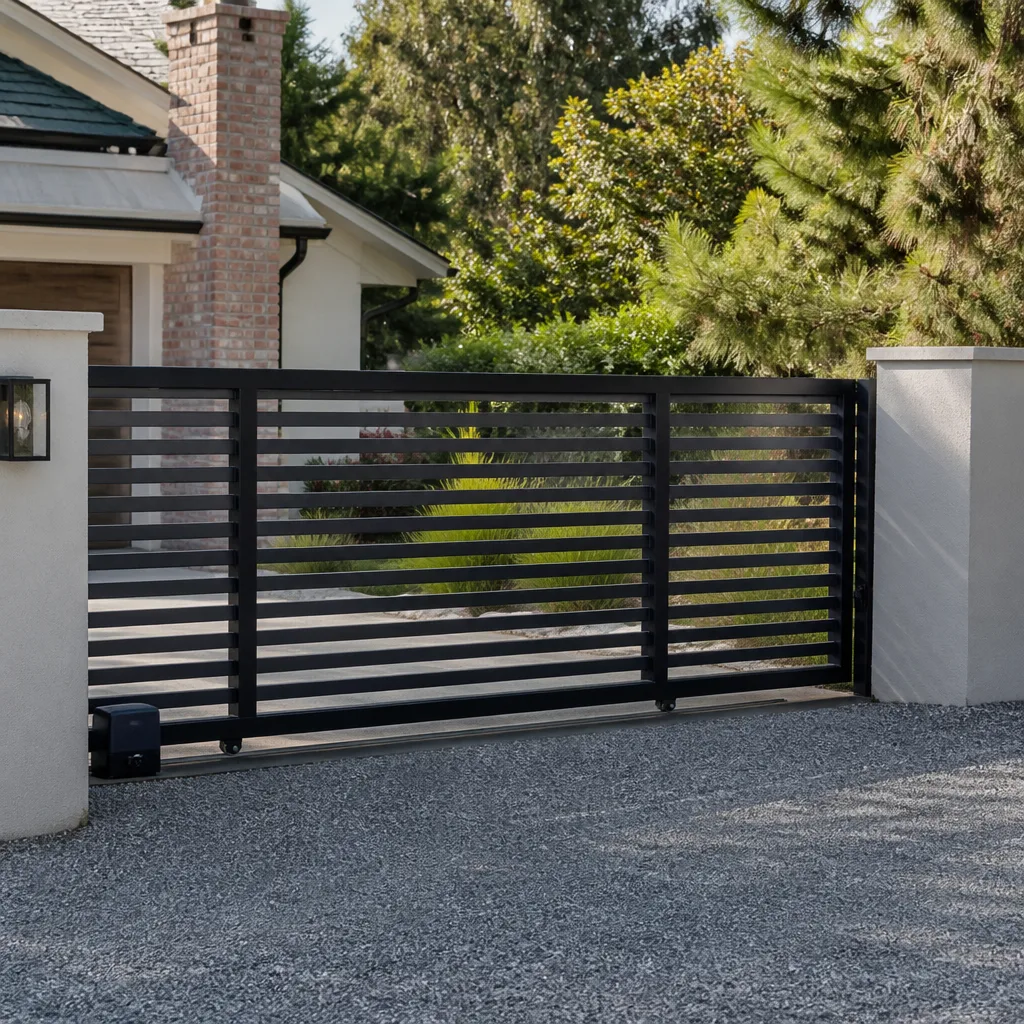 Sliding driveway gates
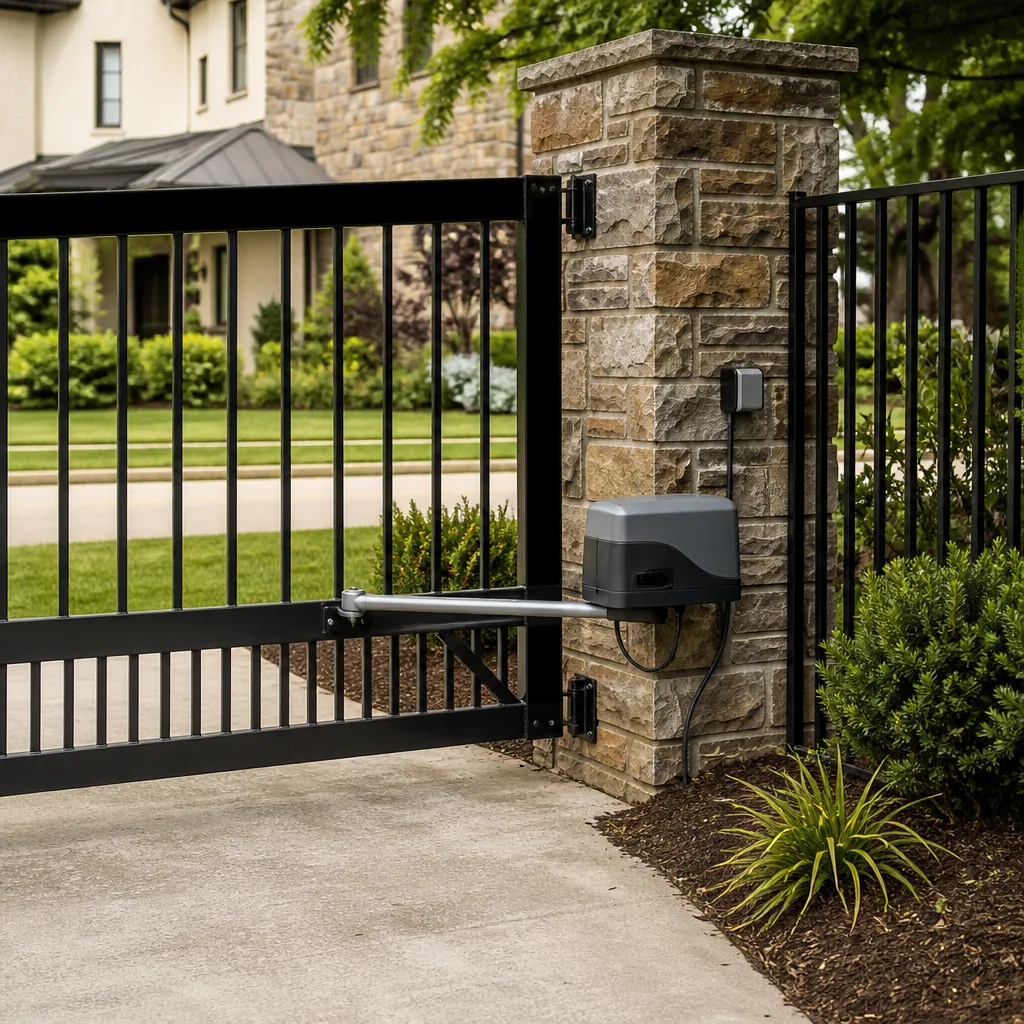 LiftMaster operators
Free on-site gate assessment - hinges, posts, and your LiftMaster or Nice gate operator checked before anything is quoted
The assessment is free and the quote is the invoice.
Get your free estimateGate Repair Emergency Preparedness Guide for Miami Homes
After Hurricane Irma tore through Miami-Dade in 2017, the average wait time for a gate repair technician stretched to 11 days. That’s 11 days of unsecured driveways, exposed pools, and properties left open to anyone who walked or drove by. Some property owners shrugged and accepted the risk. Others, the ones who had documented their manual release procedures and thought through a temporary security plan, simply switched their gates to manual mode, secured them with a chain and padlock, and waited out the chaos without a single sleepless night. This guide is about becoming the second kind of Miami homeowner. We’ll walk you through building a gate emergency plan now, before the next named storm forms in the Atlantic, so you’re never scrambling for a contractor when every gate company in the county is booked solid. Because in Miami, gate emergencies don’t strike randomly. They cluster around hurricane events, post-storm power restoration surges, and the 72-hour window after a storm passes when properties are most exposed. Let’s build your plan.
Styles & brands we work with
Quick Answer
A gate emergency preparedness plan for a Miami home means three things: knowing how to manually release and secure your specific brand of gate operator before power fails, keeping a small emergency kit with the hardware to temporarily lock a gate in place, and having a pre-vetted gate repair contractor who already knows your property and your equipment. In short, you document the manual override, you stock the basics, and you build a relationship with a gate repair specialist in Miami before hurricane season starts. If you do those three things, a gate failure becomes a manageable inconvenience rather than a two-week security gap.
Table of Contents
- Why Power Outages Are the Real Gate Emergency in Miami
- How to Locate and Test Your Gate’s Manual Release Before You Need It
- What to Keep in a Gate Emergency Kit
- Assessing Storm-Damaged Gates: Safe, Manual-Only, or Locked Out
- Building a Pre-Vetted Contractor Relationship Before Hurricane Season
- Temporary Gate Security Options When Repair Isn’t Immediate
- Emergency Planning for Miami Property Managers and Gated Communities
- Common Mistakes to Avoid
- When to Call a Professional
- Frequently Asked Questions
- The Bottom Line
Why Power Outages Are the Real Gate Emergency in Miami
Most Miami homeowners think a gate emergency means a car backed into a gate or a motor that burned out. Those happen, sure. But the most common gate emergency in this city follows a power outage, and Miami has more of those than almost anywhere else in the country. It starts simply enough. The power flickers during a thunderstorm, the gate operator loses its settings, and suddenly the gate won’t open at all. Or worse, it opens fine but won’t close, leaving the property wide open overnight in a neighborhood like Kendall or Coral Gables where empty driveways are an invitation.
Here’s what actually happens during a Miami power event and why it’s hard on gate equipment:
- Voltage sags and surges. When power returns after an outage, it often returns unevenly. A control board from DoorKing or Linear that’s been running fine for years can fry in a split second when voltage spikes on restoration. We see this constantly after afternoon thunderstorms in Pinecrest and Palmetto Bay.
- Capacitor stress. Electric gate motors rely on start and run capacitors. Repeated brownouts and quick cycling during unstable power cause capacitors to degrade faster. In Miami’s hot, humid climate, that degradation happens even faster because heat accelerates electronic aging.
- Battery backup failure. Many homeowners don’t realize their gate operator has a battery backup at all, let alone that the battery needs replacement every two to three years. After a prolonged outage, a dead battery means the gate won’t function even when the grid comes back until the battery is replaced or the system is switched to direct power.
- Sensor misalignment. Storm winds and flying debris knock photo-eye sensors out of alignment. A misaligned sensor tells the gate to refuse to close, which reads to the homeowner as “the gate is broken” when it’s actually a two-minute adjustment.
The point isn’t to scare you. It’s to reframe what a gate emergency is in Miami. The gate didn’t fail because it’s a bad gate. It failed because Miami’s electrical grid and weather are unusually hard on gate equipment. Preparing for a gate emergency means preparing for a grid problem as much as a mechanical one. We recommend every homeowner with an electric gate in Miami know exactly where their operator plugs in, whether they have a battery backup, and what the manual release procedure looks like for their specific brand. Which brings us to the next section.
How to Locate and Test Your Gate’s Manual Release Before You Need It
Every electric gate has a manual release mechanism. It’s the component that disengages the motor so you can push the gate open by hand when there’s no power. If you know where yours is and how to use it, a power outage goes from an emergency to a mild inconvenience. If you don’t, you’re locked out of your own driveway or locked in, depending on which side of the gate you’re standing.
Here’s a step-by-step process for finding, testing, and documenting your gate’s manual release. Do this on a clear Saturday morning, not during a storm.
- Identify your operator brand. Look at the motor housing on your gate. The brand name is printed on the side or on the control box. The most common brands in Miami residential installations are LiftMaster, FAAC, BFT, Linear, Viking, Ghost Controls, DoorKing, Elite, and Mighty Mule. Write the brand and model number down.
- Find the release mechanism. Most swing gate operators have a release lever or keyed release on the side of the motor housing. Sliding gate operators typically have a release accessible through a small door or panel on the operator itself. Ghost Controls and Mighty Mule residential units often use a pull-cord or small lever designed to be operated without tools.
- Test the release with the power on. Activate the release mechanism exactly as the manual instructs. The gate should now move freely by hand. Push it open a few feet, then push it closed. If it won’t move freely, the release mechanism itself may be jammed or rusted, which is actually good news to discover now rather than at 2 AM during a hurricane.
- Document the procedure. Take photos of the release mechanism, the control box, and the circuit breaker that powers the gate. Write a brief instruction card, laminate it, and store it near the gate or in the garage. If you have a property manager or a family member who might need to operate the gate in your absence, make sure they know where the card is.
- Re-engage the operator. Put the release back in its normal position and confirm the gate responds to the remote and keypad again. If it doesn’t, the release may not have fully seated. Most operators require the gate to move slightly for the mechanism to click back into gear.
One note from years of electric gate repair work in Miami: the release mechanism is almost never the problem. It’s the fact that no one has touched it since the gate was installed, so it’s frozen with corrosion in Miami’s salt air, or it’s been painted over, or the key for the keyed release has been lost. Finding that out during a power outage is a bad day. Finding it out on a Saturday morning in April is a five-minute fix.
What to Keep in a Gate Emergency Kit
After a storm, hardware stores in Miami sell out of exactly the items you need to secure a damaged gate. Padlocks, chain, zip ties, bungee cords: gone within hours. The solution is to buy these things now, when they’re cheap and available, and keep them in a dedicated container that’s easy to find in the dark.
Here’s what belongs in your gate emergency kit:
- One heavy-duty padlock with a key, not a combination. Keys work when your hands are wet and your patience is gone. Combinations don’t. Make two copies of the key and put one in a clearly labeled location.
- Six feet of galvanized chain with a working load limit printed on the tag. Enough to wrap around a gate frame and a fixed post. Galvanized resists Miami’s humidity better than plain steel.
- A pack of heavy-duty zip ties rated for at least 75 pounds. These won’t secure a gate against intruders, but they’ll hold a gate closed against wind and casual passing. Perfect for temporary use while you wait for a repair.
- Two bungee cords or ratchet straps. Useful for holding a swing gate leaf in place when the operator is disengaged and the gate wants to drift.
- A flashlight with fresh batteries, stored separately from the flashlight. Battery terminals corrode in Miami humidity when left installed.
- A printed copy of your gate’s manual release procedure. The laminated card from the previous section. When the power is out and your phone is dead, paper still works.
- The phone number of a gate repair company you’ve already vetted. See the next section on why this matters more than any tool in the kit.
The total cost of this kit is around $40 to $60, assuming you already own a flashlight. That’s a small price for the ability to secure your own property immediately after a storm, when contractors are backlogged and every neighbor is competing for the same limited help. Store the kit in a waterproof container in the garage or a utility room, and make sure everyone in the household knows where it is.
Assessing Storm-Damaged Gates: Safe, Manual-Only, or Locked Out
After a storm passes through Miami, you’ll find your gate in one of three conditions. Knowing how to classify what you’re looking at determines whether you operate the gate normally, switch it to manual, or leave it completely alone until a professional arrives. This assessment isn’t about fixing anything. It’s about making a go/no-go decision that keeps you safe and prevents further damage.
Category 1: Safe to operate normally. The gate opens and closes smoothly, the motor sounds normal, and there’s no visible damage to the gate panels, hinges, or posts. Storm debris may have knocked a sensor out of alignment, but that’s a minor issue. If the gate completes a full cycle without grinding, straining, or stopping mid-cycle, it’s likely fine. Test it twice, then leave it alone.
Category 2: Manual operation only. The gate has visible damage: a bent hinge, a sagging leaf, a post that’s shifted out of plumb, or a motor that strains and sounds different than it did before the storm. In this condition, the gate may still move, but the operator is working against damage that will get worse with every cycle. Disengage the manual release, open and close the gate by hand, and leave it in manual mode until a technician can evaluate it. If the gate is heavy and the damage is significant, a bent hinge can snap without warning. Two people should move the gate together, and both should stand behind the gate leaf, never in its path.
Category 3: Lock out entirely. The gate has major structural damage: a broken weld, a cracked post, a leaf that’s off its track, exposed wiring, or a motor that sparks or smokes when power is applied. Do not operate this gate by any means, manual or electric. A gate leaf that weighs several hundred pounds can fall or swing unpredictably when its support structure is compromised. Secure the gate in place with the chain and padlock from your emergency kit, cut power to the operator at the breaker, and call a professional. If the gate can’t be secured in place, block the driveway with your car and treat the property as unsecured until help arrives.
The most important rule: when in doubt, lock it out. A gate that’s secured and immobile is safer than a gate that’s semi-operational and unpredictable. We’d rather you wait two days for a repair on a locked gate than call us because a damaged gate fell on a car, a pet, or a person.
Building a Pre-Vetted Contractor Relationship Before Hurricane Season
Here’s the uncomfortable truth about gate repair in Miami after a storm. When a hurricane passes through, every gate company gets more calls in a week than they normally handle in a month. Dispatchers triage. Technicians work from sunrise to dark. And the customers who get served first aren’t the ones who call first, or the ones who shout loudest. They’re the ones the company already knows.
We’re not saying this is fair. We’re saying it’s the reality of how service businesses operate under extreme demand, and you can use it to your advantage. The time to build a relationship with a gate repair company is before hurricane season starts, not during the post-storm scramble. Here’s what to establish in advance.
- Get a gate inspection and baseline documentation. A thorough inspection now records the condition of your gate, motor, control board, sensors, and manual release. That baseline makes post-storm assessment faster and more accurate.
- Have your operator brand and model on file. A company that knows you have a Viking swing gate operator or a Linear slide gate can stock the right parts before they even arrive. A company that has to diagnose a mystery gate from scratch loses time and you lose your place in line.
- Confirm service coverage for your neighborhood. Miami is enormous. Some gate companies focus on Coral Gables and Coconut Grove. Others work mostly in Doral and Hialeah. Know that your chosen contractor actually serves your area before you need them on a 45-minute response.
- Ask about storm-season surge capacity. A good question to ask a gate company before June: “What’s your typical response time for existing customers in the week after a storm event?” The answer tells you whether they actively plan for surge capacity or just hope for the best.
- Establish a billing and payment relationship. If you’re a property manager or HOA board member, set up an account in advance. A pre-approved credit card or net-30 account removes friction from the repair process when speed matters.
Daystar Gate Repair works on nine operator brands: LiftMaster, FAAC, BFT, Linear, Viking, Ghost Controls, DoorKing, Elite, and Mighty Mule. That breadth matters in Miami because the city’s housing stock is so varied. A 1950s Coral Gables estate might have a vintage FAAC hydraulic operator. A new construction in Edgewater might have a smart-enabled LiftMaster. A rural property out near Homestead might run a Mighty Mule that the homeowner installed themselves. A single-trade gate specialist who knows all of these brands can serve a property manager with a portfolio of mixed equipment without subbing anything out. When you’re building your pre-vetted relationship, ask the contractor which of these brands they actually service and which they consider their specialty.
Temporary Gate Security Options When Repair Isn’t Immediate
After a major storm, you may wait days or even weeks for a full gate repair in Miami. That’s a long time to leave your property unprotected. The good news is that temporary security doesn’t require a functioning gate. It requires creativity and a realistic assessment of what you’re protecting against.
The options below are ranked roughly by security level and cost for typical Miami residential properties. Choose based on your neighborhood, your property’s exposure, and your tolerance for inconvenience.
- Chain and padlock (security: moderate, cost: $25-40). Securing the gate leaves to each other or to a fixed post with a quality chain and padlock. This stops casual intruders and keeps the gate from swinging in the wind. It won’t stop a determined person with bolt cutters, but neither will most working automated gates. Best for: single-family homes in low-crime neighborhoods like Pinecrest or Kendall.
- Vehicle as a barrier (security: moderate, cost: $0). Park a car across the driveway entrance. Miami homeowners do this instinctively after storms, and it works. A car is a visible, physical barrier. The downside is inconvenience for anyone who needs to come and go. Best for: homes in transitional neighborhoods or properties where the gate is completely inoperable.
- Temporary construction fencing (security: high, cost: $200-400 per week). For properties with total gate failure and high exposure, a temporary chain-link panel across the driveway provides real security. This is common in Miami commercial settings and increasingly in residential neighborhoods like Coconut Grove where driveway-front properties are visible from busy streets. Best for: properties that will be unoccupied during the repair window.
- Battery-powered security camera plus signage (security: moderate for deterrence, cost: $100-300). A Ring or Nest camera mounted to cover the driveway, combined with “Property Under Video Surveillance” signage, deters opportunistic crime. Miami has a thriving market for camera-based security, and many homeowners already have the hardware installed. Best for: supplementing whatever physical barrier you’ve chosen.
One caution: none of these options is a substitute for a working gate. They’re bridges between the moment your gate fails and the moment it’s repaired. The goal is to buy time safely, not to construct a permanent security solution out of temporary materials. And if you’re a property manager overseeing multiple gates at gated communities or commercial properties in Miami, the security implication of a downed gate is different: you have a duty to secure the property and may face liability if you don’t. In those cases, temporary fencing is almost always the right call while the permanent gate is brought back online.
Emergency Planning for Miami Property Managers and Gated Communities
If you manage a gated community, condominium, commercial property, or multi-family complex in Miami, gate emergencies are a different animal. A single-family homeowner deals with one gate, one operator, and one family’s schedule. A property manager deals with multiple gates, mixed brands, access control systems, and a hundred residents who all want to know when the gate will work again. Your preparation needs to be proportionally more rigorous.
Here’s what property managers should have in place before hurricane season:
- A complete gate inventory. For each gate on the property: brand, model, serial number, installation date, last service date, and known issues. If your portfolio includes a mix of operator brands, from Mighty Mule on a small residential gate to commercial-grade FAAC or BFT on a main entry, note which technician is qualified for which gate.
- Documented manual release procedures for every gate. This is non-negotiable. When the power fails at a gated community, residents need to get in and out. Maintenance staff need to know exactly how to switch every gate to manual. If the release requires a key, make sure the key is accessible and that at least two staff members know where it is.
- A written emergency communication plan. Residents must know what to expect and when. A simple blast email or community app post that says “The front gate is in manual mode until further notice. Please drive slowly and expect staff on site” prevents a hundred angry phone calls and keeps the situation calm.
- Pre-approved repair authorization. In the days after a storm, approval chains break down. The board president is on a flight. The property manager is dealing with three other emergencies. Having a standing authorization for gate repairs up to a certain dollar amount means the repair starts immediately instead of waiting for a quorum.
- A relationship with a gate specialist who knows your property. This is the single biggest lever a Miami property manager can pull. When Daystar Gate Repair already knows your gates, your brands, and your property layout, we can dispatch with the right parts and a clear plan. When we’re discovering your property for the first time during a storm surge of service calls, every diagnosis takes longer.
For commercial properties, access control adds another layer. Loop detectors, keypads, telephone entry systems, and remote access hardware all interact with the gate operator. A failure in any one component can shut down entry entirely. Property managers should have documentation of how each of these systems integrates with the gate and who is responsible for servicing what. In our experience, many “gate failures” at Miami commercial properties are actually access control failures, and knowing which is which before you call saves a round of finger-pointing between vendors.
Common Mistakes to Avoid
- Ignoring the manual release until the power is out. The manual release is there for exactly the situation you didn’t prepare for. If you don’t know where it is or how it works, the first time you learn will be the worst possible time. Test it quarterly, especially before hurricane season.
- Assuming a battery backup means the gate works forever off-grid. Battery backups in Miami gate operators are sized for hours, not days. After 24 to 48 hours of continuous outage, most backup batteries are depleted. And if the battery is more than three years old in Miami’s heat, it may already be dead when you need it.
- Waiting until June to call a gate company for a pre-hurricane inspection. By June, every gate technician in Miami is booked with pre-season inspections. The time to build a relationship and get on a company’s radar is February through April, when schedules are open and the urgency hasn’t arrived.
- Leaving a storm-damaged gate connected to power. A damaged gate with live power to the operator is a hazard. A short in the control board can start a fire, and a motor that’s fighting against a bent hinge can burn out entirely. After any significant storm damage, cut the breaker and keep it cut until a technician evaluates the system.
- Assuming a chain and padlock is for people who don’t have real security. A $30 chain and padlock, properly deployed, is the fastest way to secure a damaged gate until professional help arrives. Waiting for a “real” fix while your property sits open is the actual security failure.
- Not knowing your gate operator’s brand and model. When you call a gate repair company and say “my gate is broken,” the first question is about brand and model. If you don’t know, the company has to send a technician with generic parts and a best guess. Knowing you have a DoorKing slide gate or a Ghost Controls swing gate accelerates the entire repair process.
When to Call a Professional
Some gate problems are homeowner-safe to assess and even temporarily secure. Others need a trained technician with the right diagnostic equipment and the specific parts for your operator brand. Call a professional when you see sparking or smell burning from the motor or control board, when the gate makes a grinding or metal-on-metal sound that wasn’t there before, when a gate leaf is visibly sagging or a hinge is cracked, or when the gate opens but stops reversing on obstruction. These are not DIY situations. A gate leaf can weigh 300 to 800 pounds, and the springs, cables, and motors that move it are under constant tension. Daystar Gate Repair offers free estimates in Miami for gate damage assessment and repair scoping. Call (855) 752-6802 and we’ll walk through what you’re seeing, determine whether it’s an emergency or a scheduled repair, and send a technician who knows your specific brand of operator.
Frequently Asked Questions
In the days immediately following a major storm, gate repair in Miami can take anywhere from 3 to 11 days depending on the severity of the damage, parts availability, and whether you’re an existing customer of a gate company or a new caller. This is why we recommend building a relationship and documenting your equipment before the emergency. Call (855) 752-6802 for a current service timeline and to get on our pre-season inspection schedule.
Yes, every electric gate has a manual release mechanism that disengages the motor so the gate can be moved by hand. The release is a lever, keyed cylinder, or pull-cord located on or near the operator. If you’ve tested yours recently, you’re in good shape. If not, now is the time to locate it and test it while the power is still on. If the release is seized or you can’t find it, a gate technician can get it working again quickly.
Based on what we see across the city, the most common post-storm gate failure in Miami is a fried control board caused by power surges during grid restoration. Close behind are misaligned photo-eye sensors from wind-blown debris and dead backup batteries that were already near end of life before the storm. All three are repairable, but all three are also preventable with pre-season inspection and surge protection.
Emergency gate repair in Miami typically ranges from $150 to $450 for labor depending on the time of day and the complexity of the repair, with parts priced separately. Control board replacement can run $300 to $900 including labor. Motor replacement is higher. These are broad ranges because every gate and every failure mode is different. Call (855) 752-6802 for a free estimate with upfront pricing quoted and agreed before any work starts.
Electric gate repair involves motors, control boards, sensors, and sometimes high-voltage connections. A general handyman can often handle a mechanical adjustment, but when the problem is in the electronics, you need a gate specialist who knows your specific operator brand. A technician who’s factory-familiar with Linear, Viking, Ghost Controls, and DoorKing systems can diagnose and repair an electrical issue in one visit that a generalist might chase for days. That’s the difference between gate specialists and generalists in Miami.
First, cut power to the gate operator at the breaker. Second, secure the gate in place using a chain and padlock or ratchet straps from your emergency kit. Third, take photos of the damage from multiple angles. Fourth, leave a message with one or two gate companies and note that your property is secured but the gate is out of commission. Most Miami gate companies work through backlogged voicemails and text queues after storms, and having your property secured buys you time to wait without leaving the home exposed.
The Bottom Line
Miami is a beautiful place to live, but it demands a certain kind of preparation from homeowners and property managers. Gate emergencies aren’t a question of if, but when. The power will go out. The wind will blow debris into your sensors. The salt air will corrode something you haven’t thought about in years. The people who handle these events smoothly are the ones who prepared: they documented their manual release, stocked an emergency kit, built a relationship with a gate specialist, and understood the difference between a gate that’s safe to operate and one that needs to be locked out. You now have everything you need to join that group before the next storm develops in the Atlantic.
If you own a gate in Miami and haven’t had it inspected this year, call Daystar Gate Repair at (855) 752-6802. We service nine gate operator brands, know the city’s neighborhoods and the way its climate affects gate hardware, and offer free estimates with pricing agreed before work begins. From Mighty Mule to FAAC, we know your gate.
Written by the team at Daystar Gate Repair, serving Miami since 2018.
See the difference
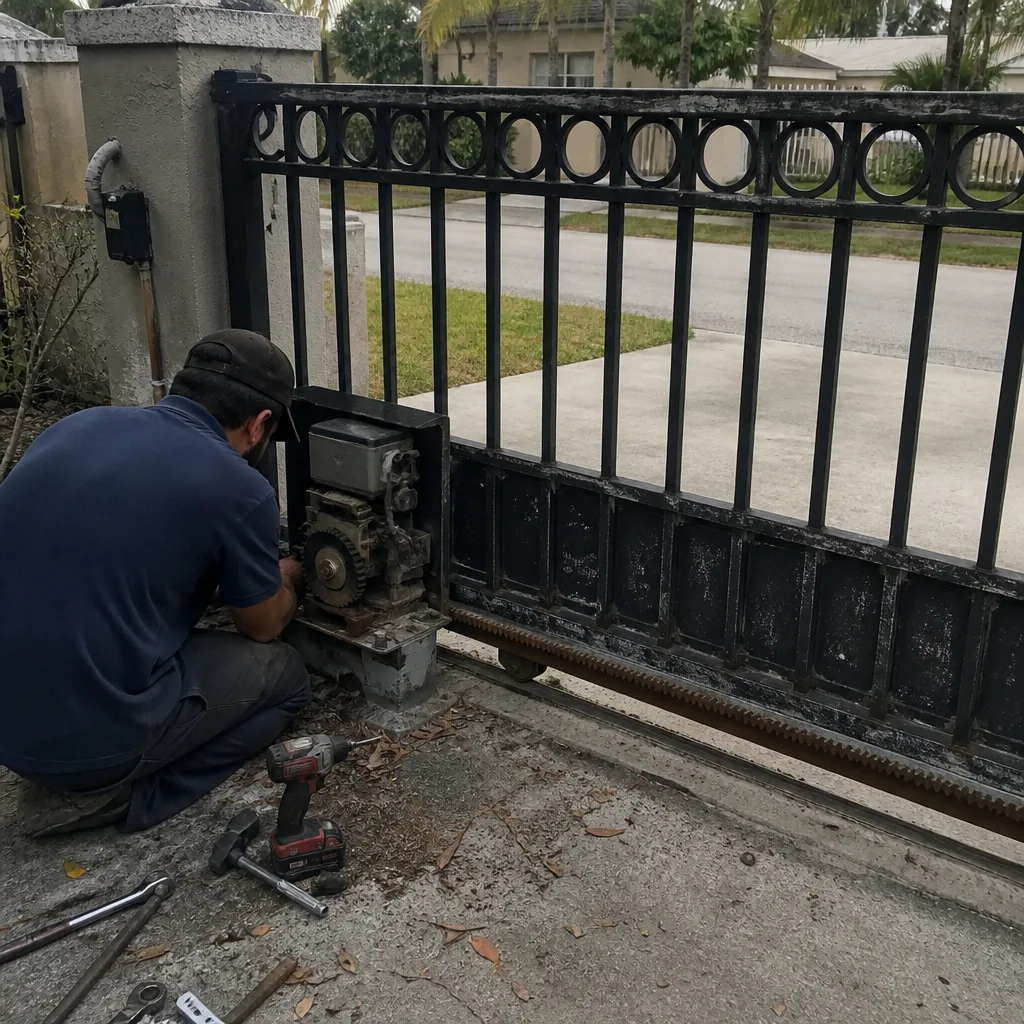 Before
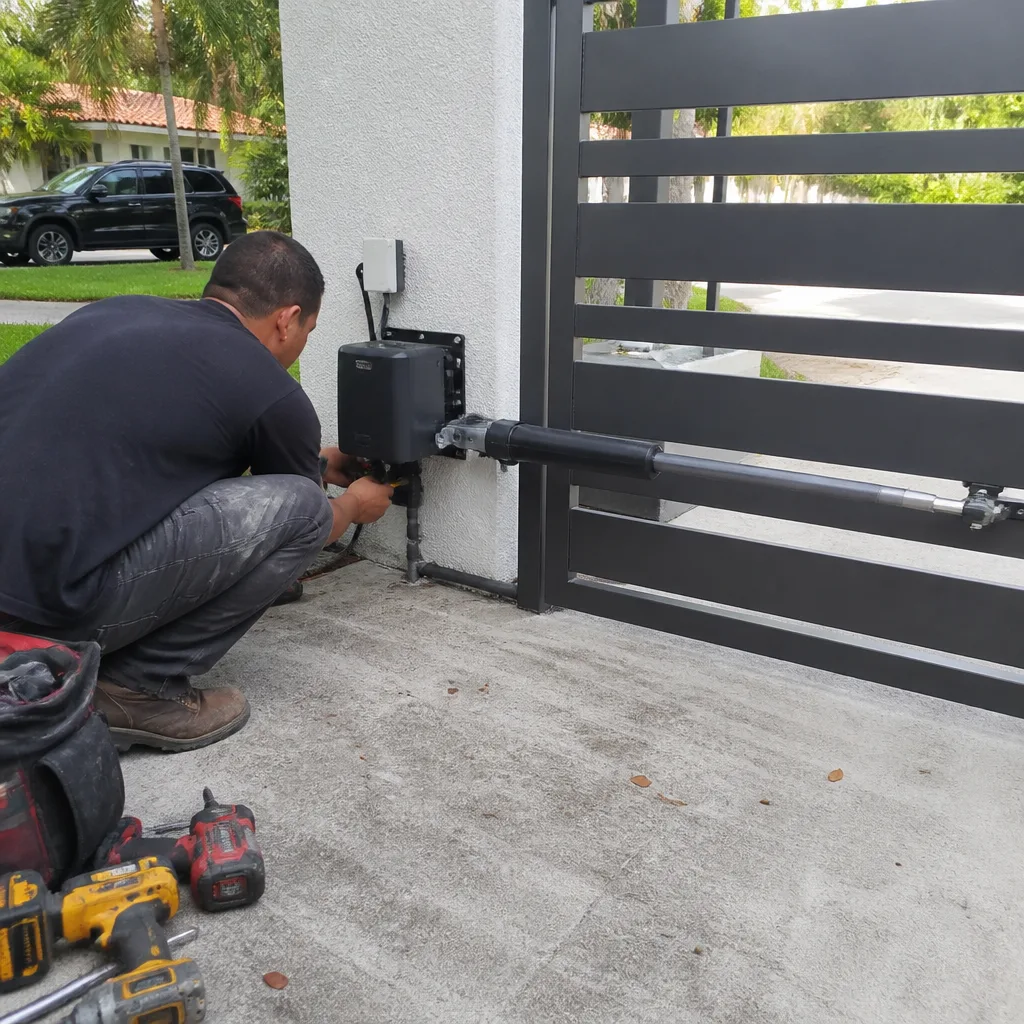 After
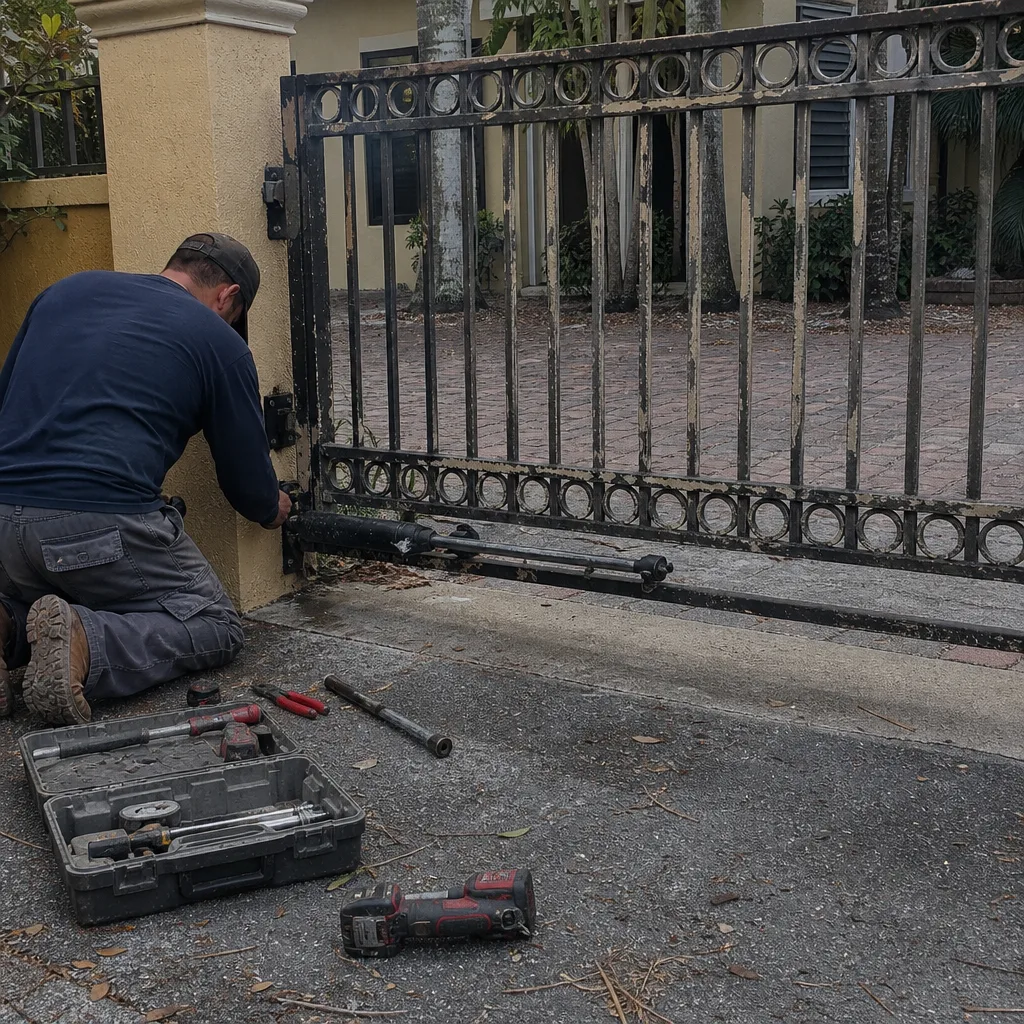 Before
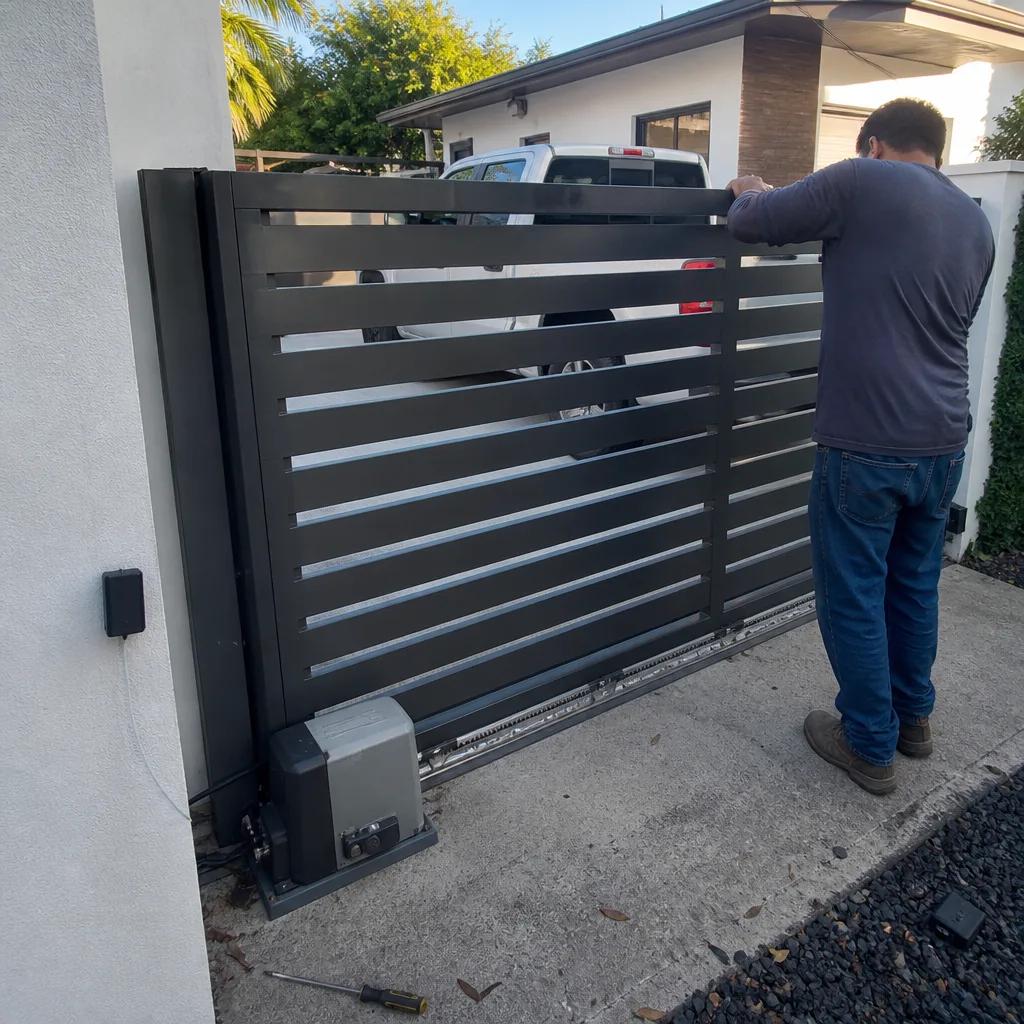 After
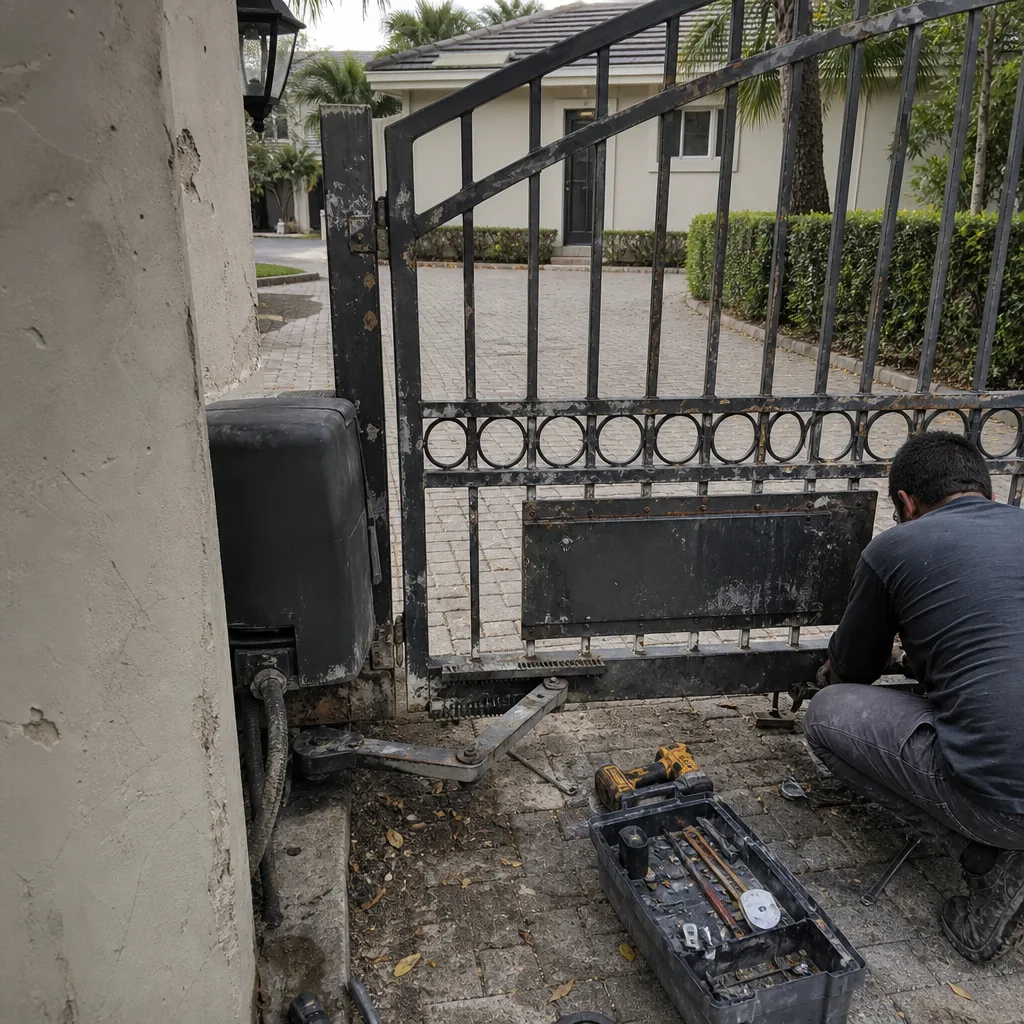 Before
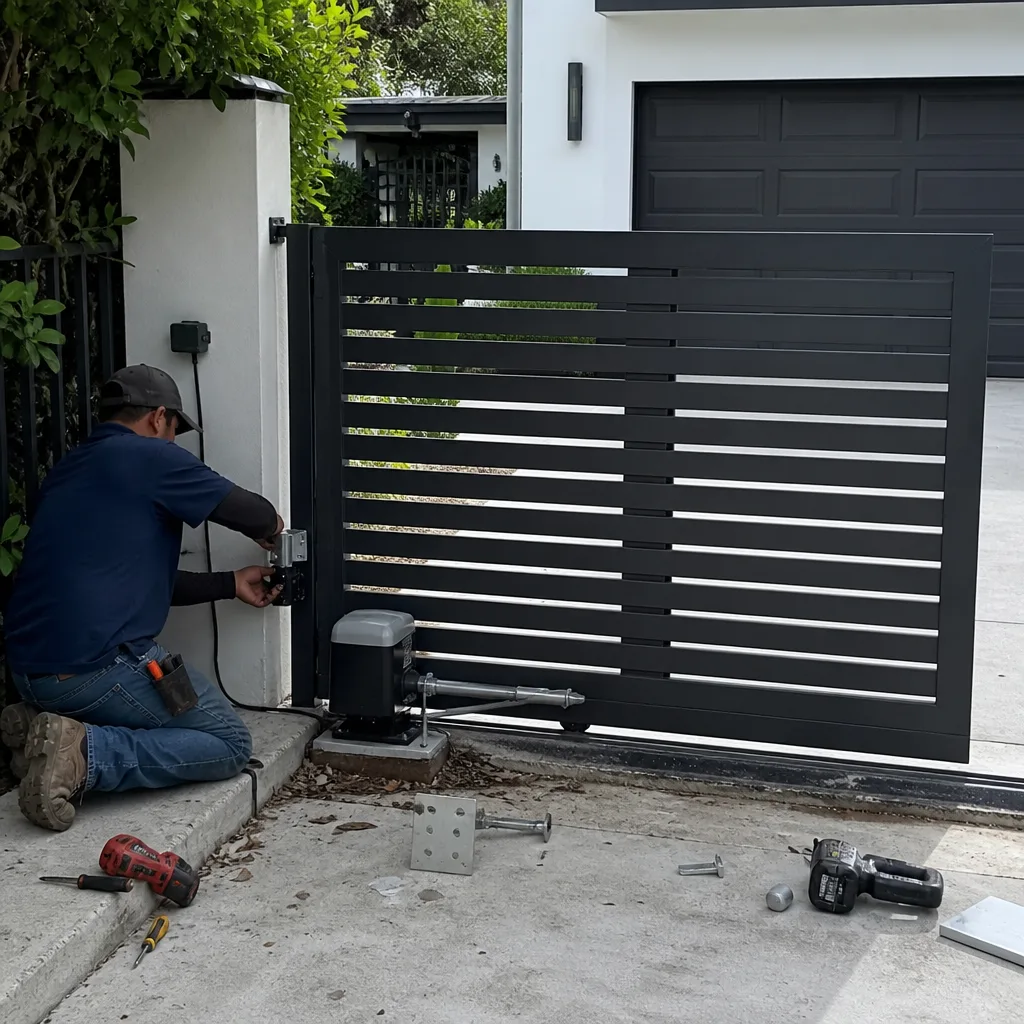 After