
Last updated October 31, 2026
 Wrought iron
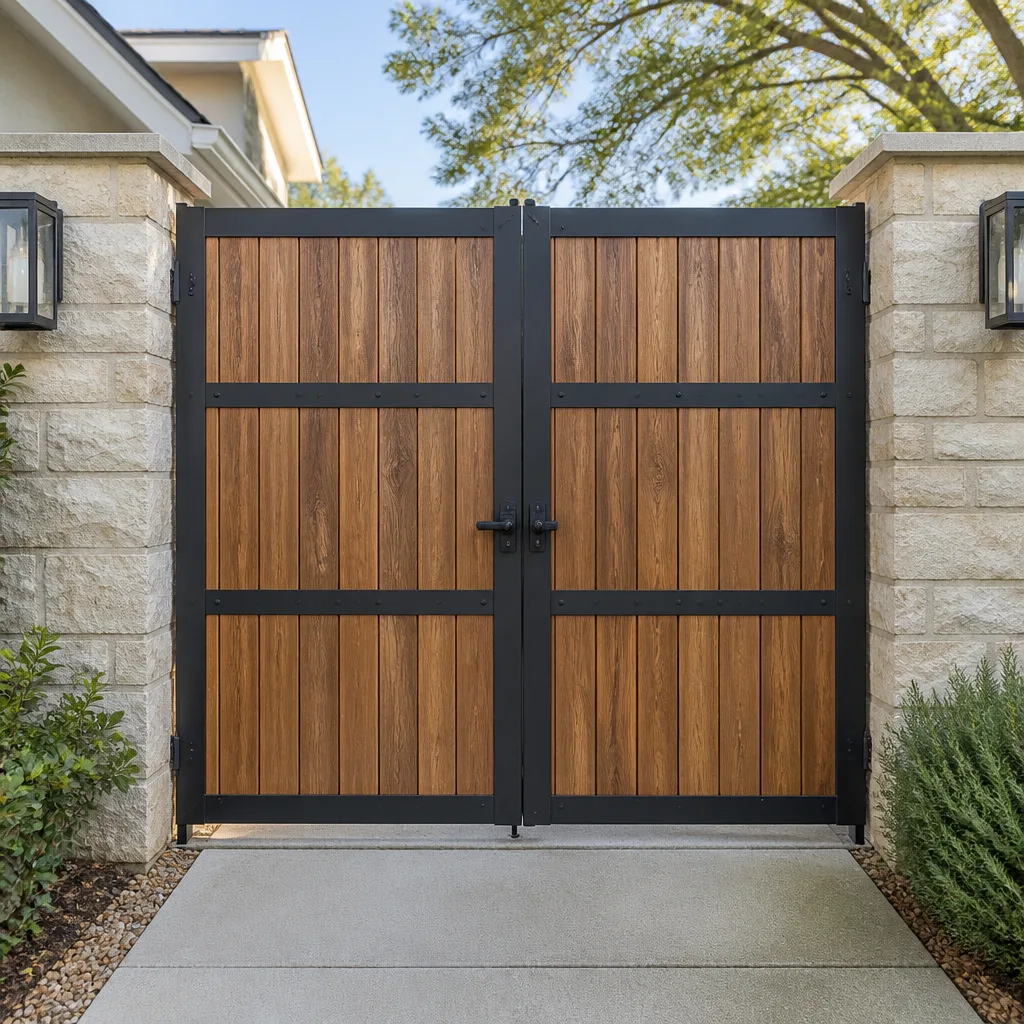 Wood & steel frame
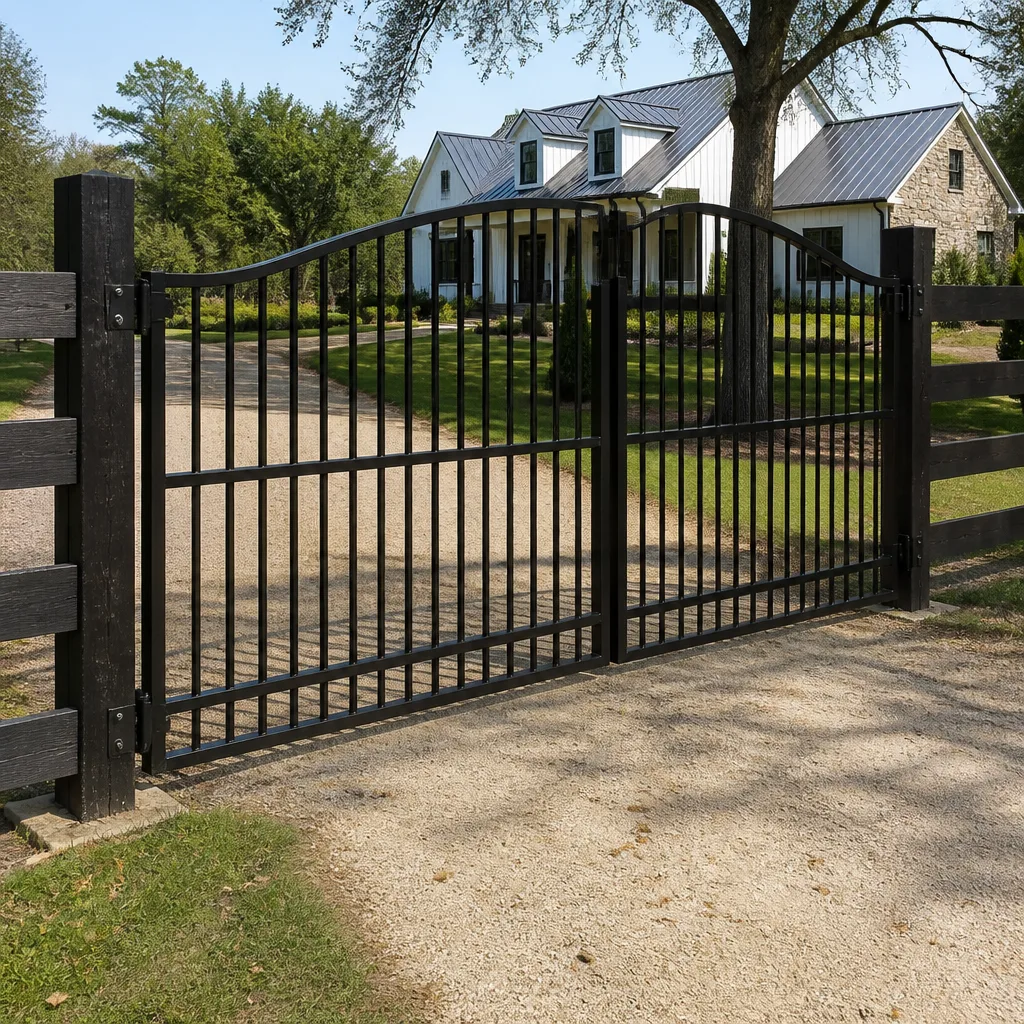 Farm & ranch
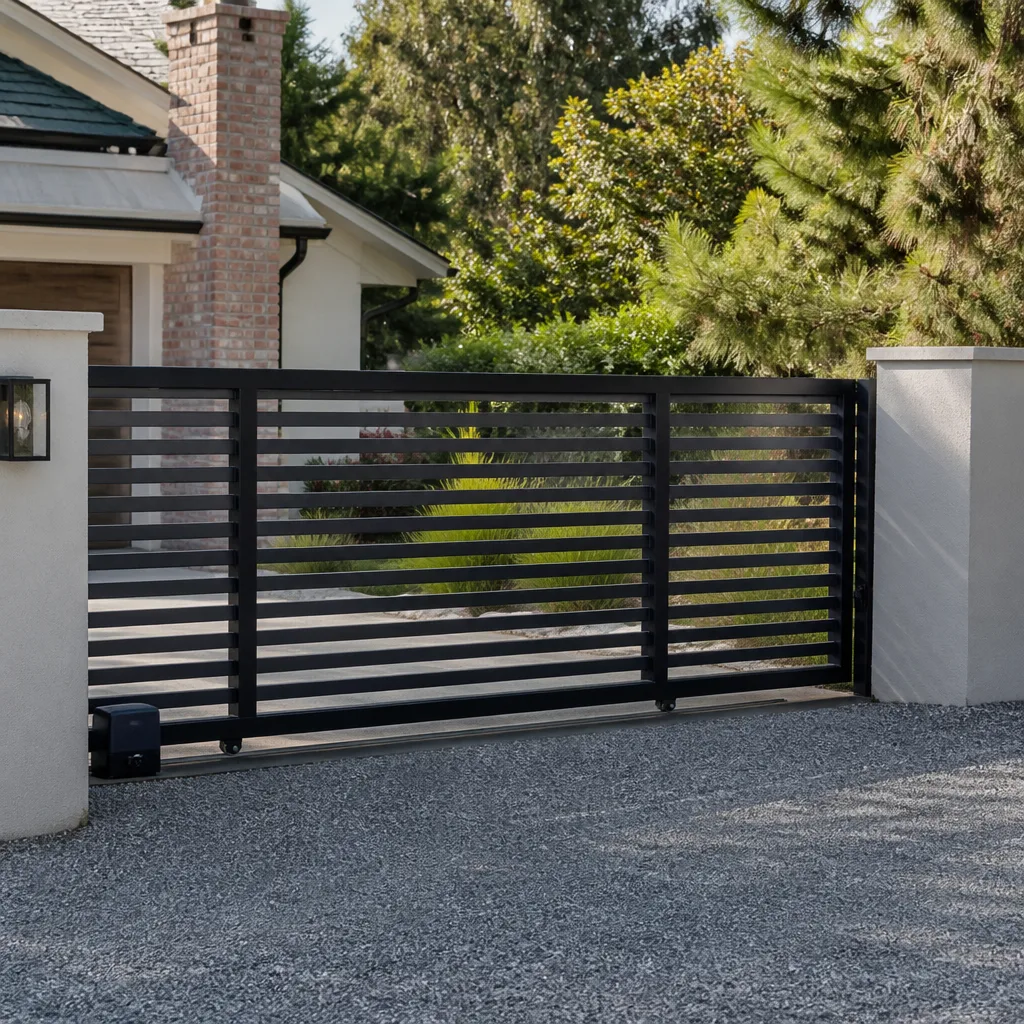 Sliding driveway gates
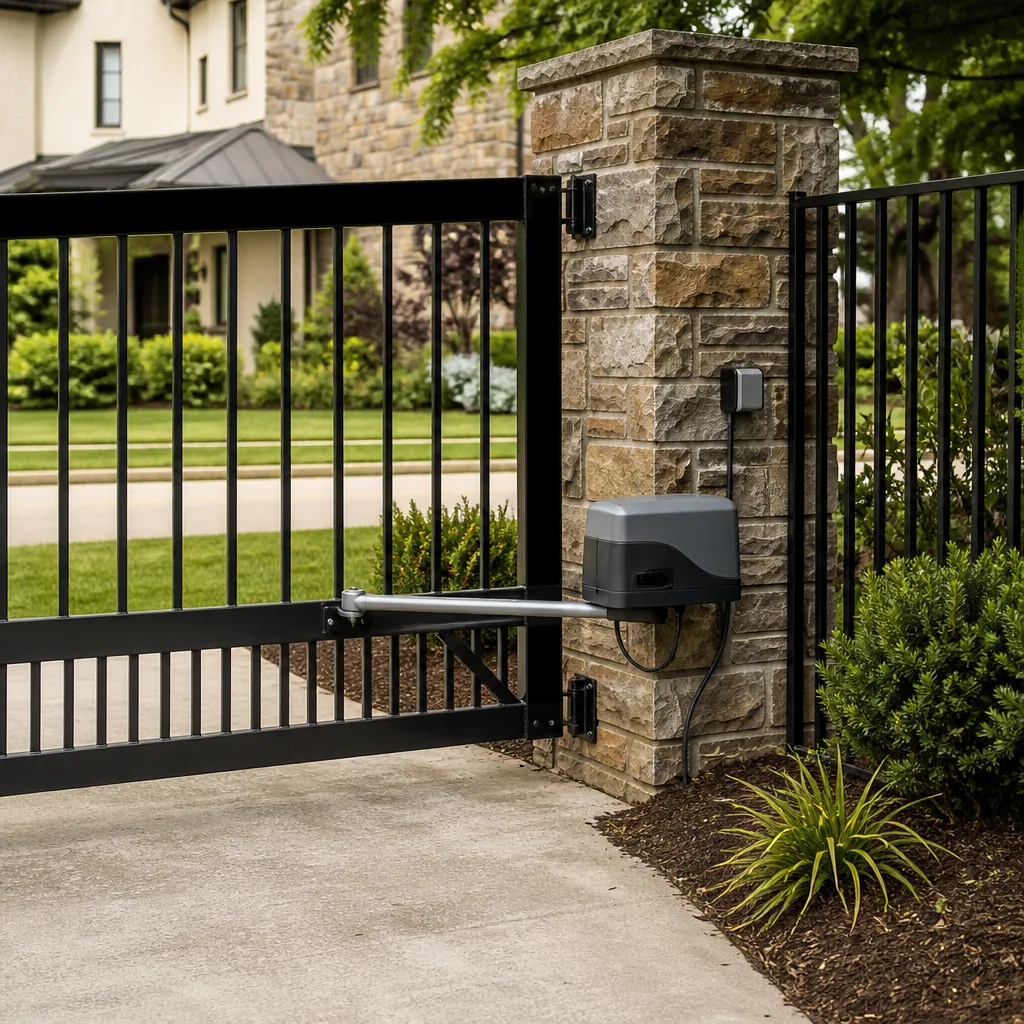 LiftMaster operators
Free on-site gate assessment - hinges, posts, and your LiftMaster or Nice gate operator checked before anything is quoted
The assessment is free and the quote is the invoice.
Get your free estimateSeasonal Gate Repair Care for Miami: Year-Round Homeowner’s Guide
In Miami, the gate failures that happen in January were usually set in motion in October. Hurricane season doesn’t just bring storm damage. The sustained humidity, salt-laden rain, and power surge cycles of a South Florida wet season quietly degrade components that then fail visibly once the weather dries out and gates see heavier use. This guide—along with our Complete Gate Repair Guide for Miami Homeowners—walks through the two distinct gate-stress cycles that define Miami gate ownership: hurricane season (June through November) and dry season (December through May). You’ll learn what to check before a named storm, what to do after it passes, and why your gate behaves differently when the temperature drops below 50 degrees. Most seasonal maintenance guides treat every climate the same. Miami is not every climate.
Styles & brands we work with
Quick Answer
Seasonal gate care in Miami comes down to two windows: a pre-hurricane season prep (April through May) focused on structural fasteners, surge protection, battery backup, and emergency release testing, and a dry season inspection (December through January) addressing thermal expansion, coating wear, and hydraulic or battery performance in cooler air. Most homeowners should plan two full inspections per year, with a post-storm check after any named storm that brings sustained winds over 60 mph. A gate that gets these three touchpoints rarely fails without warning.
Table of Contents
- Why Miami’s Climate Punishes Gates Differently
- Pre-Hurricane Season Checklist (April – May)
- Active Hurricane Season Protocols (June – November)
- Post-Storm Inspection Sequence
- Dry Season Priorities (December – May)
- Cold Snaps and Gate Operator Performance
- Brand-Specific Seasonal Notes: Ghost Controls, DoorKing, and Mighty Mule
- Common Mistakes to Avoid
- When to Call a Professional
- Frequently Asked Questions
- The Bottom Line
Why Miami’s Climate Punishes Gates Differently
A gate in Phoenix deals with heat and dust. A gate in Seattle deals with rain and mild cold. A gate in Miami deals with heat, humidity, salt air, and hurricane-force wind, often in the same week. The combination is what makes South Florida gate wear patterns unique.
Salt is the quiet killer. Even homes several miles inland get measurable salt deposition from ocean breezes and storm-driven spray. That salt settles into hinge pins, operator housings, and control board enclosures. When humidity stays above 70 percent for weeks, which is normal from June through October, the salt creates a mild conductive film on electrical contacts. Corrosion accelerates. Connections that worked fine in March start throwing intermittent faults by August.
Thermal cycling adds a second layer. Metal gates in Miami expand noticeably during summer afternoons when surface temperatures can exceed 130°F on a dark-colored gate, then contract at night. Over years, this daily expansion and contraction works fasteners loose, opens hairline cracks in welds, and shifts gate alignment. A gate that closes perfectly in the morning might drag by 3 p.m. The owner blames the operator. Usually, it’s the metal moving.
Then there’s the storm cycle itself. Sustained winds push against a large gate like a sail, transferring enormous force through the hinges and into the posts. Even a gate that survives the wind structurally can have its operator gear train stressed, its limit switches knocked out of calibration, and its safety sensors misaligned. The damage isn’t always visible the day after the storm. We’ve seen operators fail two months after a hurricane because a bearing was slightly deformed and wore rapidly under daily use.
Pre-Hurricane Season Checklist (April – May)
The single most valuable thing a Miami homeowner can do is spend an hour on gate prep before June 1. Most of this work takes no special tools. The point is to catch loose hardware and electrical vulnerabilities while there’s still time to schedule Gate Repair services without storm urgency.
Here’s the full pre-season sequence, in order of importance:
- Structural fastener inspection. Walk the full length of the gate and check every visible bolt, hinge pin, and post anchor. Look for rust staining around fastener heads, which indicates water ingress and loosening. A 16-foot gate has dozens of fasteners. Any one of them failing under wind load transfers stress to the others and to the post itself.
- Operator surge protection verification. Lightning strikes and grid fluctuations during South Florida storms are the leading cause of control board failure. If your operator is plugged into a standard outlet without a dedicated surge suppressor, add one now. For operators hardwired to a panel, a whole-panel surge device or a dedicated operator surge module is worth the investment. Power surges during a storm can take out a controller even if the gate itself is never touched by wind.
- Battery backup testing. If your gate has battery backup, simulate a power outage by shutting the breaker and running the gate three or four full cycles. Batteries that are more than three years old, or that have been through several deep discharges, often test fine on voltage but sag under load. A battery that dies during an outage leaves your gate stuck in whatever position it was in, which may be neither secure nor accessible.
- Emergency release verification. Every automated gate should have a manual release mechanism, usually a keyed release or a pull chain. Test it now. If the gate can’t be moved by hand with the operator disengaged, fix that before you need it. In an evacuation scenario, a gate that will not open manually is a serious problem.
- Safety sensor alignment check. Photo eyes and edge sensors drift out of alignment over time. Confirm the photo eye lenses are clean and the beam is actually aligned. During high winds, a slightly misaligned sensor can cause nuisance reversals or fail to detect an obstruction.
- Weather sealing on the control enclosure. Inspect the gasket around the operator control board enclosure. In Miami humidity, a compromised gasket lets moisture in slowly, and you won’t notice until the board starts glitching weeks later. Replace cracked or flattened gaskets before the first big rain.
If any of these items reveals a problem, address it immediately. Once a storm enters the Atlantic and models show a Miami track, gate repair schedules fill within 48 hours.
Active Hurricane Season Protocols (June – November)
When the National Hurricane Center starts talking about a named storm with a possible South Florida landfall, gate decisions need to happen before the winds arrive. The right protocol depends on your gate style, your property’s exposure, and the expected wind direction.
For swing gates: A swing gate in the closed and latched position presents a large, flat surface to the wind. The hinges and the latch take the entire load. In a Category 1 or 2 storm, a well-maintained swing gate can usually stay closed. In a Category 3 or higher, or if the gate faces open water, leaving the gate in the closed position risks bending the leaf, tearing the latch, or pulling the post. Many property managers in exposed Miami neighborhoods like Coconut Grove or Key Biscayne choose to pin the gate in the fully open position using a ground pin or heavy chain before a major storm. An open gate presents a much smaller wind profile. The tradeoff is security, but during an evacuation, an open gate also ensures free access for residents and first responders.
For sliding gates: Sliding gates are less vulnerable to wind load than swing gates because the gate’s surface is parallel to the track rather than perpendicular to the wind. The bigger risk is debris lodging in the track or stormwater overwhelming the drainage along the rail. Clear the track of leaves, sand, and any loose material. If the gate area is prone to flooding, lock the gate in whatever position keeps the track and operator housing above the expected water line.
Power and operator preparation:
- If your gate has battery backup, confirm it has a full charge before the storm arrives.
- Disconnect any non-essential accessories that draw standby power, like keypads with backlit displays or intercom systems.
- Switch the operator to manual mode and leave it disengaged if you anticipate power loss. A gate that’s disengaged can be moved by hand by anyone who needs in or out.
- Do not wrap the operator or control box in plastic sheeting. This traps condensation and causes more harm than good. If the enclosure is properly sealed, it will handle rain.
One more consideration unique to Miami: storm surge. Gates on properties near Biscayne Bay, the Miami River, or canal systems may see saltwater inundation. If your operator or control board gets submerged, even briefly, do not re-energize it. Saltwater intrusion requires professional disassembly, cleaning, and usually component replacement.
Post-Storm Inspection Sequence
After a storm passes, the temptation is to flip the breaker and see if the gate still works. Don’t do that yet. Follow this sequence instead. The order matters because electrical faults can be invisible but dangerous.
- Visual structural check. Walk the gate and posts looking for fresh cracks, bent metal, pulled anchors, or shifted alignment. Pay attention to the top hinge on swing gates, the point of maximum stress. Check that the gate still travels freely through its full range without contacting the ground or the post.
- Track and rail inspection. For sliding gates, inspect the full length of the track. Clear debris, sand, and organic matter. Look for any section of rail that’s been lifted or deformed by water pressure. A bent gate track will destroy rollers in weeks if not corrected.
- Electrical panel and enclosure check. Before restoring power, open the operator enclosure and look for standing water, water stains, corrosion, or insects. If anything looks wet or crusted, call a gate professional. Re-energizing a water-damaged board is the fastest way to turn a reparable problem into a full board replacement.
- Breaker reset and manual test. With the operator still disengaged, restore power and confirm the unit powers on and the control board responds. Then run the gate through manual cycles before engaging the operator.
- Automated cycle test. Engage the operator and run three complete cycles. Watch for hesitation, unusual noise, or the gate stopping short. Listen to the motor. A grinding or whining sound after a storm often indicates water or debris in the gear train.
- Safety system verification. Test the photo eyes, loop detectors, and any edge sensors. Storms knock sensors out of alignment, and storm debris can damage loop wires. Never run a gate with a disabled safety system.
The sequence takes about 20 minutes on a typical residential gate. If anything fails at any step, stop and get help. A partially damaged gate can still operate for weeks before failing completely, and the failure almost always happens at the worst possible moment.
Dry Season Priorities (December – May)
Dry season in Miami is the window for major work. Coating jobs cure. Concrete sets. Operators can be replaced without rain delays. If your gate needs anything beyond a minor adjustment, schedule it between December and April.
Thermal expansion becomes more obvious in dry season because the temperature swings are actually wider than in summer. A Miami winter day might start at 60°F and reach 82°F by afternoon. That daily 20-degree swing is enough to shift a large metal gate measurably. Gaps that looked tight in summer, when the gate was fully expanded, may show uneven clearance in winter. If your gate has a gap at the latch that changes width through the day, or a swing gate that scrapes in the morning but clears by noon, thermal movement is the likely cause. Fixes include hinge adjustment, latch realignment, or in extreme cases, a small trim of the gate leaf.
Dry season is also the time to address coatings. South Florida’s sun is brutal on painted and powder-coated gates. Fading is cosmetic. Chalking, blistering, and rust bloom are structural. Inspect the bottom rail and the hinge areas, where moisture collects and coating fails first. If you see rust developing, treat it now. Once salt air gets under the coating, it spreads underneath and flakes off large sections in a single summer.
For operating hardware, December is the ideal month for:
- Full lubrication service on hinges, rollers, and drive chains.
- Gear train inspection for wear, especially on operators that run more than 30 cycles a day.
- Control board firmware checks if your operator supports software updates.
- Battery replacement for backup systems that tested marginal during hurricane season prep.
Think of dry season as the maintenance budget window. Every dollar spent on prevention in February saves three dollars on emergency work in September.
Cold Snaps and Gate Operator Performance
Miami doesn’t get cold by most standards, but nights below 50°F happen often enough in January and February to affect gate systems in ways most homeowners never consider. Hydraulic operators are the most sensitive.
Hydraulic gate operators use oil to transmit force from the motor to the gate. Oil viscosity changes with temperature. At 80°F, the oil flows easily and the gate moves at normal speed. At 45°F, the same oil thickens. The operator’s motor has to work harder to move the same volume of oil, which slows the gate down and draws more current. If your gate moves noticeably slower on cold mornings and normalizes by midday, that’s viscosity, not a failing motor. The fix is usually a lighter-weight hydraulic fluid rated for a wider temperature range, which most Miami installers never think to specify because the original manufacturer recommended fluid for a northern climate.
Battery performance also drops in cold weather. A lead-acid backup battery that produces full runtime at 80°F might deliver 60 percent of that at 45°F. If your gate’s battery backup is marginal, a cold snap will reveal it. Test backup runtimes in January, not in July.
One more cold-weather effect: condensation. On cold nights, the metal surfaces inside the operator enclosure can drop below the dew point. Moisture condenses on the control board and wiring. When the board powers on in the morning, that condensation can cause a short or a fault. This is a common cause of “it worked yesterday, now it won’t open” calls after cold nights. Proper enclosure sealing and a small heater pad inside the enclosure address the issue if it’s recurring.
Brand-Specific Seasonal Notes: Ghost Controls, DoorKing, and Mighty Mule
Different manufacturers build different vulnerabilities into their systems. For help choosing, see our guide to Choosing the Right Gate Repair Brand: A Buyer’s Guide for Miami. Here’s what we look for on three of the most common residential brands we service across Miami.
Ghost Controls systems are popular on residential swing gates because of their straightforward installation and app integration. Seasonally, the weak points are the battery connections and the control box weather seal. Ghost Controls battery leads use spade connectors that can loosen under repeated thermal expansion. We find more intermittent power faults on Ghost Controls operators after a hot summer than on any other residential brand. The fix is usually a connector tightening and a fresh zip tie on the wire bundle. The control box seal also needs annual inspection. The foam gasket compresses over time and doesn’t recover.
DoorKing builds commercial-grade equipment that’s overbuilt for most residential applications, but that doesn’t make it immune to Miami conditions. The most common seasonal issue we see on DoorKing slide operators is limit switch drift caused by wind buffeting during storms. A 20-foot gate hit by 70 mph gusts physically moves even when the operator is engaged, and that movement works the limit cams slightly out of position. The gate then stops a few inches short or overtravels. Recalibrating the limits after hurricane season is a standard part of our DoorKing service calls. The brand’s metal gear train also benefits from a dry-season lubrication, especially on south-facing installations that bake in direct sun.
Mighty Mule is the entry-level workhorse of the automatic gate world, and a huge share of Miami’s residential gates run on it. The brand’s seasonal vulnerability is the control board’s sensitivity to power surges. Mighty Mule boards are not as hardened against electrical spikes as more expensive brands, and South Florida thunderstorms produce a lot of spikes. We replace more fried Mighty Mule boards during hurricane season than any other component on any other brand. A dedicated surge suppressor on the operator’s power feed is not optional for Mighty Mule owners in Miami. It’s the difference between a working gate and a $200 board replacement after every summer storm.
That’s three brands. Our team works across nine: LiftMaster, FAAC, BFT, Linear, Viking, Ghost Controls, DoorKing, Elite, and Mighty Mule. Each one has its own seasonal failure profile. Knowing the brand before we arrive means we bring the right parts and the right diagnostic approach on the first trip.
Common Mistakes to Avoid
- Skipping the pre-hurricane fastener check because “the gate worked all year.” Loose fasteners don’t announce themselves. They fail under wind load, and when they fail, the damage cascades into hinges, posts, and the operator gear train.
- Powering on the gate immediately after a flood without inspecting the enclosure. Saltwater-damaged boards can short catastrophically when re-energized. The visual check takes two minutes. The board replacement takes $400 and a week of waiting.
- Lubricating the track or hinges with WD-40. WD-40 is a solvent, not a long-term lubricant. It strips existing lubrication and leaves the metal dry. Use a proper lithium or silicone-based lubricant rated for outdoor hardware.
- Ignoring a gate that’s a few inches out of alignment. A gate that scrapes or drags is telling you something is wrong. Every cycle with the misalignment wears the rollers, hinges, and operator motor faster. Small alignment fixes now prevent big repairs later.
- Wrapping the operator in plastic before a storm. Trapped condensation is worse than direct rain. Sealed enclosures are designed for weather. Plastic wrap creates a greenhouse that breeds corrosion.
- Assuming battery backup means unlimited operation during an outage. Most residential battery backups are rated for a handful of cycles, not continuous use. After a prolonged outage, the battery needs time to recharge. If you run it flat, you’re back to manual operation until power returns.
- Waiting until November to address a July problem because “hurricane season is almost over.” The busiest months for gate repair in Miami are October and November, when equipment that limped through the summer finally collapses. Schedule repairs when you notice them, not when the season ends.
When to Call a Professional
Some tasks belong on the DIY list: visual inspections, track clearing, sensor alignment, battery testing. Others do not. High-tension spring systems, gear train replacement, control board diagnostics, and any work that requires moving a gate leaf off its hinges demand experience and the right equipment. A 400-pound gate falling off its track is a serious hazard. Electric gate operators carry line voltage, and troubleshooting a control board without understanding the circuit is how injuries and expensive mistakes happen.
If your gate shows structural cracks, if the operator makes grinding sounds, if the gate has been flooded, or if you simply don’t have time for the seasonal checklist, get a specialist involved. Daystar Gate Repair offers free estimates in Miami and works exclusively on gates, from residential swing units to commercial access systems. Call (855) 752-6802 to schedule a seasonal inspection or discuss a repair.
For more on what we cover, see our Gate Repair in Miami service page or our Electric Gate Repair in Miami page for motor, control board, and sensor work. If it’s time for a new system instead of another repair, our Gate Installation in Miami page lays out the process. And if you’re new here, the Daystar Gate Repair home page is a good place to see the full scope of what a gate-only company does.
Frequently Asked Questions
Twice a year is the minimum: once in April or May before hurricane season, and once in December or January at the start of dry season. Add a third inspection after any named storm that brings sustained winds over 60 mph to your area. Properties within a mile of salt water should consider quarterly checks because salt deposition accelerates every failure mode. If you’re not sure what to look for, call (855) 752-6802 and our team can walk you through a seasonal inspection checklist over the phone, or schedule an on-site visit.
A basic seasonal inspection with fastener tightening, lubrication, and sensor alignment typically runs $90 to $180 depending on gate size and access. Full annual service including gear train inspection, battery testing, and control board diagnostics usually falls between $200 and $400 for most residential systems. Repairs found during the inspection are quoted separately and agreed before any work starts. For an exact quote on your gate, call (855) 752-6802.
For emergency repairs, including gates stuck open or closed, we offer same-day service in most parts of Miami depending on current call volume. Seasonal inspections and non-emergency work are scheduled within a few days. If your gate is stuck right now, call (855) 752-6802 and we’ll get a technician headed your way.
For a swing gate on an exposed property, the safest option in a Category 3 or stronger storm is often to pin the gate fully open so it presents a minimal wind profile. For a sliding gate, clear the track of debris and disengage the operator so the gate can be moved manually if needed. Ensure the operator enclosure is sealed, confirm backup battery charge, and switch off any non-essential accessories. The goal is keeping the gate from becoming a sail and keeping access available for evacuation and first responders.
Yes. Salt aerosol carries for miles on ocean breezes, especially during summer when southeast winds prevail. Homes several miles from the coast show measurable salt deposition on exposed metal surfaces. The damage shows up as accelerated corrosion on hinges, fasteners, control board contacts, and electrical connectors. The further east and closer to the water your property sits, the more important regular hardware inspection and corrosion treatment become.
Probably not. If you have a hydraulic operator, the fluid thickens in cooler temperatures and the gate moves slower until the system warms up. If you have a belt- or chain-drive operator, cold-related slowdown is less common and may indicate a lubrication issue or a battery that’s underperforming in cool air. If the slowdown persists for more than an hour after sunrise, there’s a mechanical issue worth diagnosing. Call (855) 752-6802 and describe the symptoms. Often we can identify the likely cause over the phone before scheduling a visit.
The Bottom Line
Miami gates fail predictably, not randomly. Hurricane season tests structural fasteners, storm surge and power surges attack electrical systems, and the dry season exposes alignment problems and coating failures. The homeowner who inspects before June, checks again after a storm, and schedules major work during the dry season will spend less, wait less, and rarely face a gate that doesn’t open when it matters. If you own an automatic gate in Miami, mark your calendar for April and December. Then call us and we’ll handle the rest. For more guides & resources, visit our blog.
Written by the team at Daystar Gate Repair, serving Miami since 2018.
See the difference
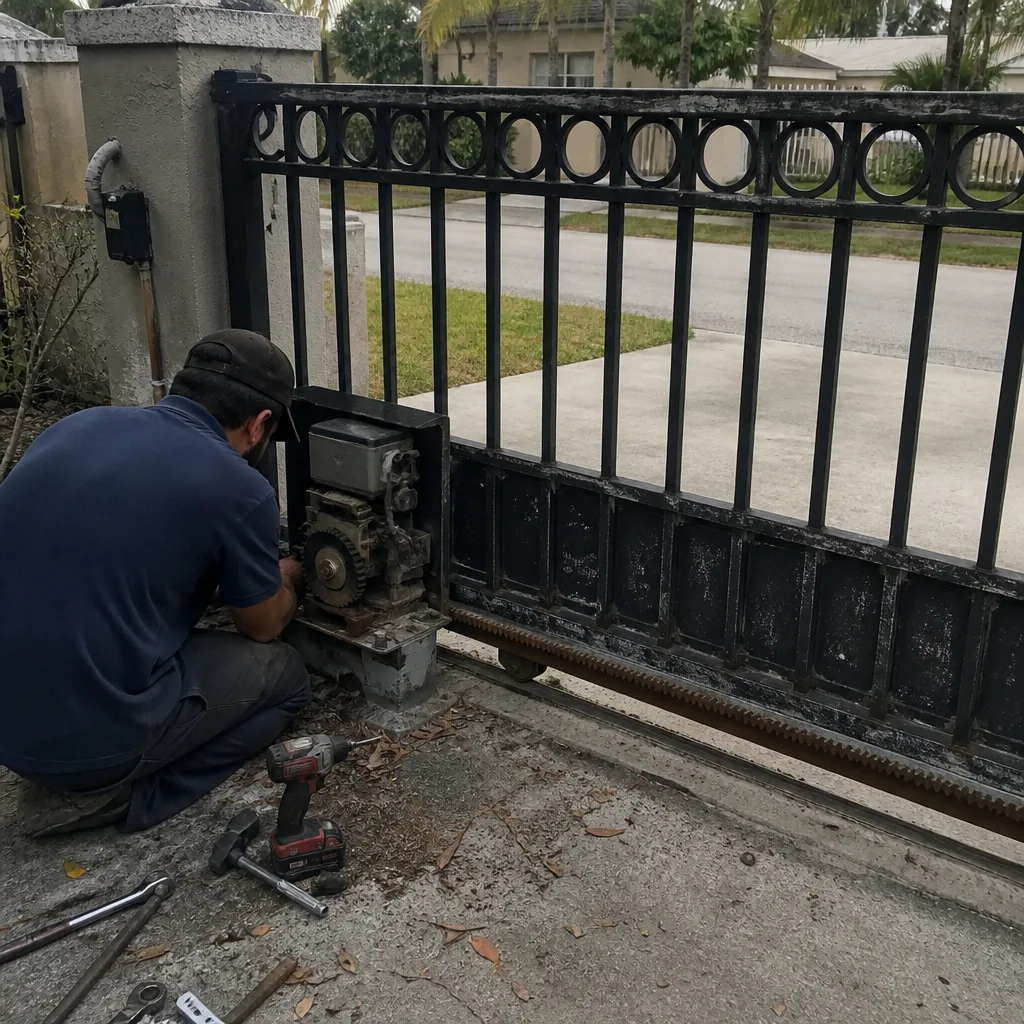 Before
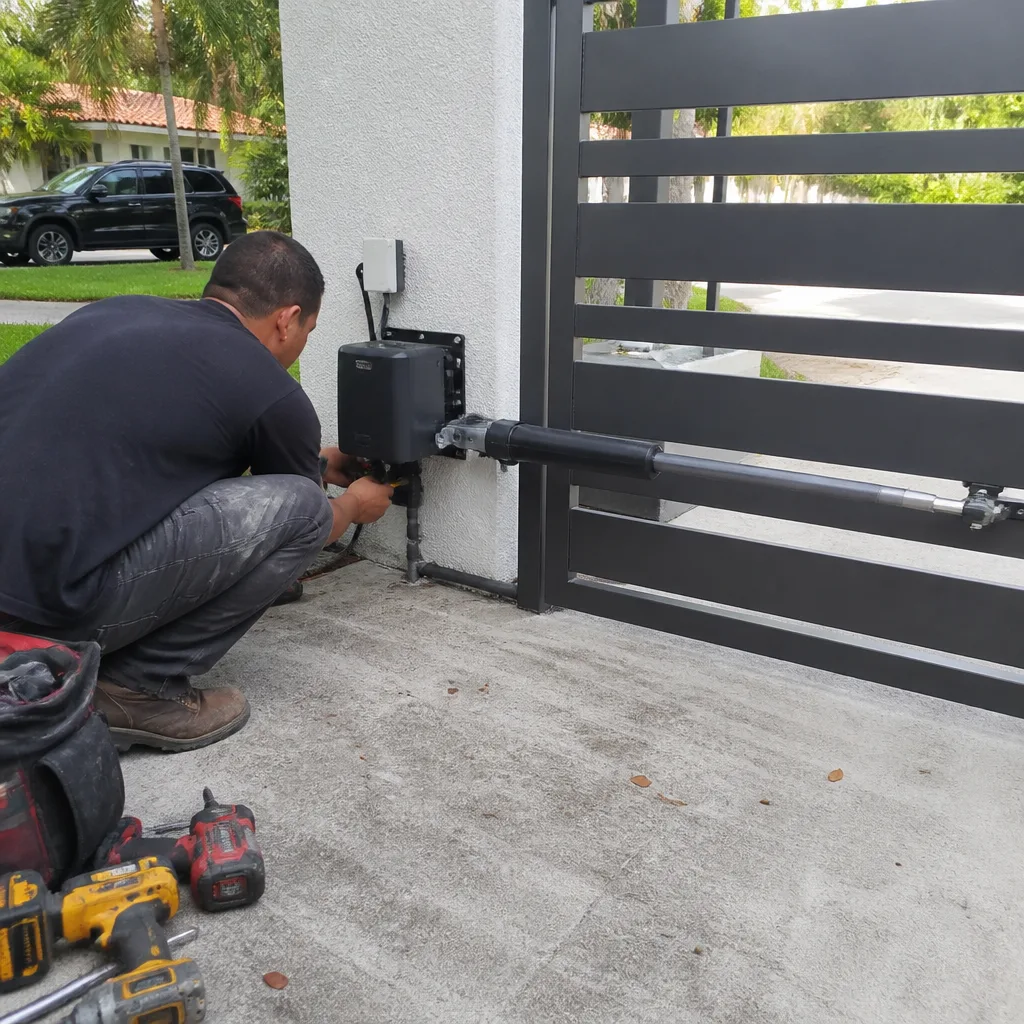 After
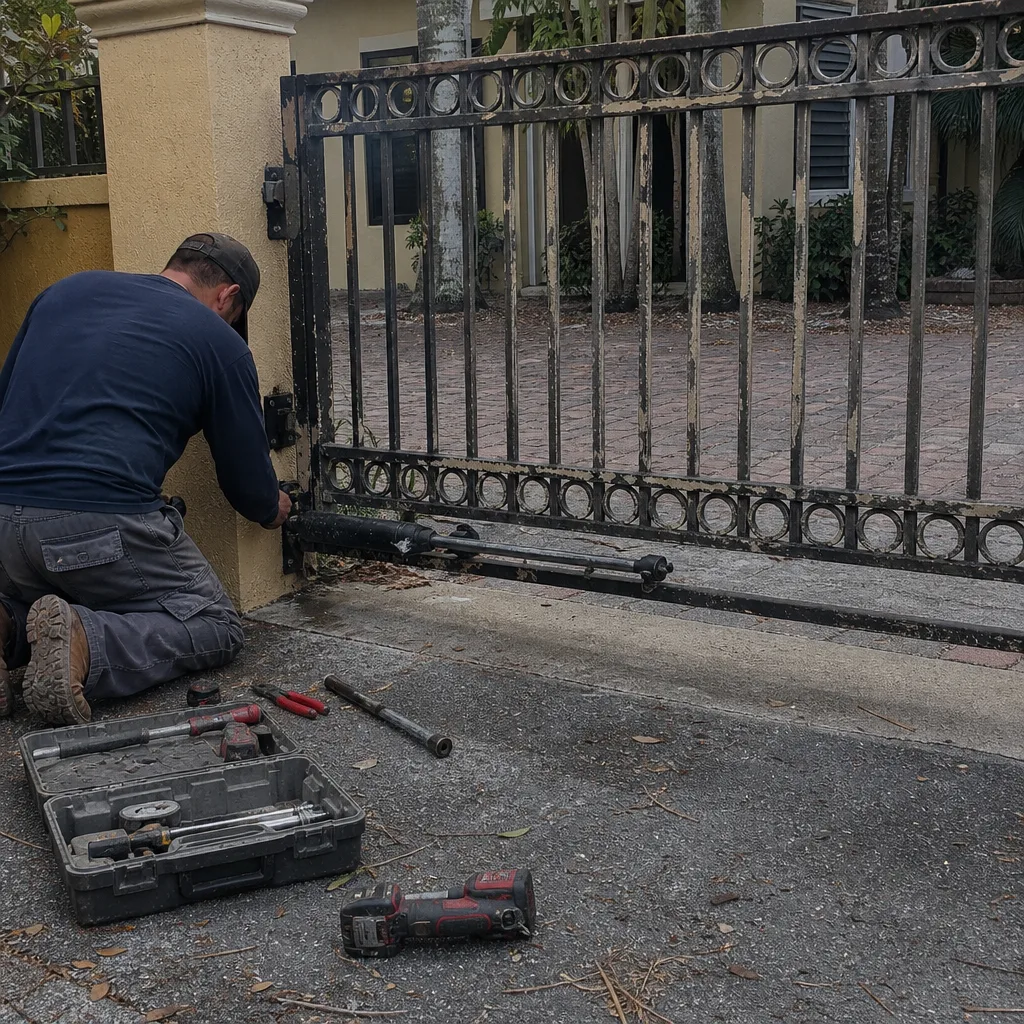 Before
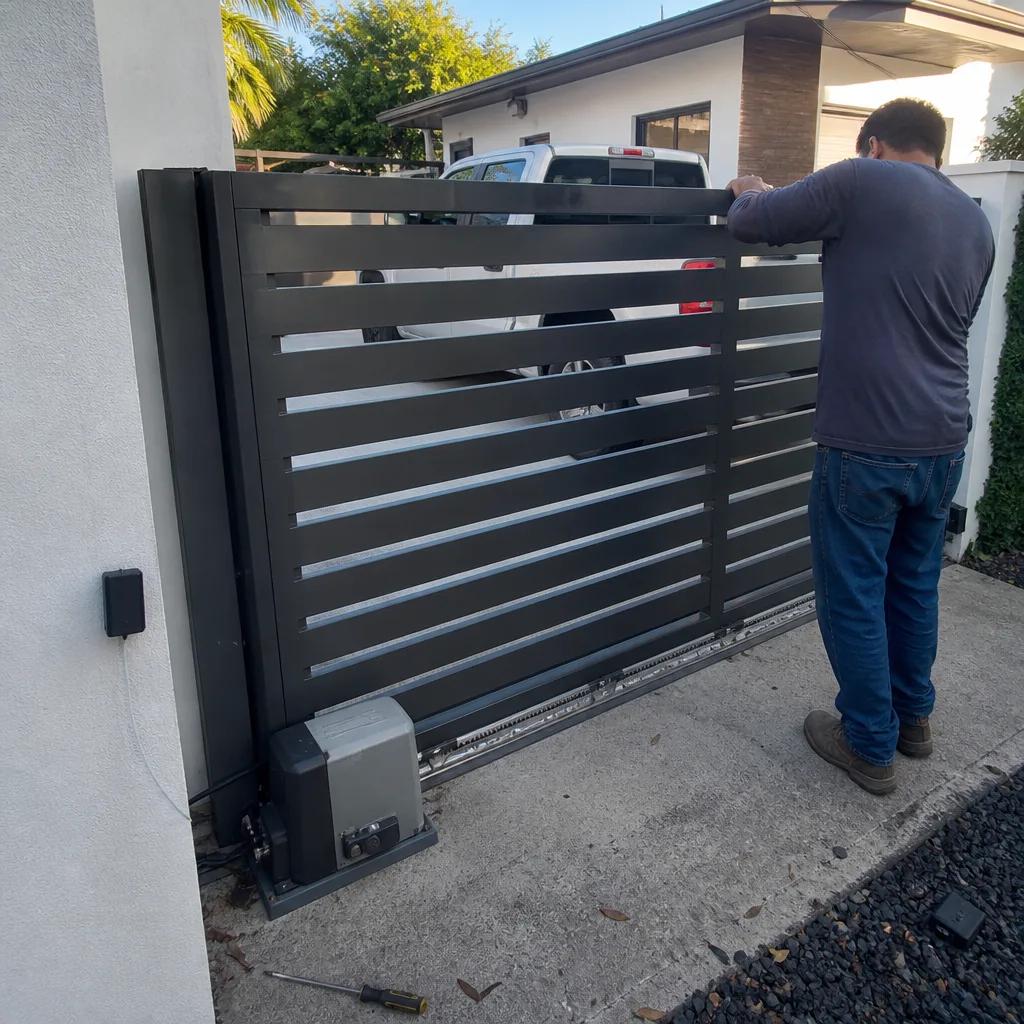 After
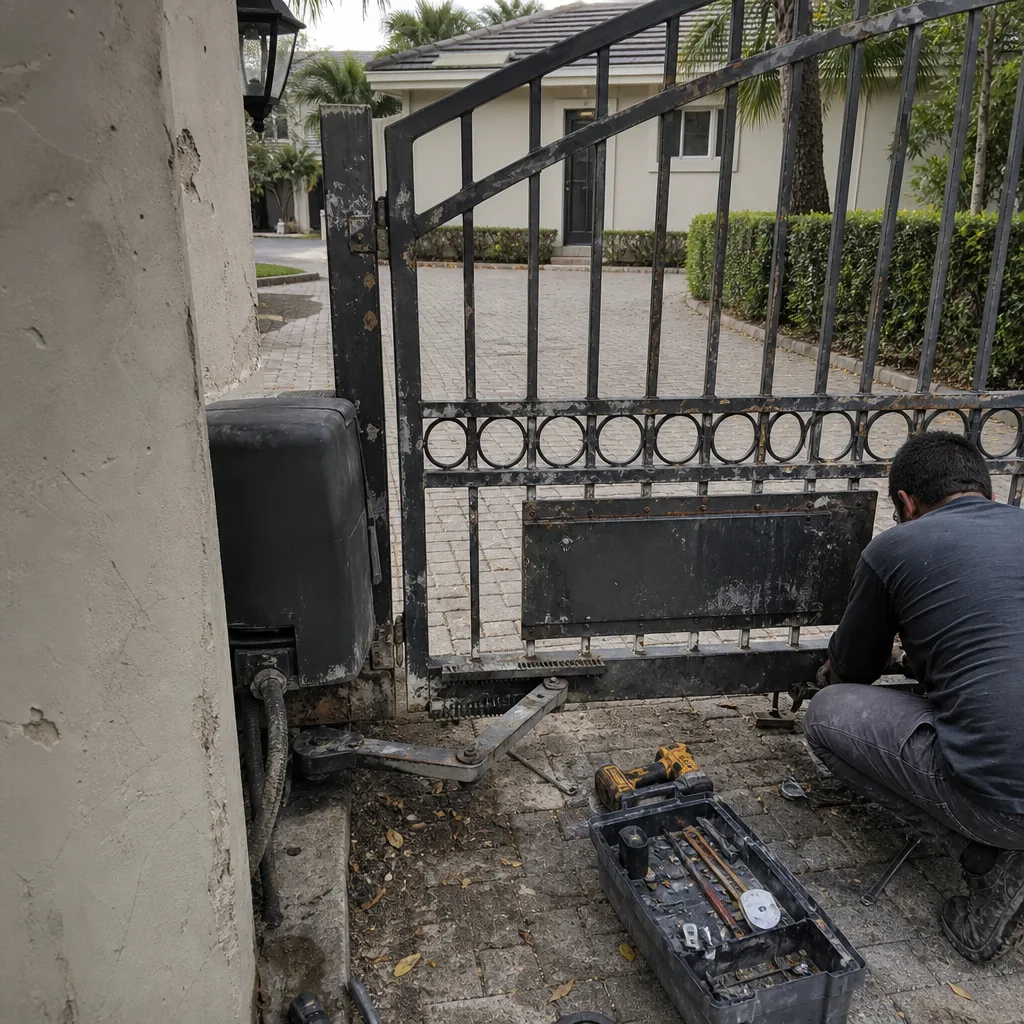 Before
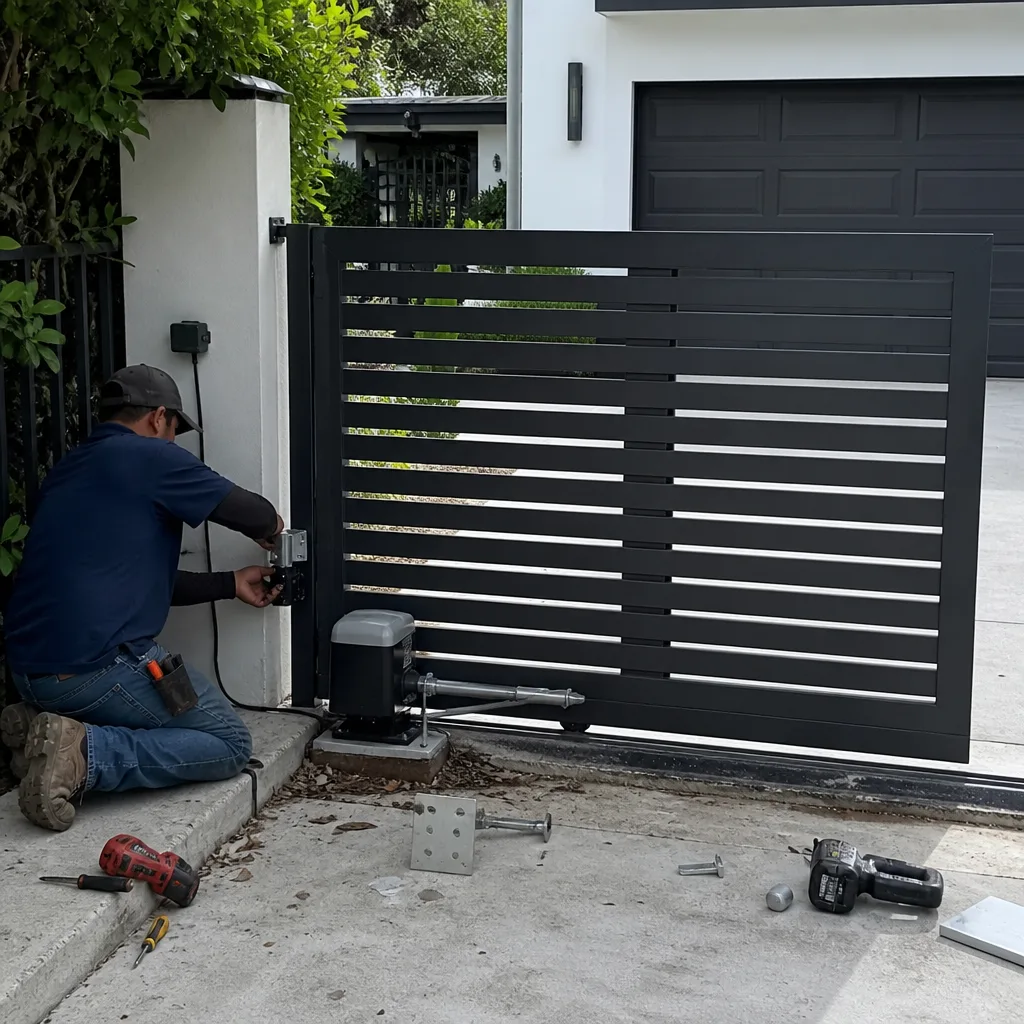 After