
Last updated October 31, 2026
 Wrought iron
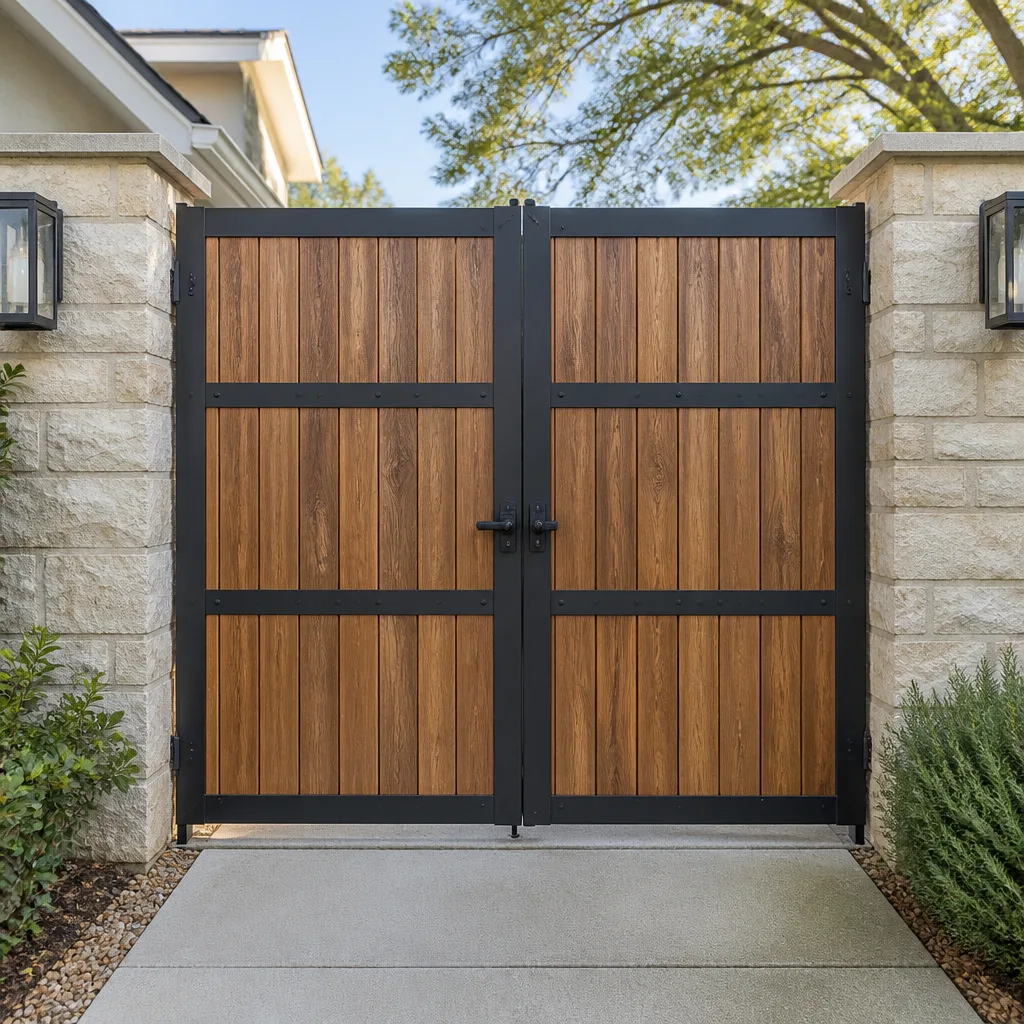 Wood & steel frame
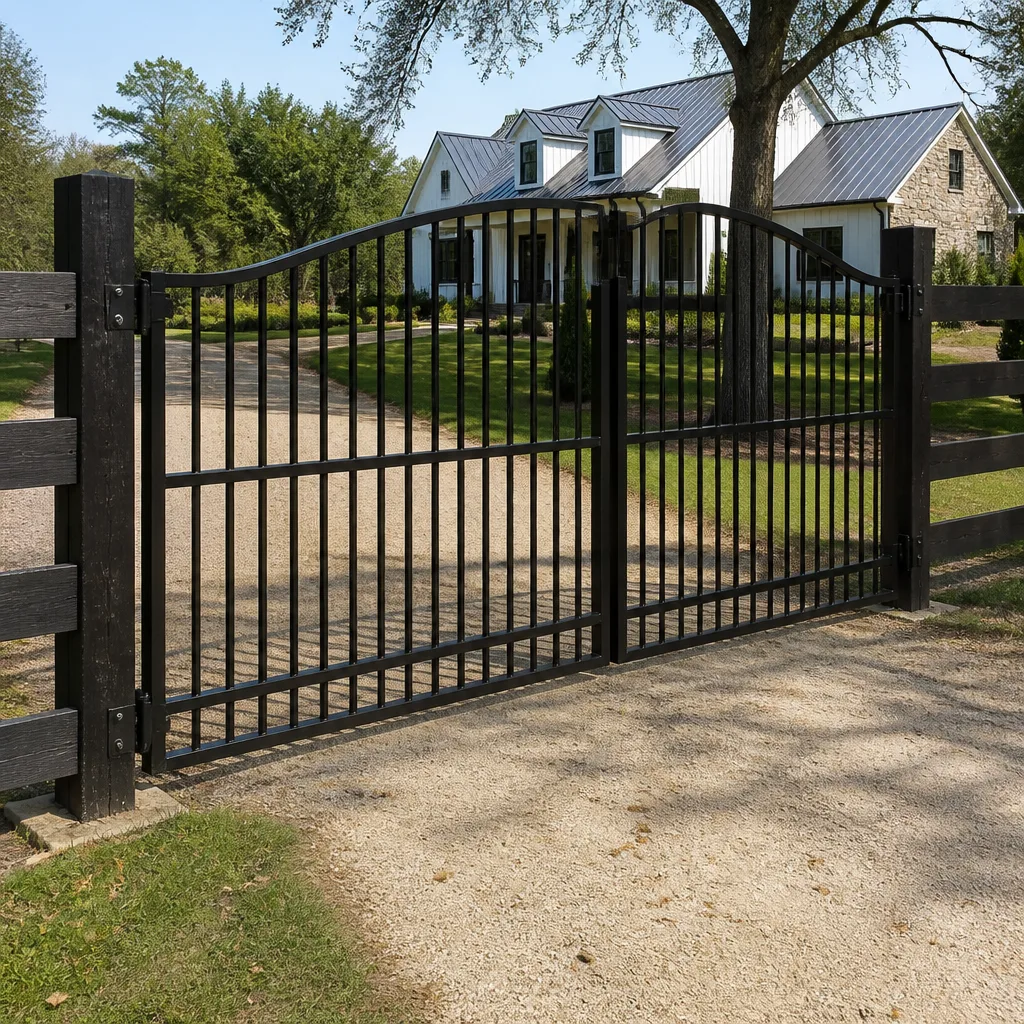 Farm & ranch
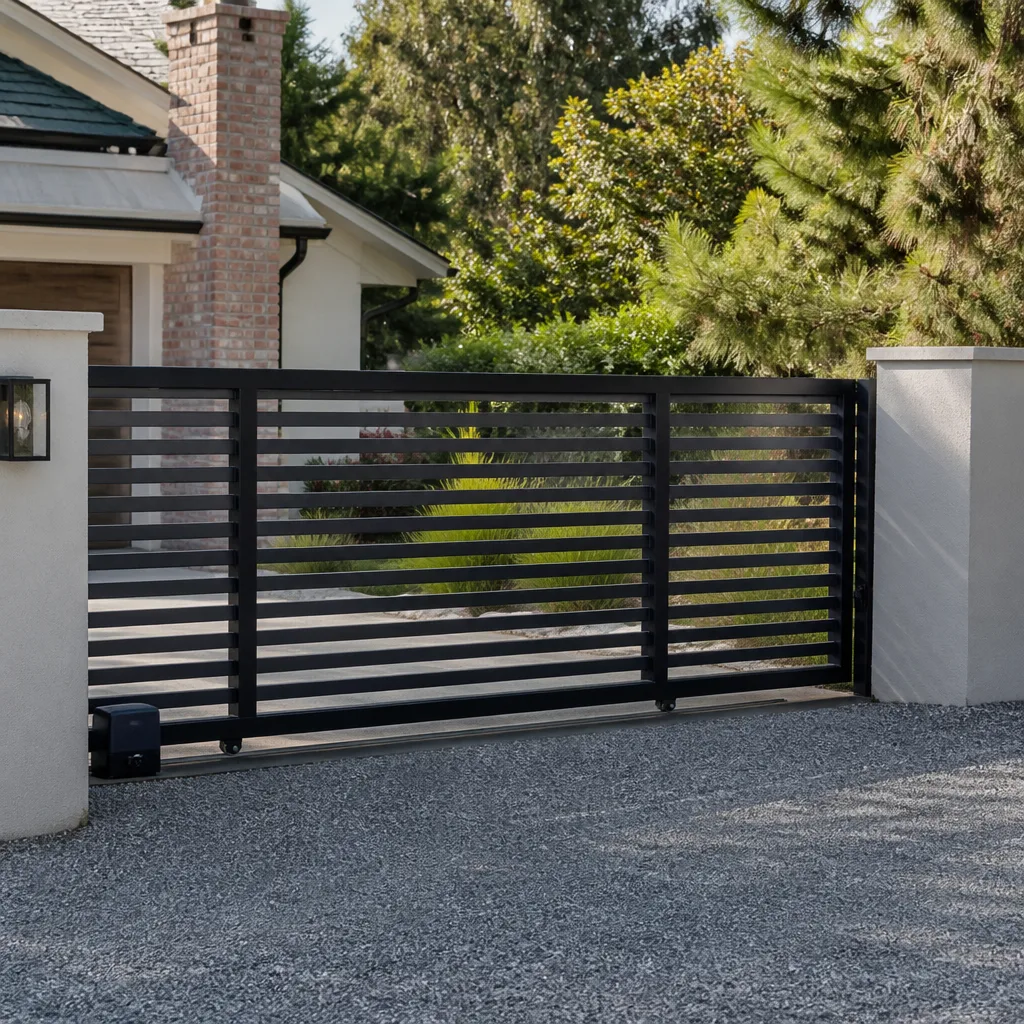 Sliding driveway gates
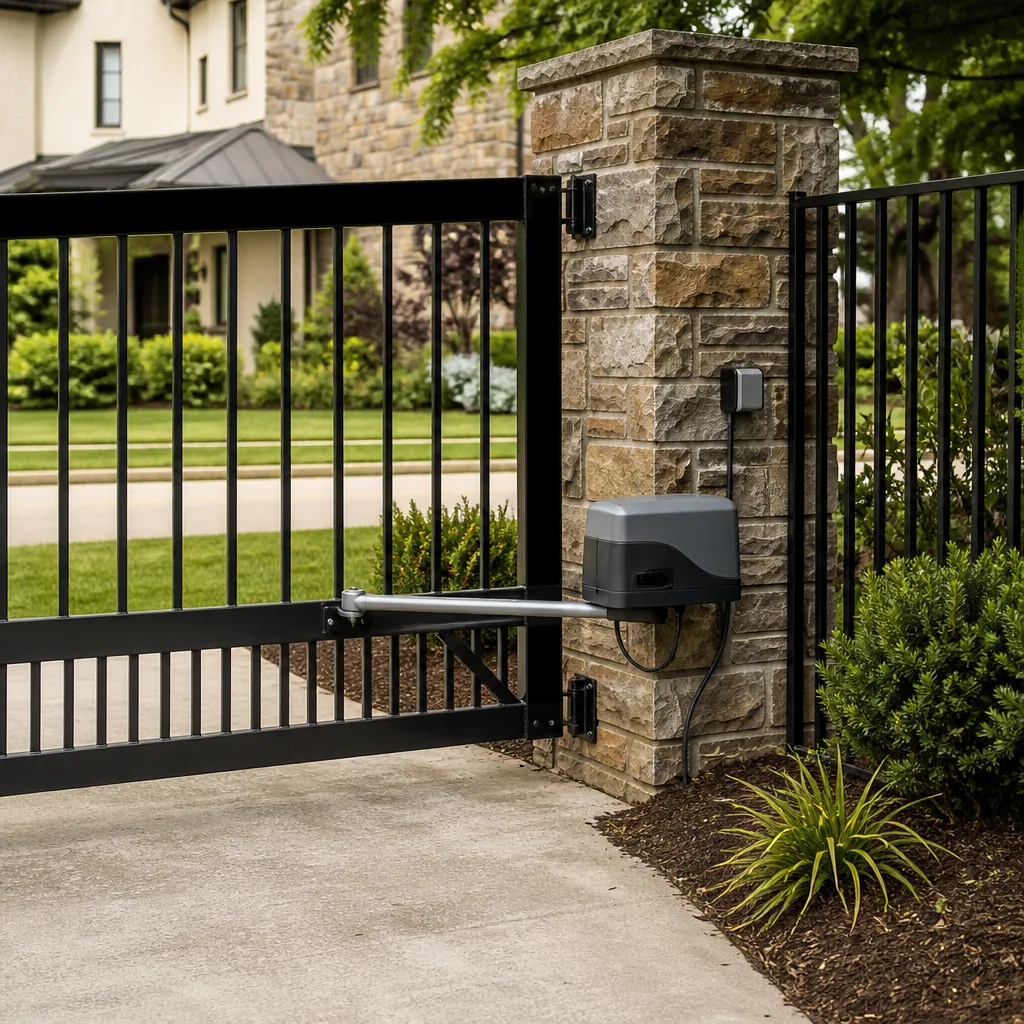 LiftMaster operators
Free on-site gate assessment - hinges, posts, and your LiftMaster or Nice gate operator checked before anything is quoted
The assessment is free and the quote is the invoice.
Get your free estimateDIY vs Professional Gate Repair: The Miami Homeowner’s Decision Guide
A homeowner in Kendall watched three YouTube tutorials, replaced his gate operator himself, and saved $400. Six weeks later, an improperly wired safety reversing sensor failed to detect his car bumper, causing $3,200 in vehicle damage. The operator was installed correctly – the safety circuit wasn’t. That’s the gap DIY gate repair guides don’t address, and it’s exactly what this guide tackles. By the end, you’ll know which Miami gate repairs you can handle with a wrench and some patience, which ones you shouldn’t touch, and how to make the smartest financial decision either way.
Quick Answer
For most Miami homeowners, the DIY vs professional gate repair decision comes down to three factors: liability, parts access, and failure mode. Lubricating hinges, adjusting latches, replacing remote batteries, and cleaning photo-eye sensors are genuinely DIY-safe tasks that take under an hour. Anything involving operator wiring, control boards, safety sensor circuits, or structural post work should go to a licensed gate specialist, because a mistake there can void your warranty, create liability if someone gets hurt, and cost far more to fix than the original repair. If your gate moves on its own power, and the problem isn’t a dead battery or dirty sensor, call a professional. Our team at Daystar Gate Repair home has the brand-specific training to diagnose it right the first time.
Styles & brands we work with
Table of Contents
- The Decision Matrix: What’s Actually DIY-Safe
- Florida Liability: Why Gate Safety Circuits Are Different
- Parts Access: The Hidden Wall Between You and a Real Fix
- The Hidden Costs of DIY Gate Repair Gone Wrong in Miami
- How to Use DIY Inspection to Cut Your Professional Repair Bill
- Electric Gates vs Manual Gates: Where DIY Lines Shift
- Common Mistakes to Avoid
- When to Call a Professional
The Decision Matrix: What’s Actually DIY-Safe
Gate repair isn’t one skill. It’s a spectrum that runs from basic mechanical maintenance at one end to integrated circuit diagnostics at the other. The problem with most online advice is that it treats every gate task as if it belonged to the same difficulty tier. Here’s the reality, based on what we see across Miami neighborhoods from Pinecrest to Palmetto Bay.
Genuinely DIY-safe tasks share three characteristics: no electrical work, no structural load, and no safety sensor involvement. These include:
- Lubricating hinges and rollers with a silicone or lithium-based spray. This prevents the squeaking and binding that accelerates wear. Do it every three months, more often if your gate faces salt air near the coast.
- Adjusting a latch or catch that’s slightly misaligned. If the gate closes but doesn’t latch smoothly, a few turns of a wrench usually fixes it.
- Replacing remote batteries and keypads. If your opener responds intermittently, this is the first thing to check. It takes five minutes and costs under $10.
- Cleaning photo-eye sensors. Miami’s humidity, rain, and landscaping debris regularly coat the sensor lenses with grime. A dry cloth and a gentle touch solve many “my gate won’t close” problems.
- Trimming vegetation that blocks the gate’s swing path or sensor line of sight.
Tasks that require a professional share the opposite characteristics. If the job involves voltage, control circuitry, tensioned parts, or anything that could hurt someone if it fails, it’s not a DIY job. We’re talking operator wiring, control board replacement, motor swaps, safety edge installation, loop detector work, and any structural post or hinge repair. The risk isn’t just that you’ll do it wrong. It’s that you’ll do it wrong in a way that looks fine for six weeks and then fails catastrophically.
One useful rule of thumb: if the repair requires you to open the operator housing and touch anything behind the cover, that’s the line. Everything inside that housing is interconnected. A loose wire on a LiftMaster or Mighty Mule control board doesn’t just stop the gate. It can disable the safety reversal system while the gate continues to operate normally.
Florida Liability: Why Gate Safety Circuits Are Different
Florida law and homeowner’s insurance policies treat automatic gates differently from almost any other home system. Here’s what most DIY guides never mention: an automatic gate that opens and closes under power is classified as a piece of machinery. When you work on the electrical components of that machinery, you’re not just fixing your property. You’re taking responsibility for how that machine behaves around people, pets, and vehicles.
Under Florida premises liability law, a homeowner with an automatic gate has a duty to maintain that gate in a reasonably safe condition. The key phrase is “reasonably safe.” Courts have interpreted this in ways that surprise many Miami homeowners. If your gate reverses improperly and pins a visitor’s child, a delivery driver, or a neighbor’s dog, the legal question won’t be whether you meant well. It will be whether you maintained the gate to the standard a reasonable person would expect. When a plaintiff’s attorney learns you replaced the control board yourself by following a YouTube tutorial, your “reasonable person” defense gets very thin.
Miami-Dade homeowner’s insurance policies add another wrinkle. Most standard HO-3 policies cover sudden and accidental damage. They also contain exclusions for damage resulting from faulty workmanship or unpermitted electrical modifications. If your DIY operator repair fails and the resulting short starts an electrical fire, the insurance adjuster has a clear path to deny the claim: the damage was caused by work you performed, not by a covered peril. This isn’t theoretical. We’ve seen the aftermath in communities from Coral Gables to Cutler Bay.
There’s also the matter of UL listings. Automatic gate operators sold in the United States carry a UL 325 certification, which requires specific safety device configurations. When you open the operator housing and rewire a sensor, you’re modifying a certified safety system. If the gate later causes an injury and the injured party’s attorney discovers the modification, the UL certification argument disappears, and with it, a major defense.
The practical takeaway: for any repair that touches the electrical system, your liability exposure exceeds the money you’re trying to save. Electric Gate Repair in Miami is one service where the “call a pro” advice isn’t just about quality. It’s about transferring liability to a company that carries insurance for exactly this kind of work.
Parts Access: The Hidden Wall Between You and a Real Fix
There’s a practical obstacle to DIY electric gate repair that most homeowners hit after they’ve already committed to the project: they can’t buy the part they need. Not because it’s expensive. Because it’s not sold to consumers at all.
Here’s how the gate operator parts market actually works in South Florida. Brands like FAAC and BFT, which dominate the high-end residential and commercial gate market, operate dealer networks rather than consumer retail channels. Their control boards, safety edge transmitters, and proprietary motors are sold to certified dealers and installers. If you call an electrical supply house in Miami and ask for a FAAC board, they’ll either tell you they don’t carry it or ask for your dealer account number. The same applies to many LiftMaster commercial-grade components.
The only alternative for a determined DIYer is the secondhand market: eBay listings, salvage lots, and discontinued-part resellers. The risks there are substantial. You can’t verify the firmware version. You can’t confirm the board hasn’t been damaged by a lightning strike or a power surge. You can’t return it when your gate does something unexpected. And if the part has been superseded by the manufacturer, you may be installing a component that’s incompatible with your existing operator in ways that aren’t immediately obvious.
This is one area where gate specialist access genuinely changes the economics. Because our team services Gate Repair in Miami across all the major operator brands, we source parts through authorized channels with verified compatibility. We know which Mighty Mule control board revision works with which motor generation, which BFT safety edge needs a termination resistor, and which FAAC revision has the known firmware bug. That knowledge isn’t in any manual. It comes from having serviced these systems hundreds of times.
The brand question matters more than most homeowners realize. A Mighty Mule operator from a big-box retailer is designed for owner installation and repair. A FAAC operator on a Coral Gables estate is designed for dealer service. The DIY decision should factor in which brand you own and whether the manufacturer even wants consumers opening the housing. Some warranties explicitly void on any non-dealer service.
The Hidden Costs of DIY Gate Repair Gone Wrong in Miami
The visible cost of a DIY gate repair is whatever you spend on parts. The hidden costs are what make the question financially one-sided in favor of professional repair for anything beyond basic maintenance. Here’s what we’ve seen across Miami, from the single-family neighborhoods of Kendall to the gated communities near Doral.
Voided manufacturer warranties. Most automatic gate operators carry warranties ranging from two to five years, but nearly all of them contain language that voids coverage if the unit is serviced by anyone other than an authorized technician. Open the housing as a DIY project, and that warranty is gone. When the operator fails two months later, you’re paying full retail for a replacement instead of a covered part.
Secondary damage from misdiagnosis. Gate operators fail in chains. A worn-out motor may be drawing excessive current. That excess current may have weakened the control board. If you diagnose the motor, replace it yourself, and don’t check the board, the new motor will fail prematurely too. Professional diagnosis means testing the whole system, not just the part that’s visibly broken.
Permit complications at sale. Miami-Dade County has specific permitting requirements for new gate installations and, in some municipalities, for major alterations to existing automatic gates. If you’ve done significant DIY work and then sell the property, the buyer’s inspector may flag the gate. In a competitive Miami market, an unpermitted gate modification can delay closing or become a negotiation chip against you.
Damage to the gate itself. A driveway gate weighs hundreds of pounds. If you disassemble the wrong component, or remove a hinge pin without supporting the gate leaf properly, the gate can drop. That’s a structural repair that costs thousands, not hundreds. We’ve picked up the pieces, literally, after DIY attempts on cantilever gates in South Miami where the homeowner underestimated the counterweight.
The do-over cost. This is the one DIY guides never calculate. You spend a Saturday troubleshooting. You order a part. It’s wrong. You order another part. You eventually give up after two or three weekends and call a professional. The professional now has to undo your work before beginning the actual repair, which adds labor hours. At Daystar Gate Repair, we see this pattern regularly. The homeowner didn’t save the $400 an honest repair would have cost. They spent $200 on parts, lost two weekends, and paid us to diagnose from scratch anyway.
How to Use DIY Inspection to Cut Your Professional Repair Bill
Here’s the part of the DIY conversation that most articles get wrong: you can absolutely save money by doing work yourself, just not the work you think. The money-saving DIY move isn’t replacing a control board. It’s documentation. When you do a thorough pre-service inspection and hand the technician organized information, you pay for less diagnostic time. Here’s how to do it right.
Step 1: Record the exact sequence of the failure. What did the gate do, and in what order? Did it start moving and then stop? Did it make a sound before failing? Did it happen after rain, after a power surge, or after the landscaping crew came through? These details are diagnostic gold. Write them down in chronological order.
Step 2: Photograph everything. Take clear photos of the operator housing with the cover on, the control board with the cover off (photograph, don’t touch), the hinges, the wheels, the track or rail, and the safety sensors. Get the model number and serial number plate in frame. If the gate is sagging, photograph it from the side so the technician can see the angle.
Step 3: Note the power situation. Is the operator plugged into a GFCI outlet? Is there a battery backup? Does the breaker trip when the gate is activated? Breaker-tripping is a major clue that points to electrical faults in the motor or wiring, not a programming issue.
Step 4: Test the manual release. Every automatic gate has a manual release mechanism, usually a lever or key. Operate it. Does the gate swing freely by hand, or does it bind? A gate that’s hard to push manually points to a mechanical problem. A gate that swings freely but won’t move under power points to an electrical or operator problem. This one test splits the diagnostic tree in half.
Step 5: Check the simple things first. Are the remote batteries fresh? Is the keypad lit? Are the photo-eyes clean and aligned? Is anything blocking the sensor path? These fixes are free and solve perhaps 15% of the “gate won’t move” calls we receive.
When you call with this information organized, the technician arrives with a working hypothesis instead of starting from zero. That’s how a one-hour diagnostic appointment stays at one hour, and how your total bill reflects repair time rather than investigation time.
Electric Gates vs Manual Gates: Where DIY Lines Shift
One of the most useful distinctions a Miami homeowner can make is between the gate itself and the operator that moves it. A gate is a physical structure: steel, aluminum, wood, or wrought iron, supported by hinges and posts. An operator is an electrical machine attached to that structure. The DIY rules are completely different for each.
On the manual side: hinges get lubricated, latches get adjusted, and the gate leaf itself can be touched, tightened, and aligned. These are mechanical tasks. If you’re comfortable with a wrench and you understand that a supported gate weighs hundreds of pounds, you can handle most of them. The key safety rule is never to remove a hinge or support post without fully supporting the gate leaf’s weight. In coastal Miami neighborhoods like Coconut Grove and Key Biscayne, salt-air corrosion accelerates hinge wear, so you’ll get more practice at this than an inland homeowner would.
On the electric side: everything changes. The operator contains line voltage, a control board worth $200 to $800, a motor, a capacitor that holds a charge even when the power is off, and wiring that connects to safety sensors. None of these components respond well to guesswork. Capacitors specifically can deliver a shock even after the unit is unplugged. If you don’t know how to discharge one safely, you shouldn’t be inside the housing.
The brands themselves align along this spectrum. A Mighty Mule from Home Depot is explicitly marketed for consumer installation, with simplified wiring and color-coded connectors. A BFT or FAAC operator is a different machine entirely, built for commercial-grade duty cycles and installed by dealers who’ve completed brand training. When we service Gate Installation in Miami, the conversation about which operator fits which application always includes the homeowner’s comfort level with the system they’re buying.
The practical takeaway: think of your gate as two separate assets. The metal asset is yours to maintain. The electric asset is a machine that deserves the same respect you’d give a circuit breaker panel or a water heater. You probably wouldn’t rewire your breaker panel because a YouTube video said it was simple. An automatic gate operator sits in the same category.
Common Mistakes to Avoid
- Opening the operator housing without disconnecting power. Even unplugged, a capacitor can hold a charge. Always disconnect at the breaker and verify voltage is absent before touching anything inside. In our experience, this is the single most common shortcut Miami DIYers take, and it’s the one with the highest injury potential.
- Replacing parts based on symptoms rather than diagnosis. “The gate won’t open” can be caused by a dead remote battery, a failed control board, a seized motor, or a tripped breaker. Buying a new board to fix a battery problem is an expensive way to be wrong. Diagnose first, purchase second.
- Bypassing safety sensors to make the gate work again. Yes, you can jump the sensor terminals and the gate will close again. You’ve also disabled the one system designed to prevent the gate from crushing a child or vehicle. Under Florida liability law, this is a nightmare waiting to become a lawsuit.
- Using the wrong lubricant. WD-40 is a solvent, not a lubricant. It strips away whatever lubricant was there and leaves the hinge metal-on-metal. Use silicone spray or white lithium grease on gate hinges and rollers. In Miami’s humidity, this matters more because corrosion moves faster.
- Ignoring the manual release function. Every automatic gate has one. Many Miami homeowners don’t know where theirs is until the power goes out during hurricane season and the gate won’t move. Locate it, test it twice a year, and keep the access key somewhere you’ll remember.
- Assuming all operators are the same. A Mighty Mule and a FAAC are both gate operators the way a Corolla and a Porsche are both cars. They share a basic function and almost nothing else. The repair procedures, parts, and diagnostic tools are brand-specific.
When to Call a Professional
Call a gate repair emergency preparedness specialist when the problem involves operator wiring, control boards, capacitor replacement, safety sensor integration, or any electrical component inside the housing. Call when your gate makes grinding noises, moves unevenly, reverses without obstruction, or trips breakers. Call when you can’t source a part through normal retail channels. Call when the gate has caused or nearly caused an injury or vehicle contact. And call when you’re not sure, because a diagnostic visit costs less than a wrong part. Daystar Gate Repair offers free estimates in Miami – call (855) 752-6802 and we’ll tell you honestly whether your repair is DIY-safe or needs a technician.
See the difference
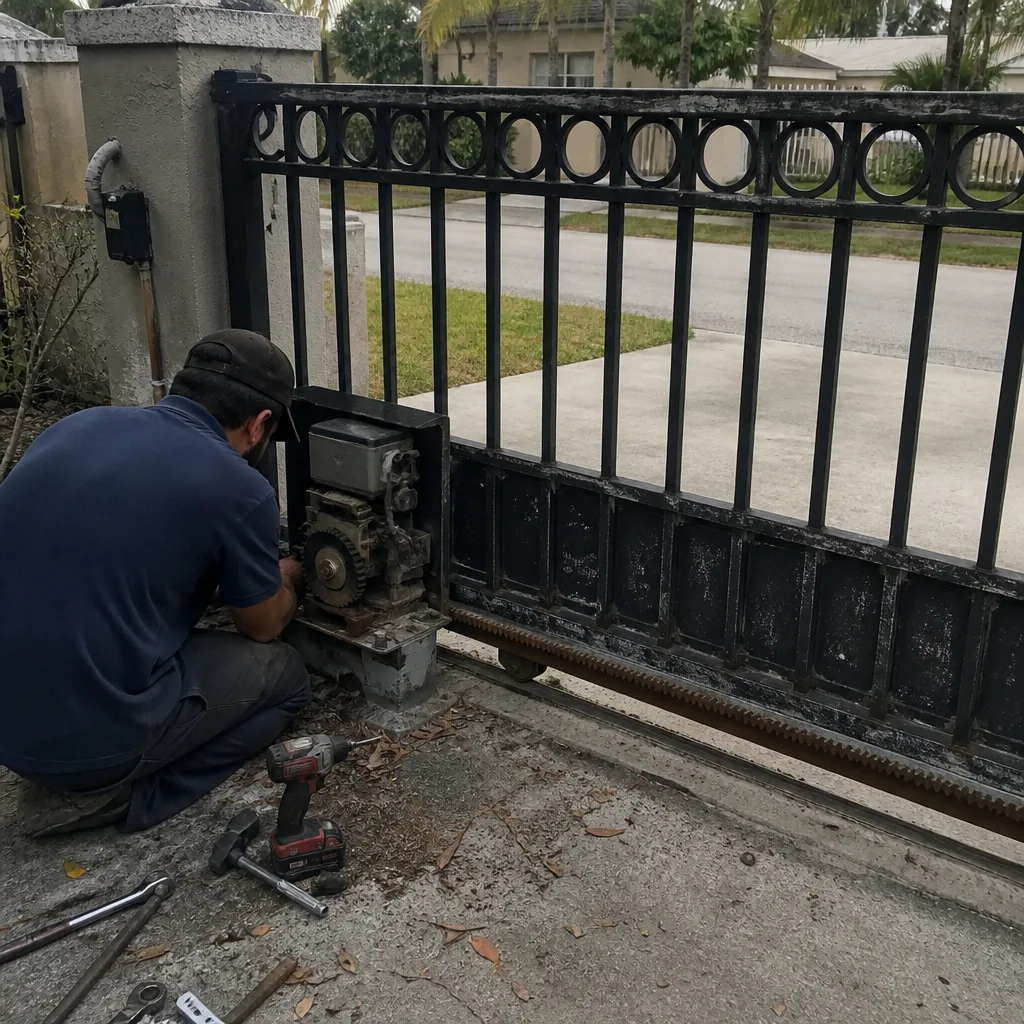 Before
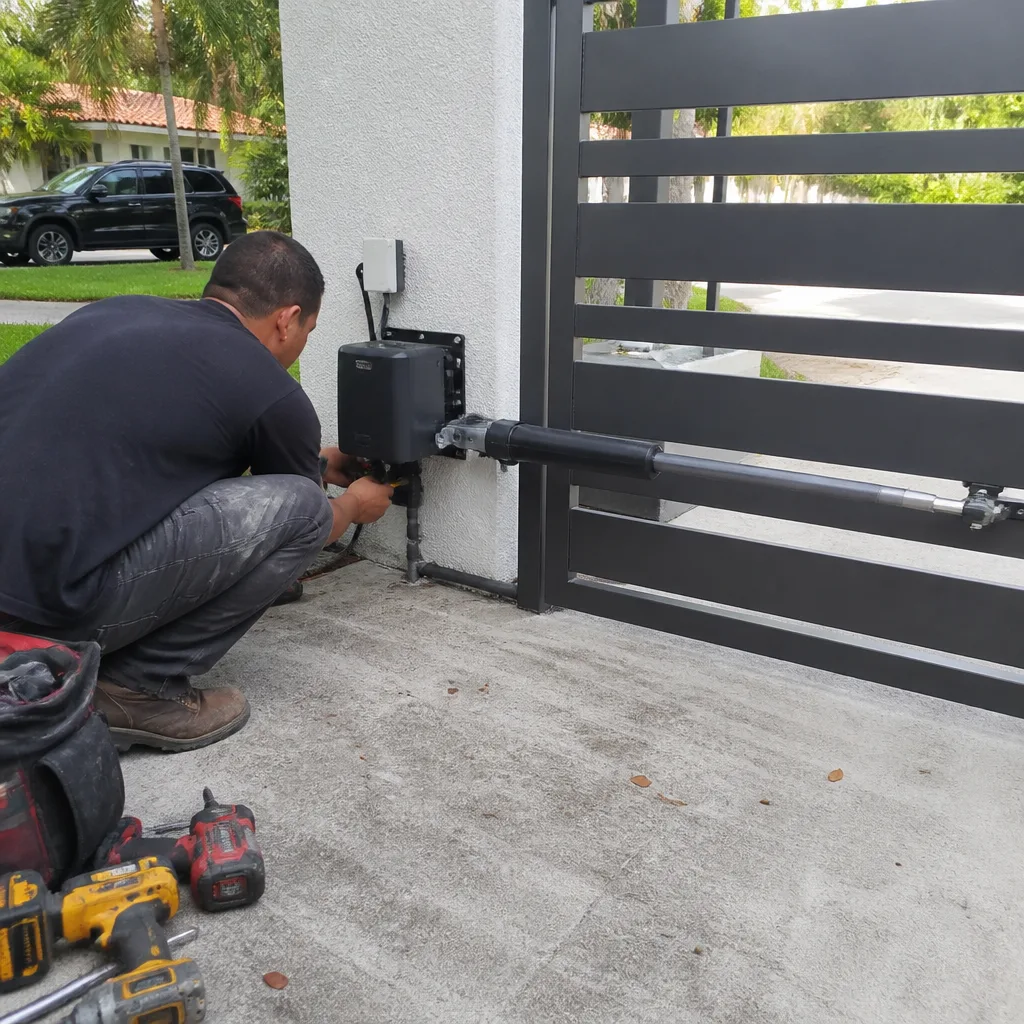 After
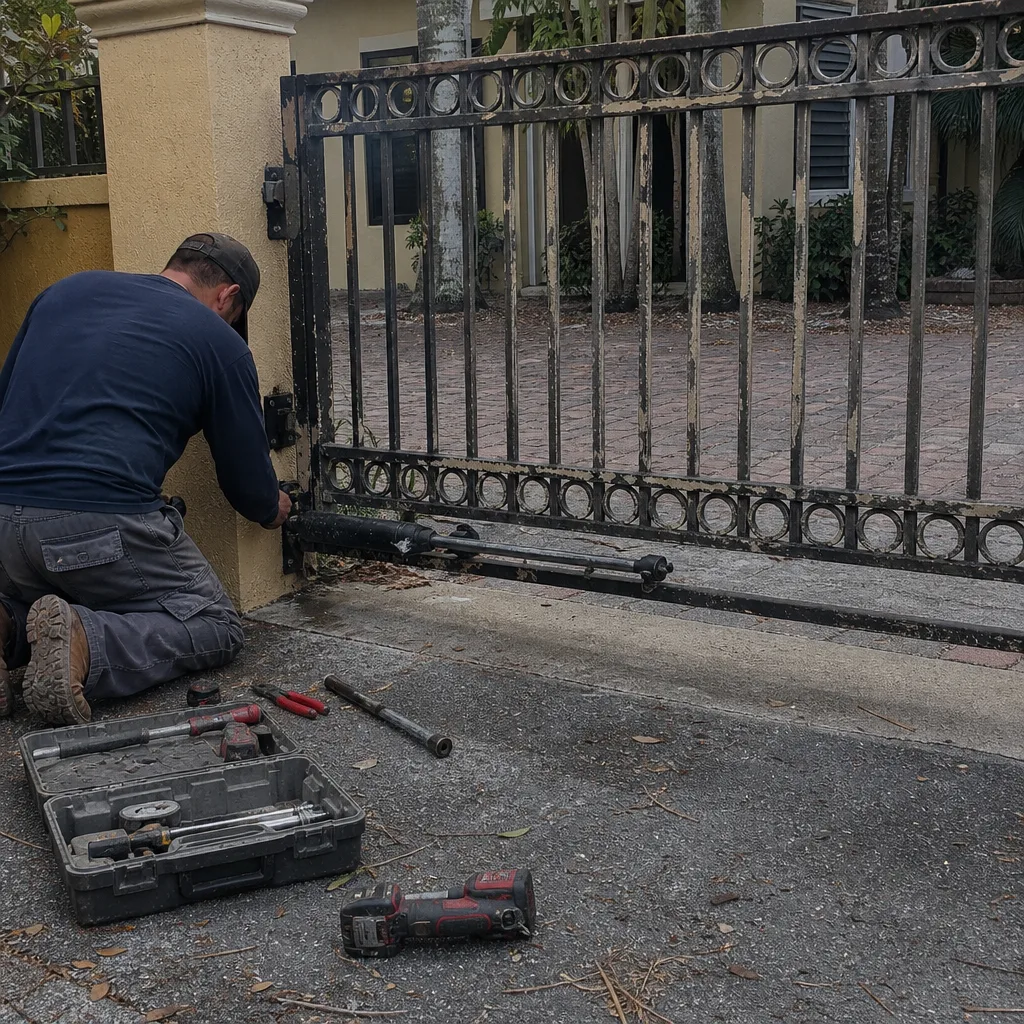 Before
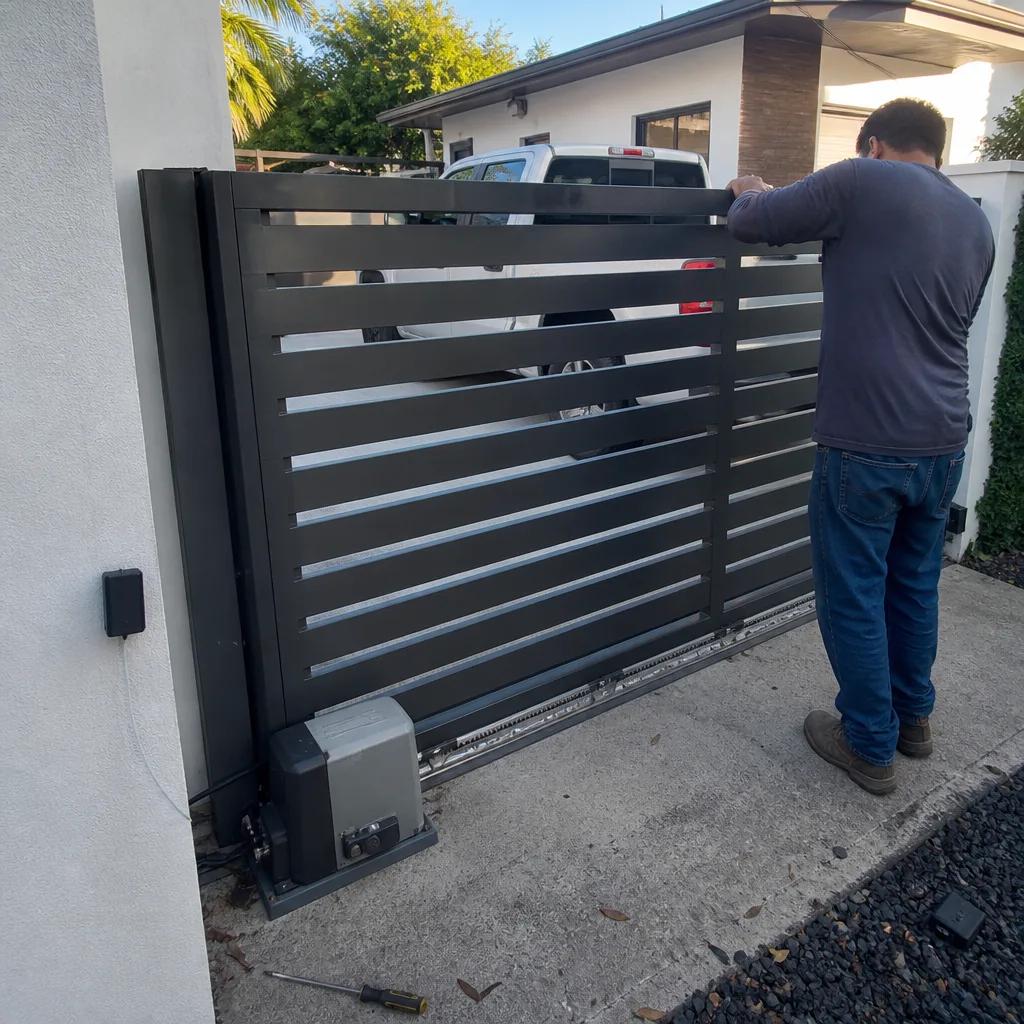 After
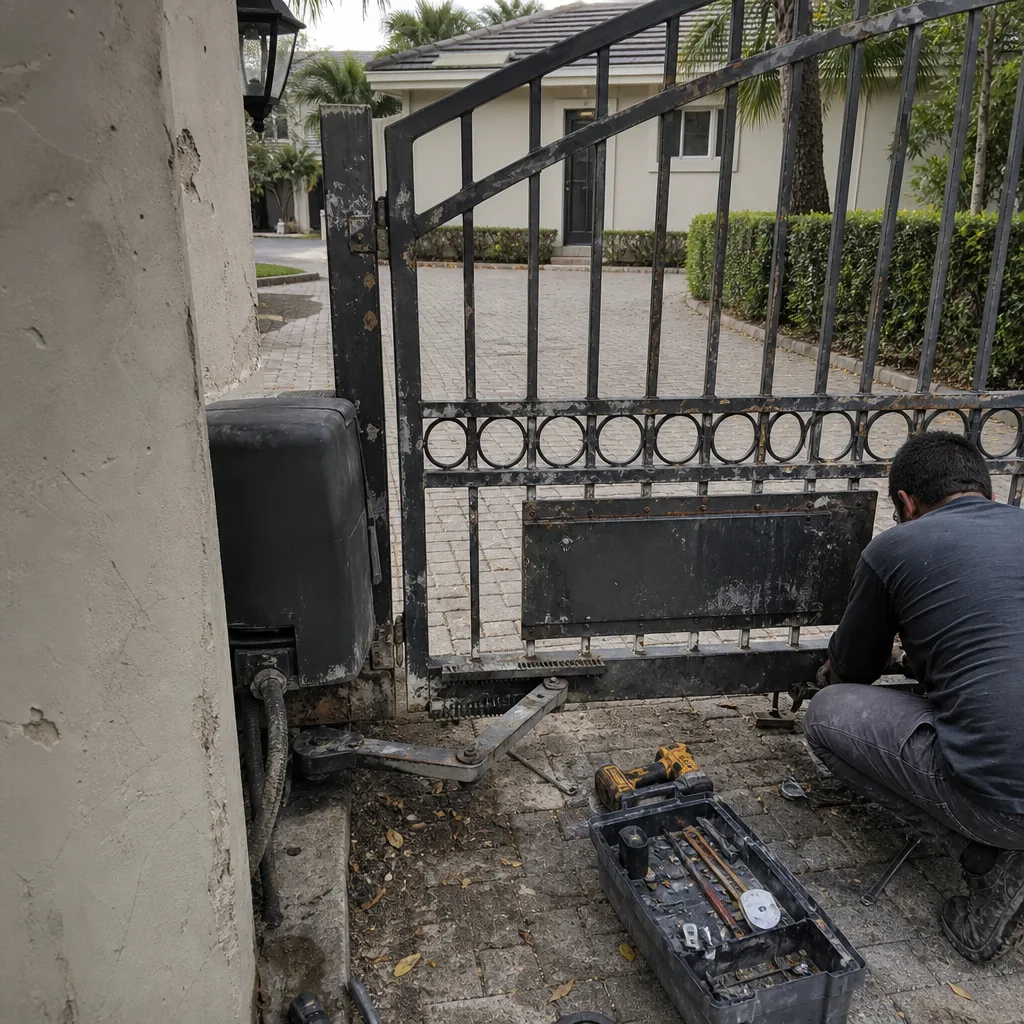 Before
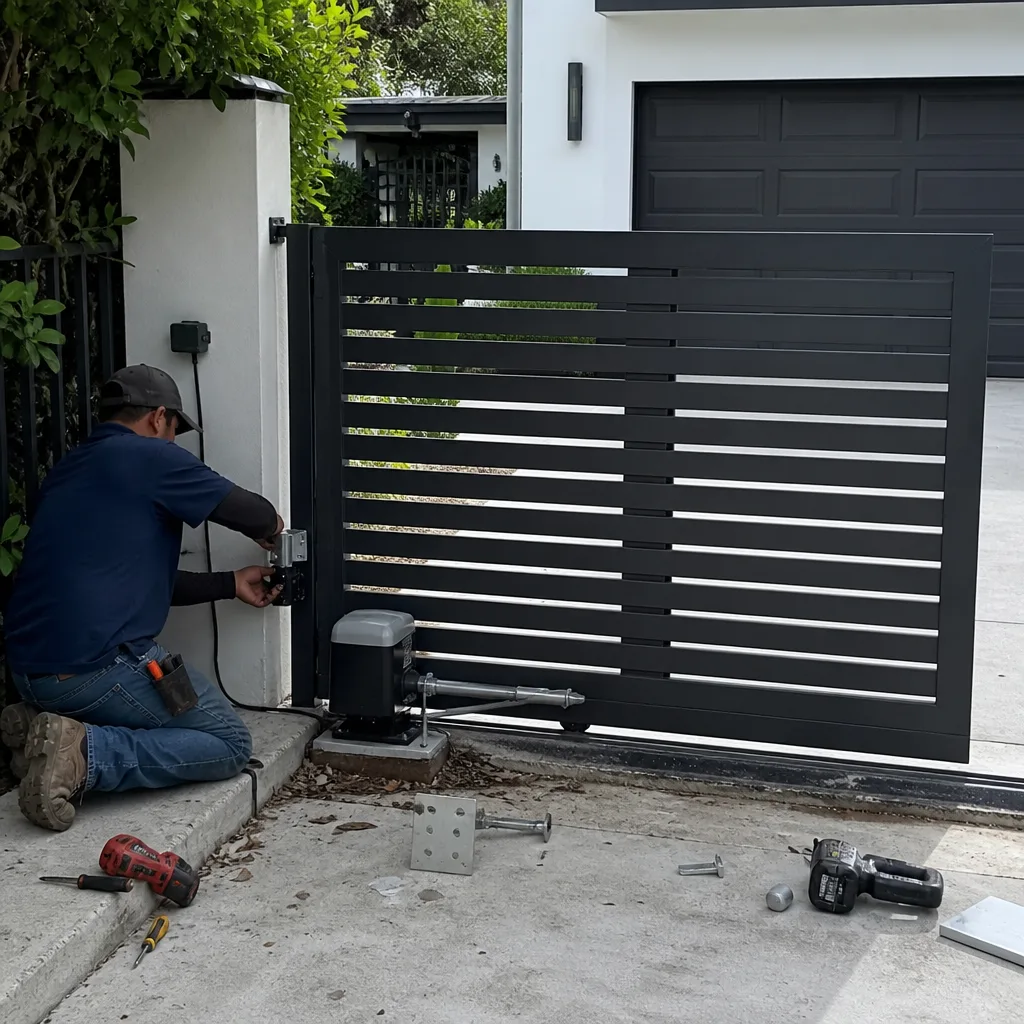 After
Frequently Asked Questions
Yes, Florida law does not prohibit a homeowner from working on their own automatic gate, but the liability and insurance consequences are yours to carry. If your repair involves the safety sensor system and someone is later injured, your DIY work becomes evidence in any lawsuit. For tasks that don’t touch the electrical system, DIY is legally and practically fine.
Basic service calls in Miami typically run $85 to $150 for the diagnostic visit, with repairs ranging from $150 for minor adjustments to $600 to $1,200 for control board or motor replacement. Luxury and commercial systems can run higher. Most reputable companies, including ours, provide a written quote before work begins, so you’ll know the total before approving anything.
Yes. Replacing a remote or keypad battery, programming a new remote to an existing operator, and resetting a keypad code are all DIY-safe tasks. You’ll need your operator’s manual for the programming sequence. If the remote is brand-new and not pairing, the issue may be the receiver board rather than the remote itself, which is a technician-level diagnosis.
FAAC and BFT are the most common brands that restrict parts to authorized dealers. Many LiftMaster commercial-grade components are also dealer-only. Mighty Mule and Ghost Controls, by contrast, sell parts through retail and are designed for consumer installation. If you own a FAAC or BFT operator in Miami, assume you’ll need a dealer for anything beyond a battery change.
Most Miami homeowner’s policies do cover hurricane-related gate damage under windstorm provisions, subject to your named-storm deductible. However, if the gate had pre-existing issues that worsened the damage, or if unpermitted DIY electrical work contributed to a failure, the claim can be complicated. Document your gate’s condition before storm season and repair known issues early.
Grinding usually indicates a mechanical issue at the hinge, wheel, or rack-and-pinion level, and lubrication may quiet it temporarily without fixing the underlying wear. If the gate is grinding against the ground, the problem is sagging hinges or a failing wheel. If the noise comes from inside the operator, the gear assembly is likely worn. Both cases deserve a professional assessment before the damage spreads.
The Bottom Line
The DIY vs professional gate repair question has a clean answer once you sort by failure mode. Lubrication, latch adjustment, battery replacement, and sensor cleaning are homeowner work. Everything behind the operator housing, everything touching safety circuits, and everything involving structural support belongs in professional hands. The reasons go beyond skill. Parts access, warranty protection, Florida liability exposure, and the real cost of a botched repair all push the same direction. The smartest DIY move in Miami isn’t replacing a control board. It’s learning to inspect, document, and diagnose well enough to make your professional repair fast and affordable—explore our more guides & resources to build that skill. That’s a skill that pays for itself on every service call you’ll ever make.
Written by the team at Daystar Gate Repair, serving Miami since 2018.
Ready to get your gate working right? Call Daystar Gate Repair at (855) 752-6802 for a free estimate. We know your gate.