
Last updated October 31, 2026
 Wrought iron
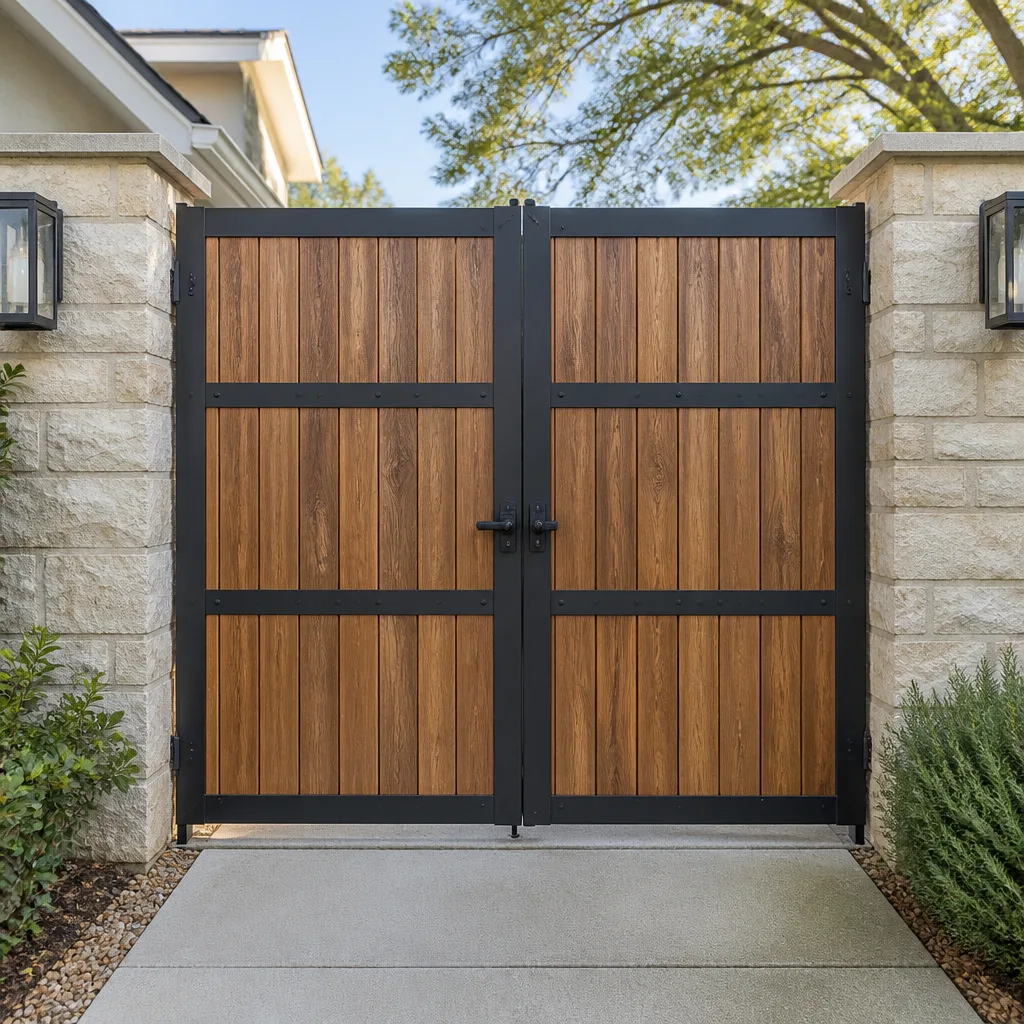 Wood & steel frame
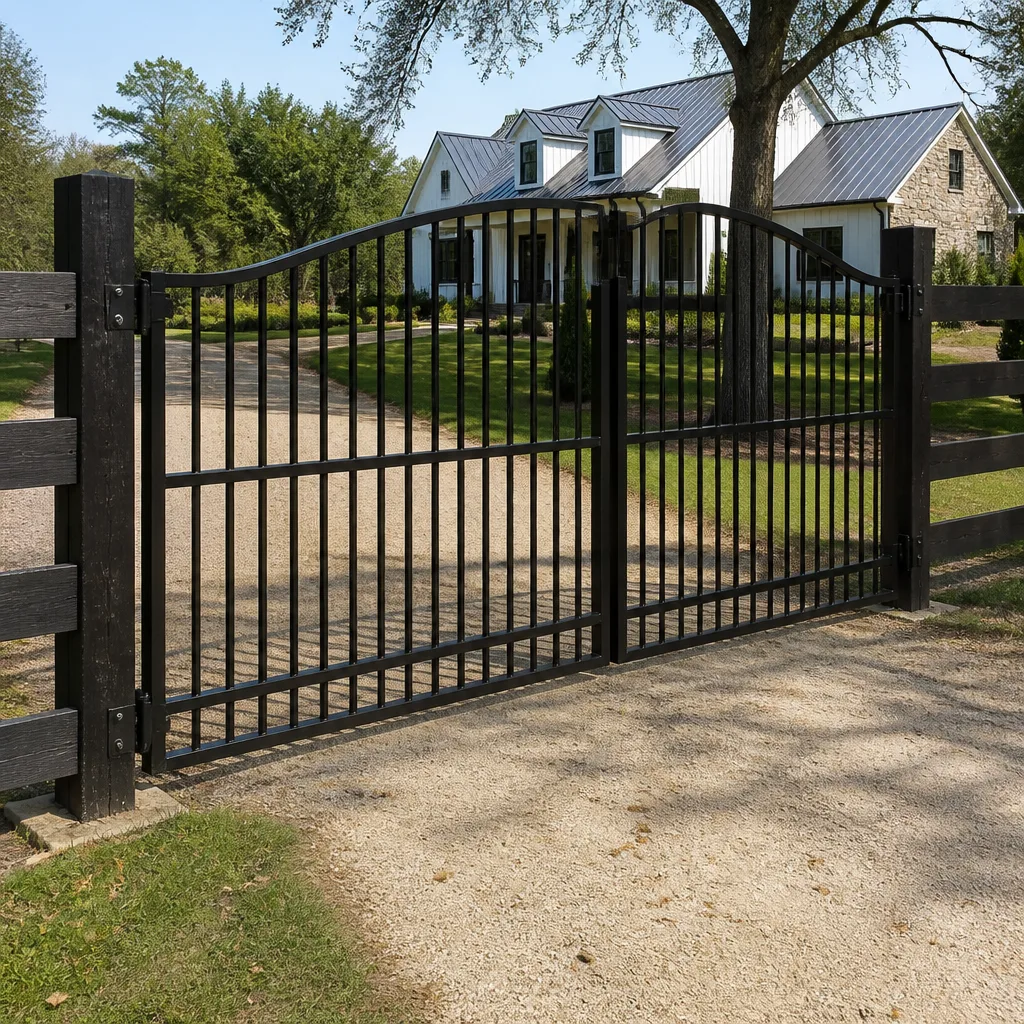 Farm & ranch
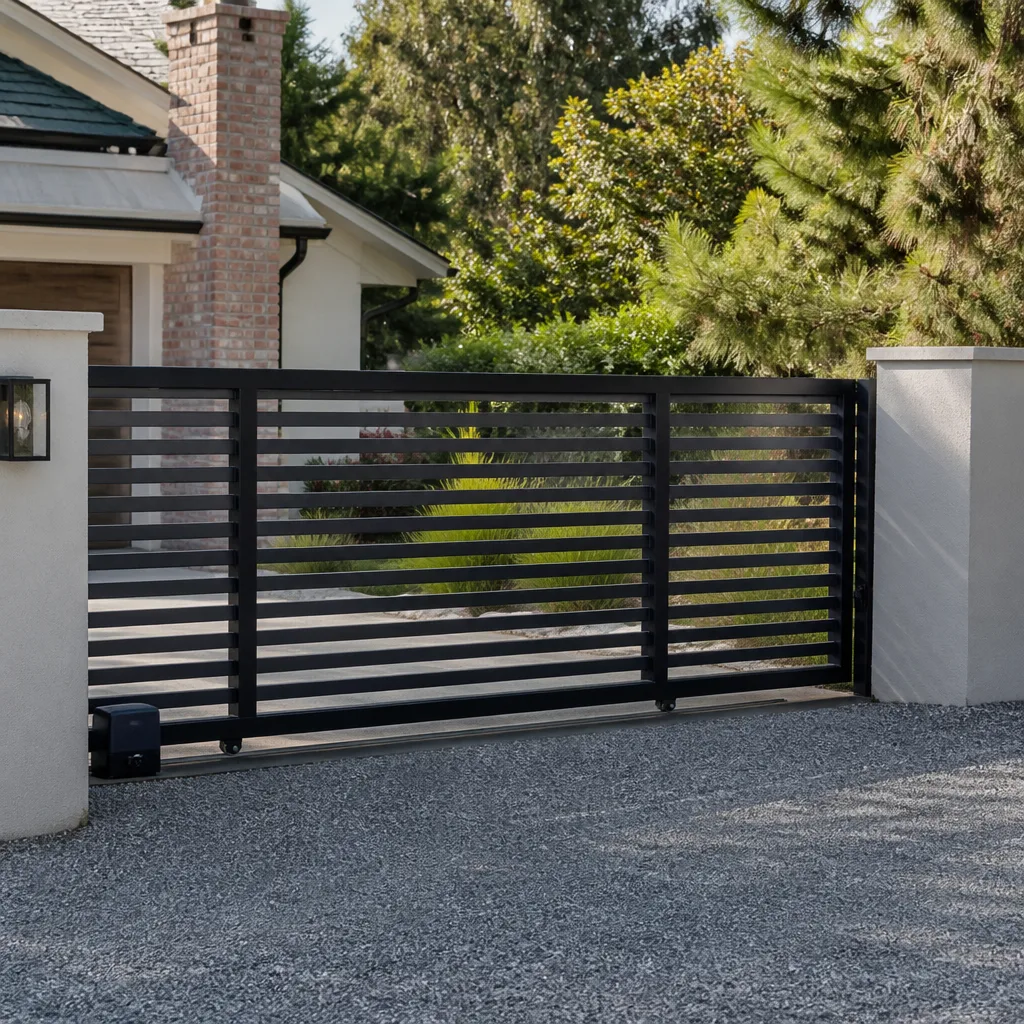 Sliding driveway gates
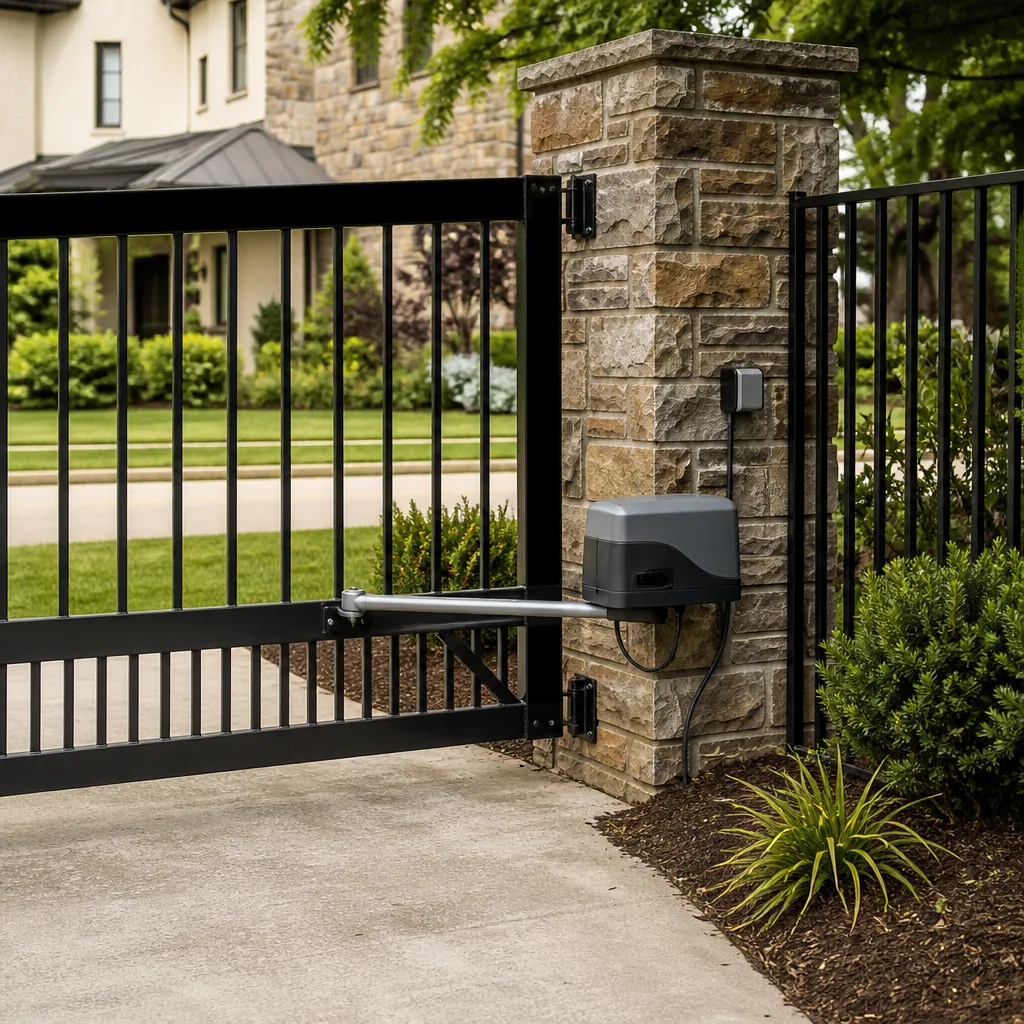 LiftMaster operators
Free on-site gate assessment - hinges, posts, and your LiftMaster or Nice gate operator checked before anything is quoted
The assessment is free and the quote is the invoice.
Get your free estimateGate Repair Maintenance Checklist for Miami Homeowners
Here’s a number that should get every Miami homeowner’s attention: the most common preventable gate repair call we see isn’t a failed motor or a snapped chain. It’s a seized or stripped hinge. The fix typically runs $200 to $600, and it almost always traces back to one skipped maintenance task: lubrication with the wrong product. Standard WD-40 evaporates in Miami heat within days, leaving metal components more exposed than they were before you sprayed them. This checklist is built for Miami’s actual environment – the year-round humidity, the salt air, the limestone soil, the afternoon thunderstorms – not a generic four-season template written for Ohio or Oregon. You’ll learn what to check monthly, what to do quarterly, which lubricants actually hold up in this climate, and when a task belongs in the hands of our Gate Repair services rather than a DIY Saturday.
Styles & brands we work with
Quick Answer
A Miami gate maintenance routine should include monthly hinge and track lubrication with a marine-grade or PTFE-based product, monthly safety sensor cleaning, quarterly inspection of control boards and wiring for corrosion, quarterly post and ground anchor checks for soil settlement, and annual professional service for electric operators and safety loops. Skipping these tasks in Miami’s heat, humidity, and salt air leads directly to the most expensive repairs: seized hinges, corroded circuit boards, and misaligned safety systems. The full checklist below breaks down exactly what to do and when.
Table of Contents
- Why Miami Gates Fail Differently
- The Lubrication Question: What Actually Works in Miami
- Monthly Maintenance Tasks
- Quarterly Maintenance Tasks
- Annual Maintenance Tasks
- Electric Gate Operator Checks Specific to High-Humidity Climates
- Post and Ground Anchor Inspection in Miami Soil
- What You Can Do Yourself vs. What Needs a Technician
- Common Mistakes to Avoid
- When to Call a Professional
- Frequently Asked Questions
- The Bottom Line
Why Miami Gates Fail Differently
Gate maintenance advice written for northern climates misses the point in South Florida. A gate in Minneapolis faces snow, road salt, and sub-zero temperatures. A gate in Miami faces a completely different set of attacks. The humidity alone keeps relative moisture levels above 70% for most of the year, which means metal components are constantly damp even when it hasn’t rained. Add the salt air from the Atlantic – which travels well inland, not just along the coast – and you have a corrosion environment closer to what boat owners deal with than what most gate manufacturers design for.
This matters because the failure modes are different. In dry climates, gates fail from mechanical wear: chains stretch, rollers flatten, springs fatigue. In Miami, we see gates fail from corrosion first and mechanical wear second. A hinge that would last fifteen years in Arizona might seize in five years in Coral Gables or Coconut Grove. A control board that would run for a decade in Denver might develop corrosion-related failures in three years near the coast. Understanding this changes what you check and how often you check it.
Our work as Daystar Gate Repair home specialists concentrates on these climate-specific failures daily. When a gate stops working in Miami, the cause is more likely environmental than mechanical. The checklist below is built around that reality, because maintaining a Miami gate means managing moisture, salt, and heat – not just greasing parts on a schedule.
The Lubrication Question: What Actually Works in Miami
The single most consequential decision in gate maintenance is what you put on the moving parts. Most hardware store lubricants are formulated for general household use in moderate climates. In Miami, they fail quickly and sometimes make things worse.
Why WD-40 Fails Here
WD-40 is a water displacer and light solvent, not a long-term lubricant. It evaporates within days in Miami’s heat and leaves behind a thin film that actually attracts dust and salt particles. Within a week of application, metal components can be drier and more exposed than before. This is why the seized hinge scenario is so common. A homeowner sprays WD-40 on the hinge monthly, believes maintenance is done, and the hinge corrodes internally anyway because the product never provided lasting lubrication.
What to Use Instead
For Miami conditions, you want one of two product categories:
- Marine-grade lithium grease – formulated for saltwater environments and high humidity. It stays in place, resists washout from rain, and provides months of protection. Good for hinges, chains, and track rollers.
- PTFE-based dry lubricants – synthetic, doesn’t attract grit, doesn’t evaporate quickly. Best for lock mechanisms, keypads, and smaller precision components where grease would collect debris.
Apply marine grease to hinges every 60 to 90 days during the rainy season (May through October) and every 90 days during the drier months. PTFE spray should go on lock mechanisms and keypad internals monthly. If you’re unsure which product to use on a specific component, err toward marine-grade. A little extra grease never killed a gate. The wrong solvent spray has killed plenty.
Monthly Maintenance Tasks
These are the tasks that should take 20 to 30 minutes per month and prevent the majority of avoidable repairs. Most require no special tools and are safe for any homeowner to perform.
- Clean and inspect safety sensors. Wipe the lenses on photoelectric sensors with a dry microfiber cloth. In Miami, salt film and dust accumulate on sensor lenses within weeks and cause false obstruction readings. A dirty sensor is the most common cause of a gate that reverses for no reason.
- Lubricate hinges with marine-grade grease. Work the grease into the hinge pin by opening and closing the gate several times. Wipe away excess. This takes five minutes and prevents the $200 to $600 seized hinge repair.
- Check chain tension on chain-drive operators. Look for sag. If the chain hangs more than one inch below the rail at its midpoint, it needs adjustment. A loose chain on a Viking or Linear operator will eventually jump the sprocket and leave the gate jammed.
- Spray PTFE lubricant into keypads and lock cylinders. This prevents the internal corrosion that makes keypads unresponsive. Do this monthly even if the keypad feels fine.
- Clear debris from the gate track. If you have a sliding gate, check the track for leaves, gravel, and sand. Miami’s afternoon thunderstorms wash debris into tracks constantly. A pebble wedged in the track can cause the operator to strain and eventually fail.
A monthly routine like this catches most problems before they become expensive. The ten minutes you spend cleaning sensors and greasing hinges in January prevents the four-figure repair in June.
Quarterly Maintenance Tasks
Every three months, set aside an hour for deeper inspection and service. These tasks require a bit more attention but are still within reach of most homeowners.
Inspect All Wiring and Connections
Open the operator cover and look at the wiring. In Miami’s humidity, you’re checking for three things: green corrosion on copper terminals, white mineral deposits on connections, and any sign of water intrusion. If you see corrosion starting, disconnect power first, then gently clean terminals with a wire brush. If the corrosion is advanced or you’re uncomfortable working inside the operator, call a professional. The electric gate repair specialists in Miami see this exact issue constantly, and early intervention prevents board failure later.
Check Gate Alignment and Level
Stand back and look at the gate from the side. It should hang straight with no visible tilt. Push on it gently. Should not rock. A gate that’s begun to sag puts stress on every component – hinges, operator, wheels – and will eventually bend a hinge pin or crack a weld. This is also the time to check the gap between gate leaves when closed. If the gap is wider at the top than the bottom, the gate is beginning to sag and needs adjustment.
Test Safety Reversal Function
Every automatic gate should have a safety reversal feature: if the gate encounters resistance while closing, it should reverse direction. Test this quarterly by placing a firm object like a traffic cone or trash can in the gate’s path and activating the close cycle. If the gate hits the object and keeps pushing, the safety system is failing. This is a critical safety issue, not a convenience item. Fix it immediately.
Inspect Wheels and Bearings on Sliding Gates
Sliding gates ride on steel wheels that corrode in Miami’s salt air. Check for flat spots, wobble, or visible rust. Spin each wheel by hand and listen for grinding. A failing wheel is a $40 part that becomes a $400 motor repair if ignored long enough, because the operator strains harder to move a gate whose wheels aren’t rolling smoothly.
Annual Maintenance Tasks
Once a year, do a comprehensive service or have one done. This is the time to catch corrosion and wear that monthly checks won’t reveal.
Deep Clean the Entire Gate
Use a mild detergent and water. Avoid pressure washing around hinges, sensors, or the operator, as high-pressure water forces moisture into sealed components. Hand-wash those areas. A clean gate isn’t just cosmetic – accumulated salt and grime accelerates corrosion, particularly in the weld joints and at the bottom rail where standing water collects after rain.
Inspect the Operator Internals Completely
Remove the cover and inspect everything: circuit board, transformer, capacitor, limit switches, gear assembly. Look for discoloration on the board, bulging capacitors, and any sign of insects – ants and roaches love the warmth inside gate operators in Miami and their nests cause short circuits. If this inspection is outside your comfort zone or you’re uncertain what you’re looking at, this is a job for a gate repair technician in Miami who can assess the internals quickly and accurately.
Test Ground Loop Detectors
Most automatic gates in Miami use in-ground loop detectors to sense vehicles. These loops are buried in the driveway and can fail from soil movement, lightning strikes, or simple age. Test yours by driving a vehicle slowly over the loop area and confirming the gate opens. If it doesn’t, if it opens intermittently, or if the gate opens for a bicycle but not a car, the loop may need replacement. Loop replacement requires cutting and repouring a section of driveway – not a DIY job.
Service or Replace Weather Seals
Rubber seals and gaskets on the operator housing degrade in Miami’s UV and heat. Inspect them. Cracked seals let in water and salt air, which leads directly to circuit board corrosion. Replacement seals are inexpensive. Replacing a corroded control board is not.
Electric Gate Operator Checks Specific to High-Humidity Climates
Automatic gate operators in Miami face an extra set of environmental attacks that don’t appear in most maintenance guides. The combination of constant humidity, salt air, and intense heat creates failure modes specific to this region. If you own an automated gate with a BFT, Linear, Viking, or Ghost Controls operator, pay particular attention to these checks.
Circuit Board Corrosion Inspection
Your operator’s control board is a printed circuit with exposed copper traces and solder joints. In Miami’s humidity, those traces corrode over time. The first symptom is usually intermittent behavior – the gate works sometimes, then doesn’t, with no obvious pattern. By the time the board fails completely, corrosion has often spread far enough that repair isn’t possible. Checking for early corrosion is simple: open the operator cover and look at the board with a flashlight. Green or white deposits on the traces and solder points mean moisture is getting in. At that stage, cleaning and sealing can extend the board’s life. Ignored, it will fail within months.
Motor Housing Seal Integrity
The seal around the motor housing is the only thing between Miami’s moist air and the motor windings. Check the seal for cracks, gaps, or signs of compression set. Run your finger along the seam where the motor meets the gearbox. If you feel oil or grease leaking out, the seal is compromised and water will eventually get in. A weeping motor seal is a warning sign, not a problem to defer.
Capacitor Condition
Capacitors in gate operators age faster in heat. A failing capacitor often bulges at the top or sides – visible when you open the cover. Symptoms include the motor humming but not turning, or the gate moving slowly. Capacitor replacement is straightforward for someone with electrical experience, but if you’re not comfortable working with live components, have a professional do it. The cost of the part is trivial compared to the cost of a motor replacement.
Battery Backup Systems
Many Miami gates have battery backup for hurricane season power outages. Test yours annually. The battery should be replaced every three to five years regardless of condition – Miami’s heat shortens battery life significantly, and a battery that worked in year two may fail in year four when a storm knocks out power and you actually need it. If your operator has no battery backup and you want one installed, the gate installation experts in Miami can add one to most systems.
Post and Ground Anchor Inspection in Miami Soil
Miami sits on limestone and clay, and that soil mix creates specific problems for gate posts and ground anchors. The soil expands when wet and contracts when dry. Over years of wet and dry cycles, this movement works posts loose. The process is slow – you won’t notice it day to day – but the cumulative effect is real. A post that was plumb and solid when installed can develop a noticeable lean within five years.
What to Check
Every quarter, check the base of each gate post for these signs:
- Visible gap between post and surrounding concrete or soil – indicates the post is working loose in its footing
- Cracks in the concrete footing – hairline cracks are normal; widening cracks that follow the post outline mean active movement
- Rust staining at the post base – water pools at the base of posts in Miami and accelerates corrosion at the exact point of maximum stress
- Root intrusion from nearby trees or palms – roots follow water, and concrete footings collect water. Palm roots in particular will grow toward and around gate post footings, eventually exerting enough force to shift the post
If you see any of these signs, mark the area and monitor it monthly. If the movement accelerates or the gate begins to bind or drag, call a professional before the post fails completely. A shifted post that’s caught early can usually be re-set. A post that has moved significantly may need to be removed and repoured, which is a substantially more expensive project.
What You Can Do Yourself vs. What Needs a Technician
There’s a line in gate maintenance between homeowner tasks and professional work. Crossing it in the wrong direction can void a manufacturer warranty, damage equipment, or create a safety hazard. Here’s where the line sits for Miami homeowners.
Safe for Homeowner Maintenance
- Cleaning safety sensor lenses
- Lubricating hinges, chains, and locks with the correct products
- Clearing debris from tracks
- Visual inspection of wiring for corrosion
- Testing safety reversal function
- Cleaning the gate and operator housing exterior
- Checking post and grounding conditions
Leave to a Licensed Technician
- Any work inside the operator housing on the circuit board, wiring, or motor. Opening the cover to look is fine. Touching components is not. Live voltage is present even when the gate is not moving, and a wrong connection can fry a board that costs $300 to $800 to replace.
- Spring replacement on swing gates. Gate springs are under high tension and can cause serious injury if released improperly. This is not a homeowner task under any circumstances.
- Limit switch adjustment. Setting the open and close limits incorrectly causes the gate to over-travel and slam into the stops, damaging the operator and potentially the gate itself.
- Loop detector replacement or installation. This requires cutting into the driveway and correctly setting the detector sensitivity.
- Any repair on a gate still under manufacturer warranty. Most manufacturers – including BFT, Linear, and Ghost Controls – void the warranty if unauthorized work is performed. A certified technician’s work keeps your warranty valid.
One more thing worth knowing: doing the homeowner-level tasks consistently does more to prevent major repairs than any professional service call. A gate that’s cleaned, lubricated, and inspected monthly rarely needs emergency repair. The gates that fail catastrophically are almost always the ones that haven’t been touched in years.
Common Mistakes to Avoid
These are the most frequent errors we see Miami homeowners make with gate maintenance. Each one is preventable and each one leads to repair costs that didn’t have to happen.
- Using WD-40 as a lubricant. It evaporates within days in Miami heat and leaves metal components dry and exposed. Use marine-grade grease or PTFE spray instead.
- Skipping sensor cleaning until the gate malfunctions. A dirty sensor causes the gate to reverse or refuse to close, and by the time you notice, the lens is often pitted from salt buildup and needs replacement rather than cleaning.
- Power washing the gate and operator. High-pressure water forces moisture past seals and into the operator housing. Hand-wash around sensitive components.
- Ignoring a slow-operating gate. If your gate moves slower than it used to, something is wrong. It could be failing capacitors, a straining motor, or dry hinges. The cause doesn’t self-correct. It gets more expensive.
- Adjusting the operator force settings to “fix” a binding gate. Turning up the force so the gate pushes through resistance masks the problem while stressing every component. Fix the binding, not the setting.
- Waiting until hurricane season to test the gate. If your gate fails in June, you’re competing with every other homeowner for service appointments. Test and service it in February or March when you have scheduling flexibility.
- Using household outdoor spray paint on gate components. Standard spray paint doesn’t adhere well to galvanized metal and accelerates corrosion in Miami’s salt air. Use paints formulated for metal in marine environments if you’re touching up rust spots.
When to Call a Professional
Some gate problems announce themselves gradually. Others fail without warning. Either way, certain situations call for a diagnostic visit from someone who works on gates every day. If your gate makes grinding or clicking sounds when operating, if it moves unevenly or jerks, if you smell burning plastic near the operator, or if the gate trips its own breaker, stop using it and call for service. The same applies to any gate that has been hit by a vehicle – even a low-speed bump can knock a gate out of alignment or crack a weld. Daystar Gate Repair offers free estimates in Miami. Call (855) 752-6802 and a gate specialist will assess the problem and give you a clear price before any work begins.
Frequently Asked Questions
Every 60 to 90 days, using marine-grade lithium grease. If your gate is within two miles of the coast, lean toward 60-day intervals during the rainy season because salt air accelerates corrosion. If you notice the hinge making any squeaking or grinding sound before the scheduled interval, lubricate immediately. For an exact product recommendation based on your gate type, call (855) 752-6802 and we’ll point you to the right lubricant.
Professional annual maintenance service for a residential automatic gate in Miami typically runs $150 to $300 depending on the gate type, the number of operators, and whether battery backup is included. DIY monthly maintenance costs about $20 to $40 per year in supplies. Compare that to the $200 to $600 for a seized hinge repair, $300 to $800 for a control board replacement, or $400 to $1,200 for a motor replacement, and the math is straightforward. Call (855) 752-6802 for a maintenance quote specific to your gate and brand.
You can perform visual inspections and cleaning of the operator exterior, but internal repairs should be handled by a trained technician. The voltage inside an operator is live even when the gate is not moving, and an incorrect connection can destroy the control board. Additionally, most manufacturers void their warranty if unauthorized repairs are performed. The safest approach is to call a specialist for anything inside the operator housing.
The combination of persistent humidity, salt air from the Atlantic, and high temperatures creates a corrosion environment that most gate components were not engineered to withstand indefinitely. Salt and moisture settle on metal surfaces continuously, and the heat speeds up every chemical reaction. This is why Miami gates need more frequent lubrication and inspection than gates in dryer, cooler climates, and why marine-grade products are the correct choice here.
Focus on three things: keep all moving parts lubricated with marine-grade grease so water doesn’t displace the protective film, keep sensor lenses clean so rain and salt film don’t cause false readings, and inspect the operator housing seal before the heavy rains start in May. If the seal is cracked, replace it before water gets inside. A pre-rainy-season inspection in April catches most seasonal problems before they become seasonal breakdowns.
Daystar specializes in nine gate operator brands including BFT, Linear, Viking, and Ghost Controls, covering everything from residential swing gates to commercial access systems. Because our entire workload is gates – not fencing, not garage doors, not general contracting – our technicians know the failure patterns and common issues specific to each manufacturer before they arrive at your property. Call (855) 752-6802 for a free estimate on any brand we service.
The Bottom Line
Maintaining a gate in Miami is different from maintaining one anywhere else. The heat, humidity, and salt air attack metal components continuously, and the products and schedules that work in other climates fail here. The core routine – monthly sensor cleaning, monthly PTFE spray on locks and keypads, quarterly marine-grade grease on hinges, quarterly wiring and post checks, annual deep service – prevents the vast majority of expensive repairs. Most of it takes less than half an hour per month and costs almost nothing in supplies. The alternative is a gate that works fine until it doesn’t, and by the time it doesn’t, the repair bill is four figures instead of four dollars. A Miami gate that’s maintained properly will run for fifteen to twenty years. One that’s ignored will fail in five. That’s the whole story.
Written by the team at Daystar Gate Repair, serving Miami since 2018. For more guides & resources, visit our blog.
See the difference
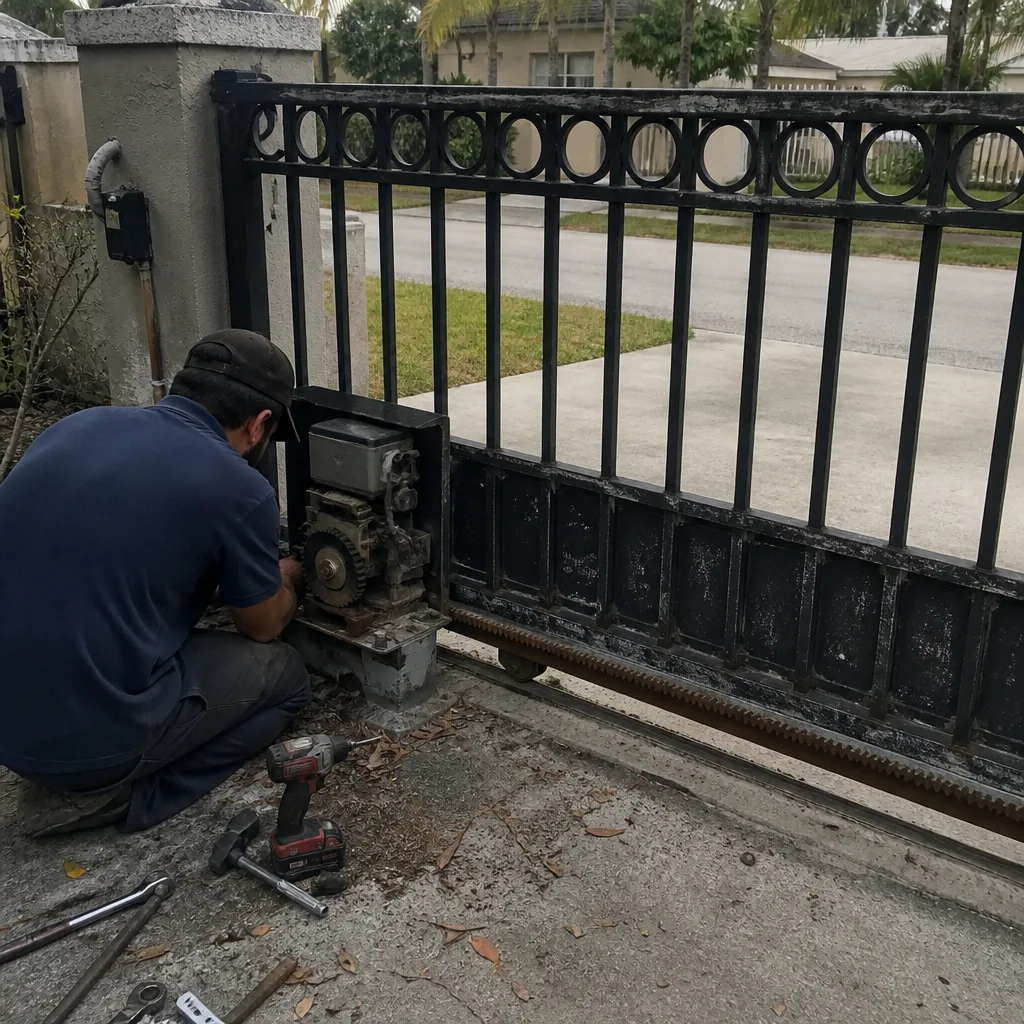 Before
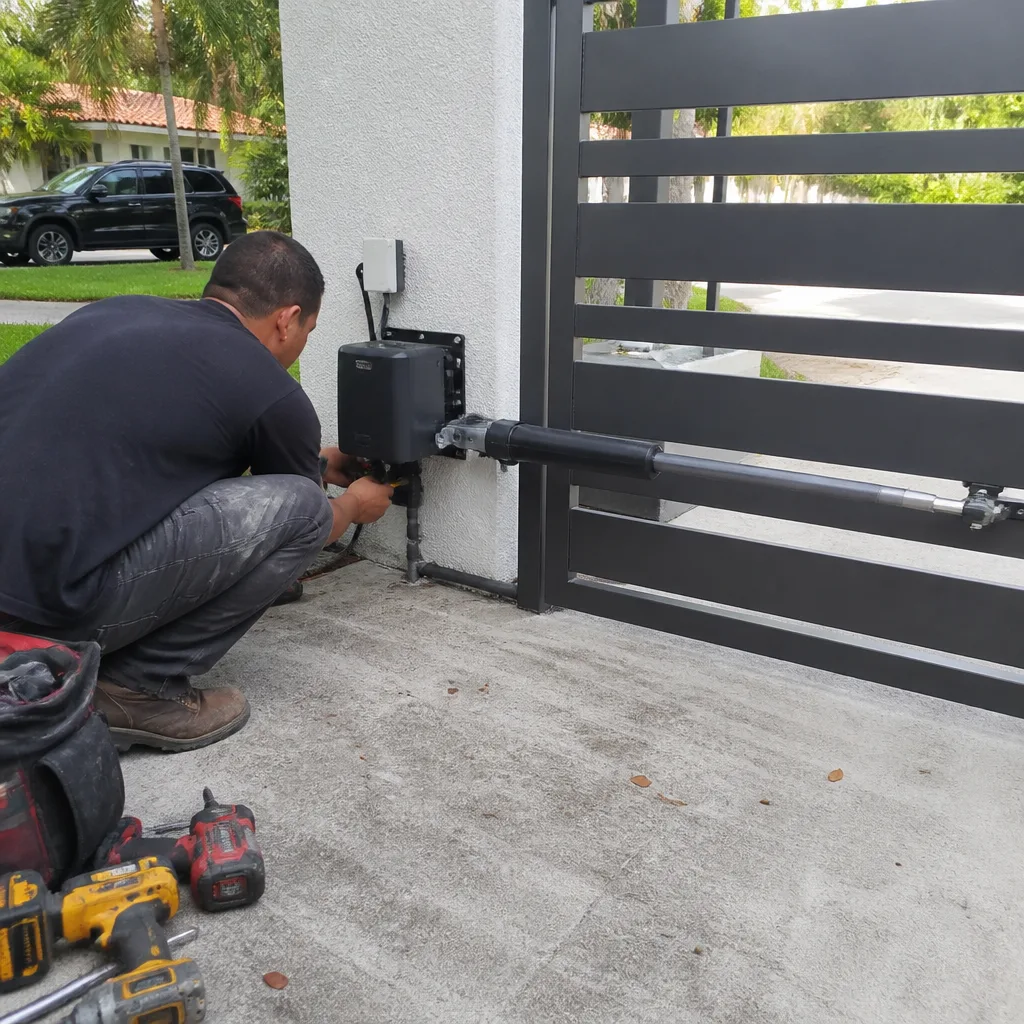 After
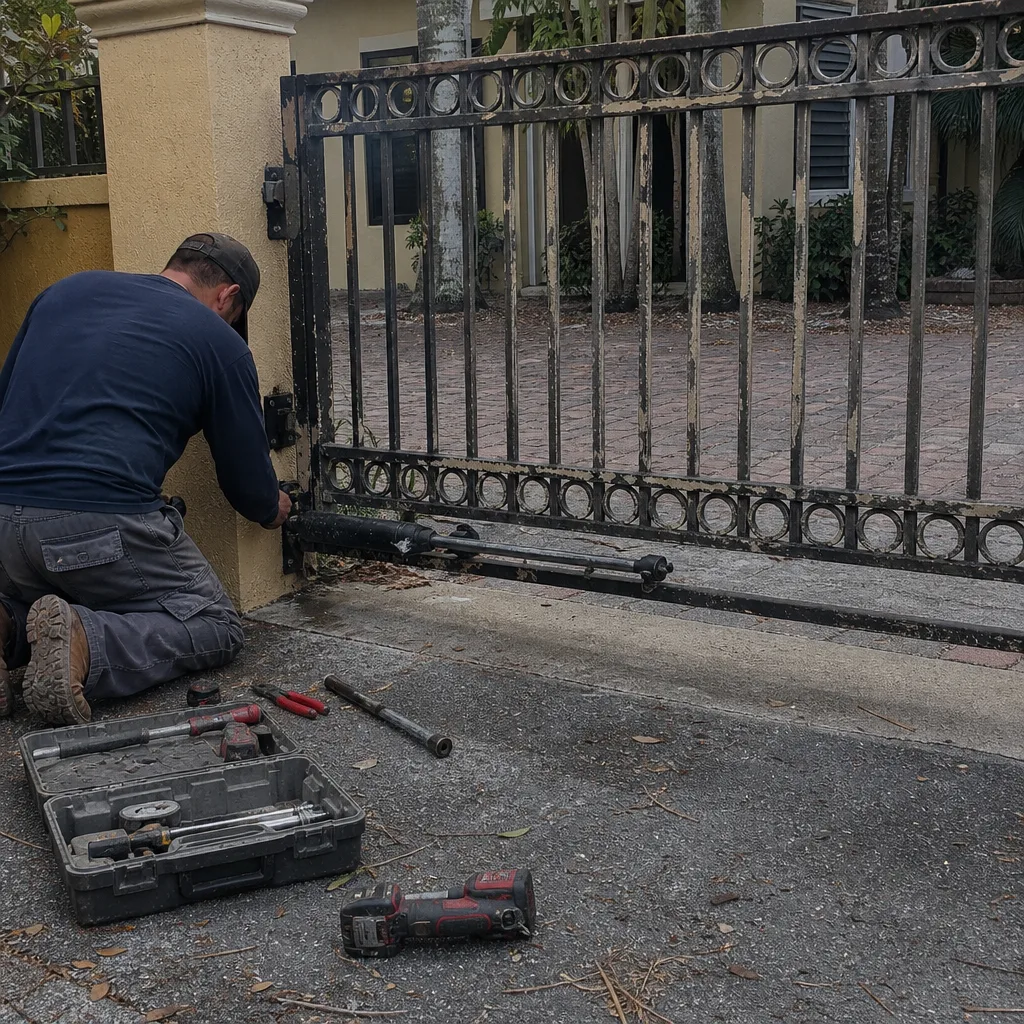 Before
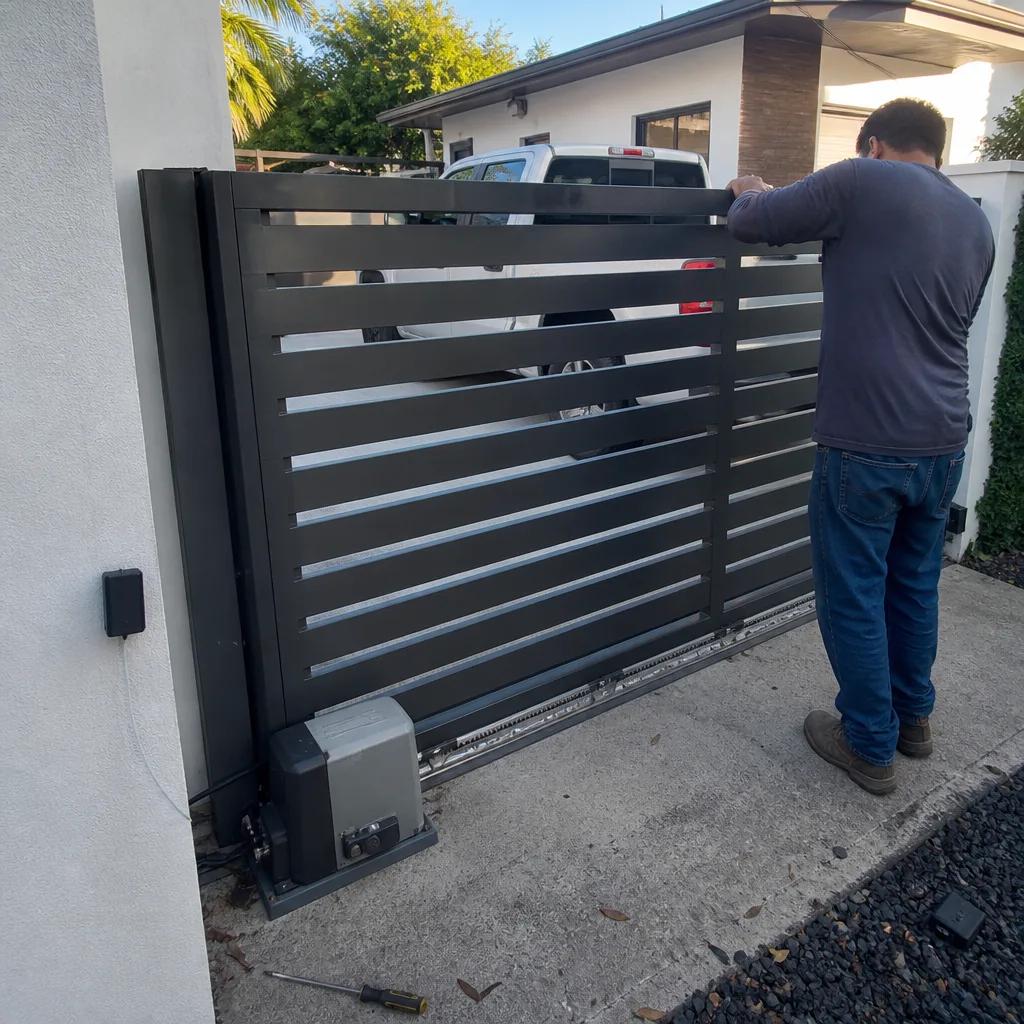 After
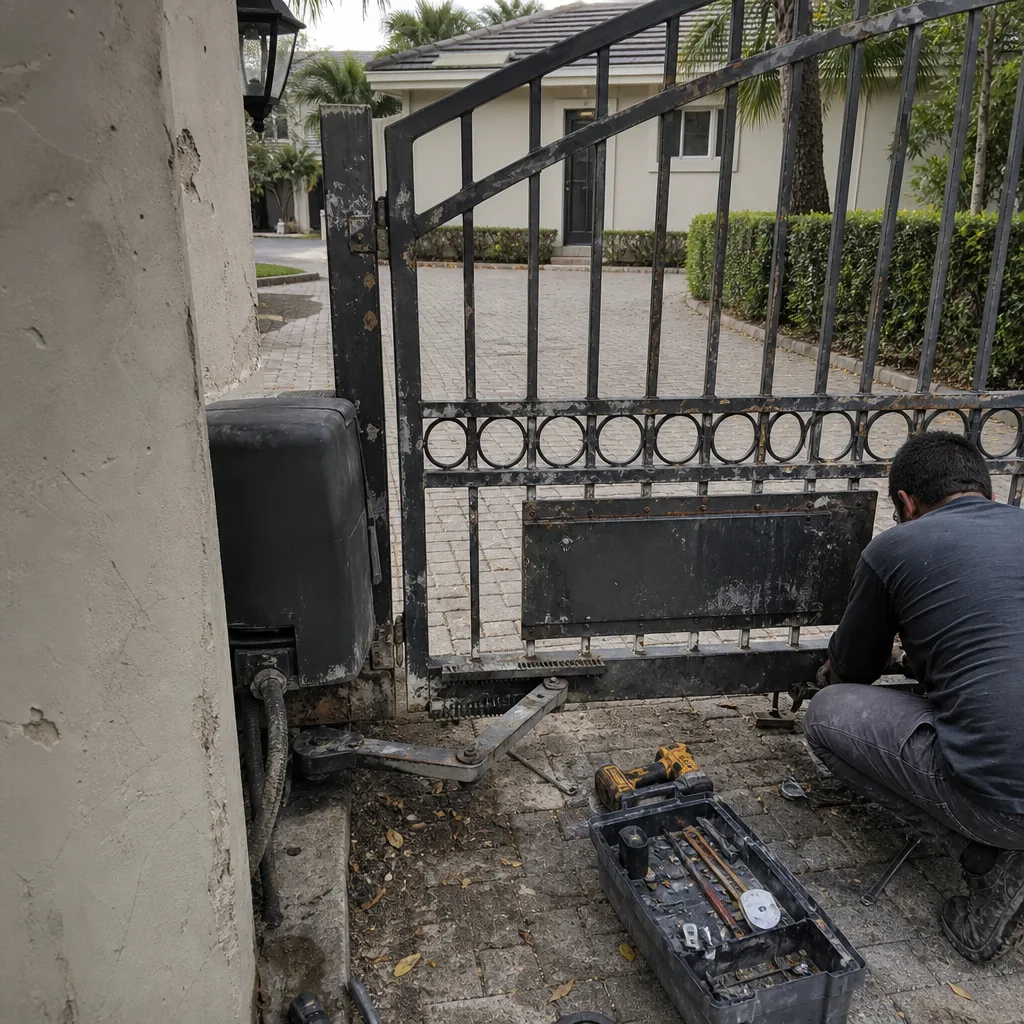 Before
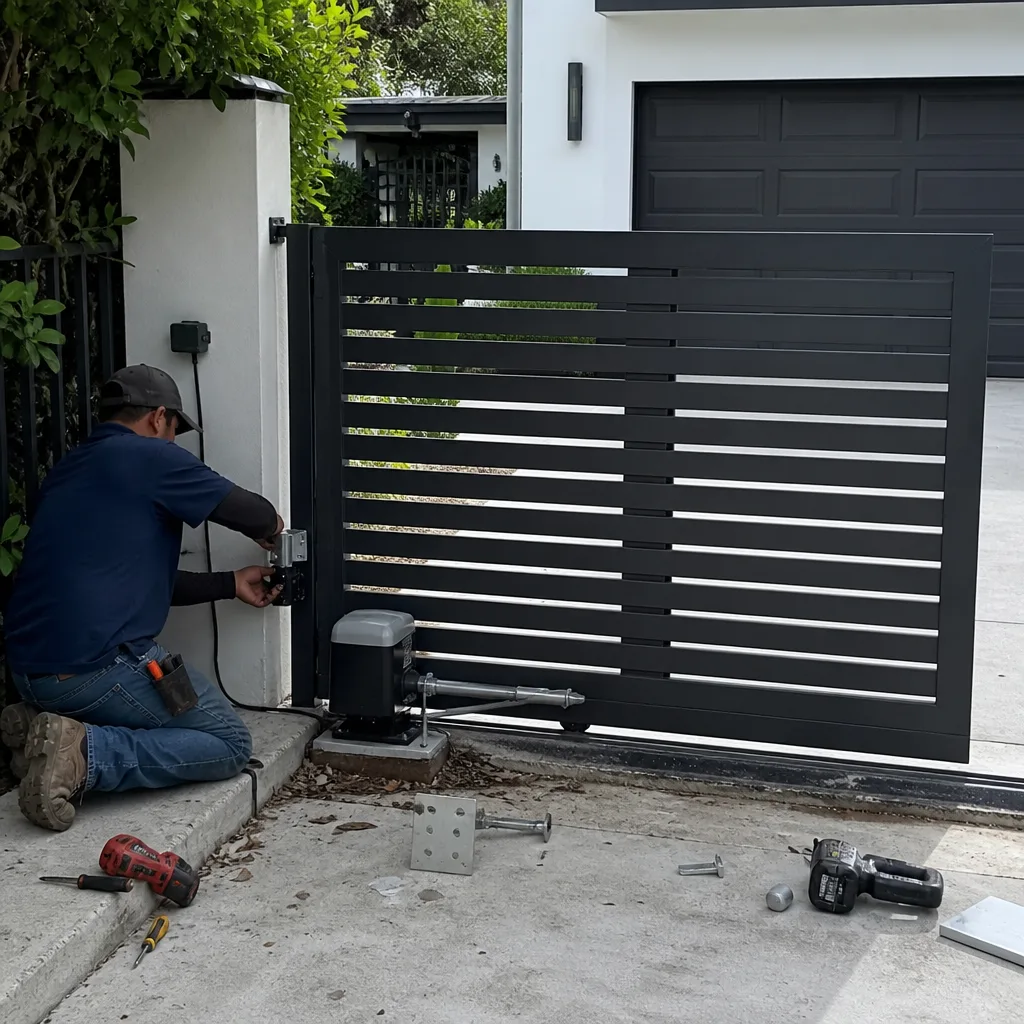 After